
Reading EPS Block Density Tolerances on a Quote
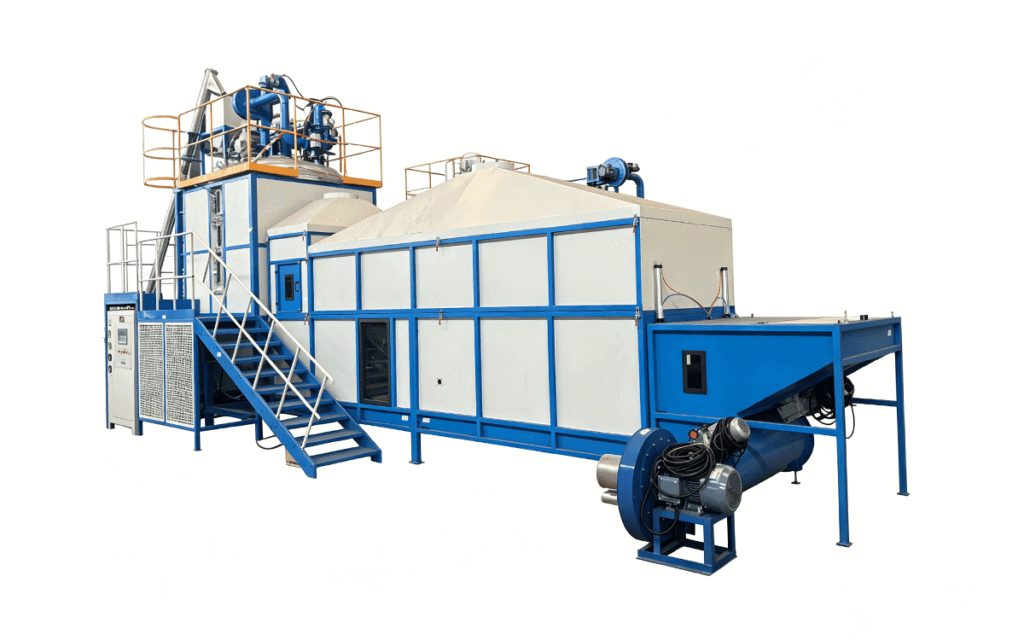
Density is the number buyers and sellers of EPS blocks argue about most, and the tolerance printed next to it is where the argument usually hides. When a quote promises blocks at 15 kg/m3 plus or minus a figure, that tolerance is only as trustworthy as the measurement behind it. This note explains what to look for before you sign, and why the design of the supplier’s eps pre-expander machine matters more than the paperwork.
What the Tolerance Figure Actually Promises
A density tolerance on a quote is a promise about process control, not about a single lucky measurement. Three questions separate a real tolerance from a marketing figure:
- Where is density measured? Weighed batch control at pre-expansion, checked against cut samples, is the credible method. Density estimated by eye or by expansion ratio alone is not a measurement.
- How often is it checked? Continuous or per-batch weighing catches drift within a shift. End-of-day sampling catches nothing until a whole shift has drifted.
- Is it recorded per batch? A supplier with a logged density per production batch can answer a dispute with data. One without can only offer opinions.
Why Weighed Density Control Changes the Conversation
On a weigher-equipped pre-expander, the target density is set as a weight, the machine doses and expands to that weight, and the result is recorded batch by batch. That is what allows a supplier to quote a tight tolerance honestly. Machines without weighed control rely on operator adjustment against a scale sample, and the tolerance quietly widens. The pattern we see is consistent: the tolerance on the quote reflects the measurement system upstream of the moulder, because the moulder can only freeze what the bead side delivers.
There is also an economic angle buyers should keep in mind. A supplier holding blocks to a tight lower tolerance on density is, at the same weight of raw material, delivering more consistent performance in the field. Quotes with suspiciously wide tolerances often price in exactly that inconsistency.
Practical Questions to Ask Your Supplier
Before accepting a density figure, ask how it is controlled: whether the pre-expander uses weighed batch control, what the recorded tolerance is over a normal production run rather than a demonstration, and whether you can receive the batch density log with your order. A supplier with a controlled bead side answers these easily and in writing.
Density control is a machine-level capability before it is a commercial promise. If you want to see what weighed batch control looks like in practice, review our EPS pre-expander machine or contact our team with the density grades your market requires.