
6-Side PE Film Wrapping vs Manual Shrink Wrapping for EPS Shape Products
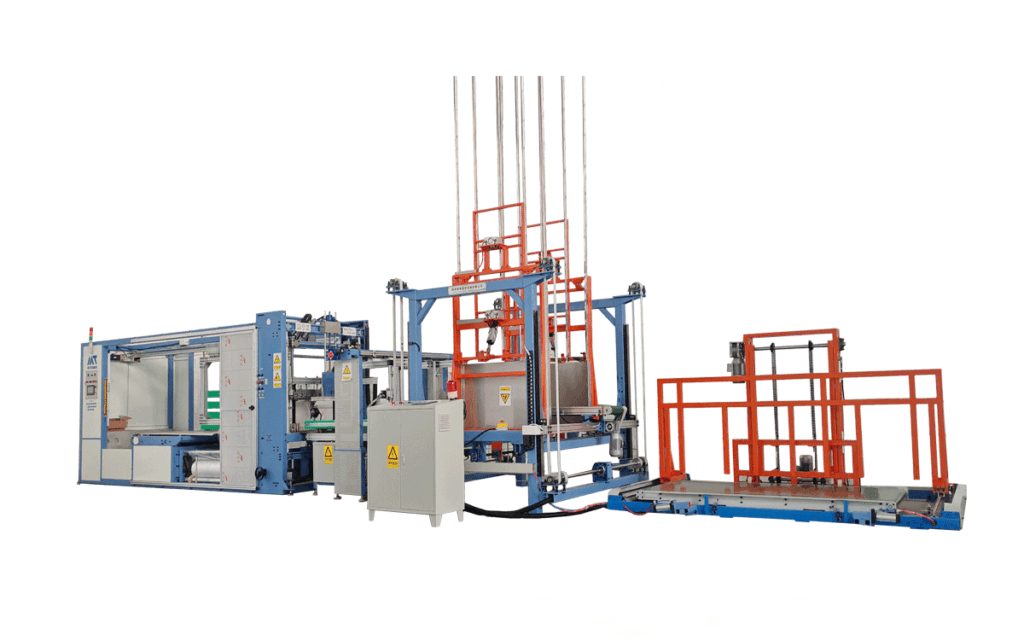
On many EPS plants, shape-molded products are still packed by hand: two operators, a roll of film, a heat gun, and a lot of tape. It works — until volumes rise, labour gets expensive, or a shipment arrives with scuffed edges. Here is an honest comparison between manual shrink wrapping and automatic six-side PE film wrapping, using real machine data.
What actually happens in manual shrink wrapping
An operator places the bundle on a table, pulls film around it, overlaps the ends, seals with a heat gun, then tapes the open faces. A two-person team typically closes a bundle in well over a minute, and the quality of the seal depends entirely on who is working that shift. Exposed corners are common, and every rejected bundle is film, labour and product written off.
What a six-side wrapping machine does differently
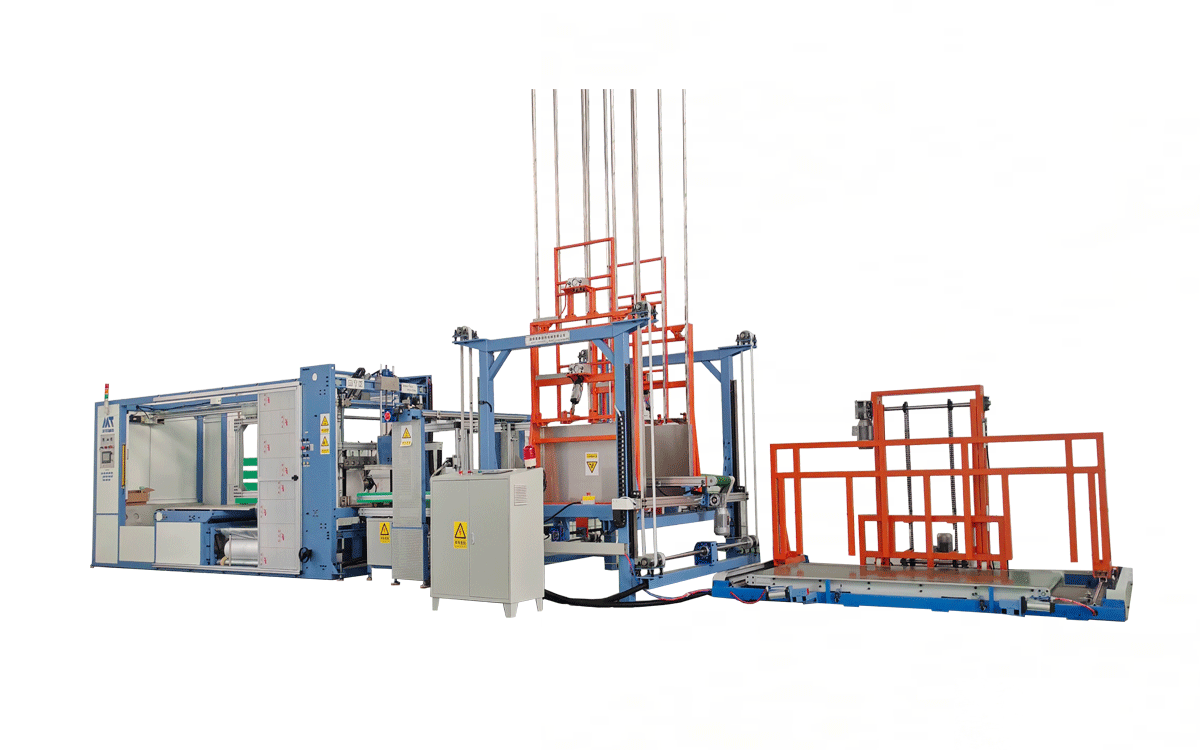
The bundle is pushed into the machine and carries the PE film with it. As it advances, the film wraps around all six faces and is heat-sealed and cut in the same cycle. The result is a tightly enclosed package with no exposed surfaces. Foil positioning, fastening, welding and cutting happen in one pass — there is no second handling step.
Output: the numbers
- With 0.02 mm PE film at 1200×800×600 mm, this class of machine runs about 2–3 packs/min.
- With 0.01 mm HDPE film in another configuration, output reaches roughly 4–6 packs/min.
- One operator supervises the cycle instead of two handling the bundle.
Even at the conservative end, a single shift produces several hundred consistently wrapped bundles, with a repeatable seal on every one.
Cost comparison beyond the machine price
Labour
This is usually the decisive factor. Manual wrapping ties up two people per packing station for the entire shift. Automatic wrapping reduces that to supervision plus loading, which is why plants with rising wage costs see payback fastest.
Film and tape
Manual wrapping wastes film through overlap and rework, and consumes tape on every open face. A six-side wrapper meters film per cycle and eliminates tape entirely — the machine saves film and tapes as well as labour.
Damage and returns
Decorative cornices and custom molded parts are sold on appearance. An exposed corner that rubs through in transit turns into a claim. Full six-side enclosure is the cheapest insurance against that.
Where each method still makes sense
Manual wrapping is defensible for very low volumes, one-off custom shapes, or plants packing a few dozen bundles a day. Above that, the arithmetic shifts quickly. If you are already investing in EPS CNC cutting to hold tight tolerances, packing those precision parts by hand undoes the value you just created.
Products this suits
- Decorative cornices and architectural profiles
- Insulation boards
- Fish boxes and insulated containers
- Custom molded parts with vulnerable edges
The machine’s adjustable width (approx. 600–800 mm) and height (approx. 300–600 mm) cover most of these product families without changing frame size.
Making the switch
Before you commit, run your own bundles on the machine and count the actual packs per minute with your film. Then compare against your labour cost per pack. Full specification and configuration options are on the EPS Wrapping Machine for Shape Products page — or talk to our engineers about a trial with your products. If you also pack blocks, compare it with our EPS packaging machine for block.
Typical specifications
EPS Wrapping Machine for Shape Products — specification snapshot
| Model | Product Length | Product Width | Product Height | Speed | Film |
|---|---|---|---|---|---|
| SPLM-CA20/W800H600 | 2000 mm | 600–800 mm (adjustable) | 300–600 mm (adjustable) | 2–3 packs/min @ 1200×800×600 | PE, 0.02 mm |
These are YouXin’s current model ranges. Throughput depends on bundle size, film gauge and sealing settings; a trial with your own product is the only reliable figure. Full options: EPS Wrapping Machine for Shape Products.
Five steps to plan the switch
- Count your current labour per pack. Two operators, minutes per bundle, film and tape consumed. Without this baseline you cannot judge the investment.
- Run your own bundles on the machine. Count actual packs per minute with your film and your product, not the number on the datasheet.
- Check the size envelope. Your largest and smallest bundles must fall inside the adjustable width and height range.
- Compare damage and returns. Exposed corners that rub through in transit are claims you stop paying for with full six-side enclosure.
- Plan the layout and the operator. One person supervises and loads. Decide where bundles arrive from and where pallets leave.
Common mistakes
Judging on machine price alone. Labour per pack, film waste and damage claims are where the money is.
Keeping manual for the “difficult” shapes. If a shape can be bundled, it can usually be wrapped automatically. Running two systems doubles the training and the film stock.
Not re-matching settings to the film in use. Film supplier, gauge and season all change the correct sealing temperature.
Sizing the wrapper below moulding output. The packer then sets the pace for the whole plant.
Frequently Asked Questions
Is manual wrapping ever still the right answer?
Yes, for very low volumes, one-off custom shapes, or plants packing a few dozen bundles a day.
How many operators does an automatic wrapper need?
One, supervising the cycle and loading bundles, against two for a manual station.
Does it use tape?
No. The film is heat-sealed and cut in the same cycle, so tape is eliminated along with the open faces it used to close.
Can it handle cornices and decorative profiles?
Yes. Full six-side enclosure is the cheapest insurance for products sold on appearance.
What should we send to get a proposal?
Bundle dimensions, product photos, film type and target packs per minute. Talk to our engineers about a trial.
What to prepare before the machine arrives
A wrapping machine is easy to install and easy to under-prepare for. Before delivery, confirm the following so commissioning is not spent waiting on services:
- Power and compressed air at the ratings on the machine plate, with a clean, dry air supply for the pneumatics
- Floor space for infeed and outfeed — bundles in, pallets out, with room for an operator to walk the line
- Film stock in the gauge the machine will be tuned for, enough for a full day of trials
- A representative bundle set covering your largest, smallest and most fragile products
- A named operator who will own the settings log from day one
With those in place, commissioning is normally a matter of matching temperature and tension to your film and running trials, not a construction project.
Can the film be printed or coloured?
Yes, provided the film gauge and sealing behaviour stay within the range the machine is tuned for. Tell us if you plan to use printed film and we will confirm the settings.
What if our bundles are outside the size window?
A different frame size is the correct answer. Workarounds such as double-wrapping or reducing bundle size usually cost more in film and labour than specifying the right frame from the start.