
Hello, my name is Allen. For over twenty years, my world has revolved around the design, manufacturing, and operation of high-performance EPS machine machinery. From our bustling factory floors in China, I’ve had the privilege of speaking with hundreds of business owners and procurement officers like Mark Thompson from the USA. They are sharp, decisive leaders who don’t have time for guesswork. They need to know which machine will give them the best performance, the highest reliability, and the greatest return on their investment. The most critical decision they face, and the one we’ll tackle today, concerns the very heart of their production line: the EPS pre-expander.
This guide is a direct result of those conversations. We will cut through the technical jargon and provide a clear, honest comparison between the Batch Pre-Expander and the Continuous Pre-Expander Machine. By the end, you will understand not just how each machine works, but precisely which one is the right strategic choice for your specific EPS foam production needs.
What is an EPS Pre-Expander Machine and Why is it the Heart of Your Factory?
Before we can compare technologies, it’s crucial to understand the fundamental role of an EPS Pre-Expander Machine. Think of raw EPS material as tiny, hard grains of sugar. In this state, it’s dense and unusable for creating lightweight products. The pre-expander machine is the piece of equipment that transforms these solid polystyrene beads into the soft, expanded foam beads we all recognize. It’s the very first, and most critical, step in the entire EPS production process.
The process is a bit like making popcorn. The machine uses precisely controlled steam to heat the raw EPS beads, which contain a small amount of a blowing agent called pentane. The heat causes the polystyrene to soften and the pentane to vaporize, creating pressure that inflates the bead to many times its original size. The final density of the foam—a key factor that determines its strength, insulation properties, and cost—is determined right here, in the expander machine. If this stage is done poorly, no amount of quality in the subsequent molding machine can fix it. A high-quality EPS pre-expander is the foundation upon which every successful EPS foam product is built.
How Does a Batch Pre-Expander Machine Operate?
A batch pre-expander works in distinct, repeatable cycles, offering an incredible level of control. The process is meticulous. First, a pre-weighed amount of raw EPS material is fed into the expansion chamber. The chamber is then sealed, and steam is injected under carefully managed temperature and pressure. An agitator inside the chamber keeps the beads moving to ensure they are all heated evenly. Once the beads have expanded to the target density, the steam is cut off, and the expanded beads are discharged from the machine, often into a fluidized bed dryer for cooling and stabilization.
This cyclical or "batch" method is the gold standard for achieving high precision EPS quality. Because each batch is a self-contained event, the operator has precise control over all variables: the weight of the raw material, the steam pressure, the heating time, and the discharge. This allows for the production of a very wide range of densities, from very low density for protective packaging to high density eps foam for construction or specialized applications. The batch process is inherently more flexible, allowing a factory to switch between different product requirements quickly and efficiently.
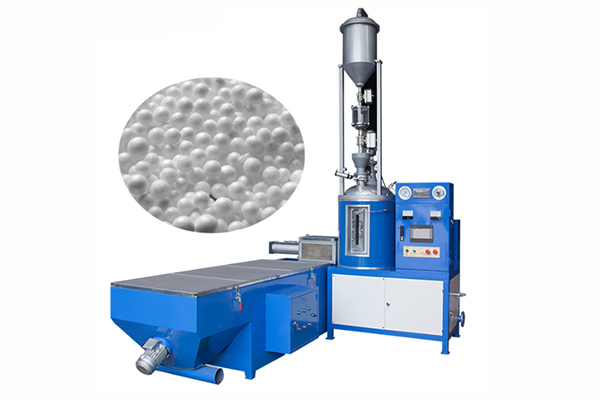
How Does a Continuous EPS Pre-Expander Machine Work?
As its name suggests, a continuous pre-expander machine operates in a constant, uninterrupted flow. Raw EPS beads are fed into one end of a long, typically cylindrical chamber by a screw feeder. As the material travels through the machine, it is continuously injected with steam. By the time the beads reach the discharge outlet at the other end, they are fully expanded. The density is controlled by adjusting the ratio of the raw material feed rate to the amount of steam being injected.
The primary advantage of a continuous pre-expander is its sheer throughput. This machine is an efficient workhorse, designed to produce a massive volume of expanded EPS beads at a single, consistent density. It requires less operator intervention once it’s up and running, making it ideal for dedicated production lines where the product specifications do not change. For a factory that produces millions of the same insulation panels or simple block fills day in and day out, the continuous method offers unparalleled output speed.
Batch vs. Continuous: Which EPS Expander Machine is Right for Your Production?
This is the crucial question for any business owner. The choice between a batch pre-expander and a continuous pre-expander machine is not about which machine is "better" in a general sense, but which is strategically better for your business model. As a manufacturer, I guide my clients through this decision by focusing on their products and market.
Here is a direct comparison to help you decide:
| Feature | Batch Pre-Expander Machine | Continuous Pre-Expander Machine |
|---|---|---|
| Density Control | Excellent. Precise control over each batch allows for a wide range of densities (e.g., 8-60 g/L). | Good. Best for maintaining a single, consistent density. Less flexible for changes. |
| Flexibility | High. Easy to switch between different densities and material grades. | Low. Designed for dedicated, long production runs of one product type. |
| Output Volume | Good to High. Volume depends on the size of the machine and cycle time. | Very High. Unmatched throughput for single-density production. |
| Application | Ideal for shape moulding machine products, high density items, lost foam, and factories with diverse product ranges. | Ideal for high-volume block production, insulation board manufacturing, and packaging fills. |
| Energy Efficiency | Modern batch machines are very efficient, especially with vacuum systems. | Can be very efficient when running at full capacity, but less so during startup or short runs. |
"The decision is simple," I often tell my clients. "If you need to make many different things with perfect precision, you need a batch machine. If you need to make a massive amount of one thing, a continuous machine might be your answer."
What are the Key Features of a High-Quality EPS Batch Pre-Expander Machine?
When you are ready to invest in an eps batch pre-expander machine, you need to look past the basic specifications. The details of the engineering are what separate a reliable, long-lasting machine from one that causes constant headaches. From my experience on the factory floor, these are the non-negotiable features you should demand.
First, look at the control system. A modern batch pre expander machine should be equipped with a high-quality PLC (Programmable Logic Controller), often with a user-friendly touchscreen interface. This system is the brain of the machine, providing precise temperature control and pressure control. Paired with high-quality electronic sensors and proportional steam valves, this allows for the exact accuracy needed to hit a target density with minimal variation. Second, the physical construction is key. The expansion chamber should be made from stainless steel to resist corrosion from the steam. Finally, a crucial component is an integrated, efficient fluidized bed dryer. This ensures the freshly expanded, moist beads are dried and stabilized, which is essential for proper aging before they go to the molding machine. Our High Quality Automatic EPS Batch Pre-Expander is engineered with all these critical features in mind, designed for operators who demand both performance and reliability.
When Should You Choose a Continuous Pre-Expander Machine for my EPS Production?
A continuous pre-expander machine is a specialist tool, and it excels in the right environment. You should seriously consider this type of expander machine if your business model is focused on high-volume, single-product manufacturing. The classic example is a company that produces EPS insulation panels for the construction industry. They need to produce millions of square feet of foam at a consistent, medium density, day in and day out.
In this scenario, the eps continuous machine shines. It can be integrated into a fully automatic production line that runs with minimal supervision. The raw material is fed from a silo, the pre-expander runs continuously, and the expanded beads are conveyed directly to the silos that feed a large block molding machine. This creates a seamless and highly efficient workflow. The tradeoff is flexibility. This setup is not well-suited for a company that needs to produce a run of high-density blocks in the morning and low-density packaging shapes in the afternoon. But for dedicated, high-volume production, the continuous pre expander is an unbeatable workhorse.
How Does a Vacuum System Improve the EPS Batch Expansion Process?
One of the most significant innovations in modern EPS batch technology is the integration of a vacuum system. This feature elevates the performance of a batch pre-expander machine to another level, particularly when producing high-density EPS foam. After the steam heating phase is complete, the vacuum pump is activated, rapidly lowering the pressure inside the expansion chamber.
This has several key benefits. First, the vacuum causes any remaining moisture on the beads to flash-evaporate, resulting in a much faster cooling and drying cycle. This shortens the overall cycle time, increasing the machine’s productivity. Second, the beads that come out are drier and more stable, which reduces the required aging time in the silo before they can be used in a shape moulding machine. Most importantly, the vacuum environment is essential for producing stable, high-quality, high-density EPS, which is often used in applications requiring greater structural strength or for lost foam casting. A machine with a vacuum system is simply a more capable and efficient piece of equipment.
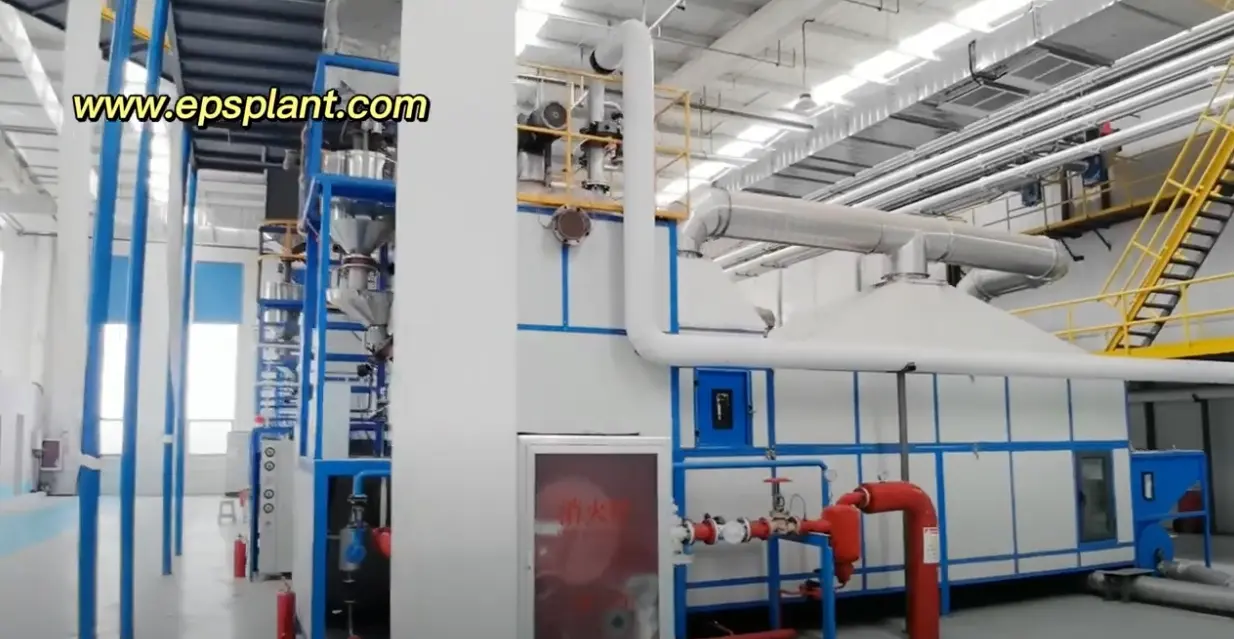
How Does the Pre-Expander Fit into the Complete EPS Production Line?
No machine in an EPS factory works in isolation. The pre-expander machine is the starting point of a highly integrated system. The quality of its output has a direct and significant impact on every subsequent stage of processing. After the beads are expanded and stabilized, they are stored in large silos, ready to be pneumatically conveyed to the next stage.
This next stage is typically either an EPS block molding machine or an EPS shape moulding machine. The block machine fuses the beads together inside a large rectangular mould to create massive blocks of EPS foam, which are later cut into sheets by a cutting machine. The EPS Shape Moulding Machine uses a custom EPS mould to create specific products, from bicycle helmets to complex packaging inserts. If the beads from the pre-expander have an inconsistent density or high moisture content, the final product from the moulding machine eps will be weak, poorly fused, and have a poor surface finish. A high-quality expander machine is the only way to guarantee a high-quality final product.
Lost Foam Casting: A Specialized Application for the High Precision EPS Batch Pre-Expander?
While most EPS is used for packaging and insulation, there are high-tech applications that demand the utmost precision. Lost foam casting is a perfect example. In this advanced manufacturing process, an exact replica of a metal part is made from EPS foam. This foam pattern is then coated in a ceramic shell, placed in a flask, and surrounded by sand. When molten metal is poured in, it vaporizes the EPS pattern (hence "lost foam") and perfectly fills the cavity, creating a highly detailed metal part.
This process requires EPS beads of exceptionally stable and uniform density. Even a tiny variation can ruin the final metal casting. This is where the high precision eps batch pre-expander is not just the best choice—it’s the only choice. The precise, cycle-by-cycle control of a batch machine, often enhanced with a vacuum system, is the only way to produce the flawless EPS bead quality required for such a demanding application. This capability demonstrates the superior control and versatility inherent in the eps batch processing method.
How Do You Select a Reliable EPS Machine Supplier and Avoid Common Pitfalls?
For a business owner in the USA or Europe, selecting an EPS machine supplier from China can feel daunting. I have heard the stories of communication issues, delivery delays, and non-existent after-sales support. These are the pain points that a professional manufacturer works tirelessly to eliminate. Choosing the right supplier is just as important as choosing the right machine.
First, do your homework. Look for a supplier who is a true manufacturer with their own factory, not just a trading company. A real manufacturer has deep technical knowledge, controls the quality of their machinery, and can provide long-term support. Don’t be swayed by the lowest price alone; consider the total cost of ownership. A cheap machine that breaks down frequently will cost you far more in lost production than a high-quality machine from a reputable supplier.
Ask tough questions. What is their warranty policy? Do they provide on-site installation and training? How quickly can they supply spare parts? A confident and professional supplier will welcome these questions. They should be able to provide you with customer references and detailed technical documentation. As a Professional EPS Machine Manufacturer, we believe in building partnerships, not just selling machines. We understand that our success is tied directly to yours, and we are committed to providing the reliable equipment and unwavering support you need to thrive.
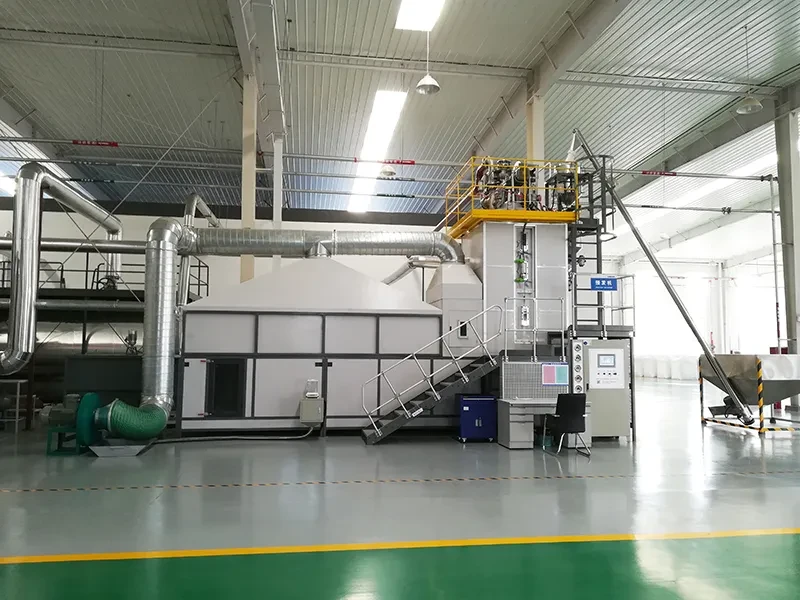
Key Takeaways for Your EPS Pre-Expander Investment
The decision to invest in a new EPS pre-expander machine is a major step forward for your business. Making the right choice will set the foundation for years of efficient and profitable production.
- The Pre-Expander is Critical: The quality of your final foam product is determined at the pre-expansion stage. This machine is the heart of your operation.
- Batch for Flexibility and Precision: Choose an EPS Batch Pre-Expander if your factory produces a variety of products with different densities or requires high precision for applications like lost foam.
- Continuous for High Volume: Choose a Continuous Pre-Expander Machine if you have a dedicated production line for a single, high-volume product like insulation sheets or block fill.
- Look for Key Features: Demand a PLC control system, stainless steel construction, and an integrated fluidized bed dryer for any high quality machine. A vacuum system is a powerful upgrade for batch machines.
- Choose a True Manufacturing Partner: Select a supplier who is a proven manufacturer with a strong reputation for quality, reliability, and excellent after-sales support. This is the most important decision you will make.
Post time: 12-09-2025