
Have you ever tried to slice a block of white packing material, only to end up with a room covered in tiny white snowballs? We all know this nightmare. The static electricity causes those annoying plastic beads to stick statically to your clothes, your tools, and your walls. Whether you are a factory owner designing a new manufacturing plant, or a hobbyist building a weekend project, dealing with loose styrofoam is incredibly frustrating.
If you want to cut styrofoam without making a total disaster, you are in the right place. This comprehensive guide will show you exactly how to process this material cleanly. You will learn the physics behind the material, the best manual tools to use, and how industrial machinery achieves perfect precision. By understanding these methods, you will save hours of cleanup, reduce material waste, and increase your overall efficiency.
Why Is It So Hard to Cut Without Making a Mess?
To understand how to slice cleanly, we first need to look at what the material actually is. Standard white EPS (Expanded Polystyrene) is often called beaded foam. It is made of thousands of tiny plastic beads that are expanded with steam and fused together in a mold. Interestingly, these beads are actually composed of about 98% air.
When you try to separate this material with a dull blade, you are not actually slicing the plastic. Instead, friction takes over. The blade catches on the individual beads and rips them apart. This aggressive action will tear the foam, releasing those charged particles into the air.
To avoid this chaotic snowstorm, you must eliminate friction. You have two primary choices: use extreme sharpness to sever the beads seamlessly, or use thermal energy to vaporize the plastic before your tool even makes physical contact. Understanding this basic rule is the foundation of all successful operations, from small home modifications to massive industrial production lines.
What Is the Best Method to Process Styrofoam for Factory Layouts?
If you browse any manufacturing community or industry forum, you will see endless debates. Plant managers constantly argue over whether they should use a knife or hot wire for bulk processing. For large-scale B2B factory production, the answer is always thermal energy.
When designing a modern factory layout, floor space and cleanliness are vital. You cannot afford to have a messy factory floor covered in plastic dust. It clogs expensive machinery, contaminates the final product, and creates a severe slipping hazard for workers. Industrial machines use an electrically heated cutting thread or rigid wire to process massive blocks straight from the molding machine.
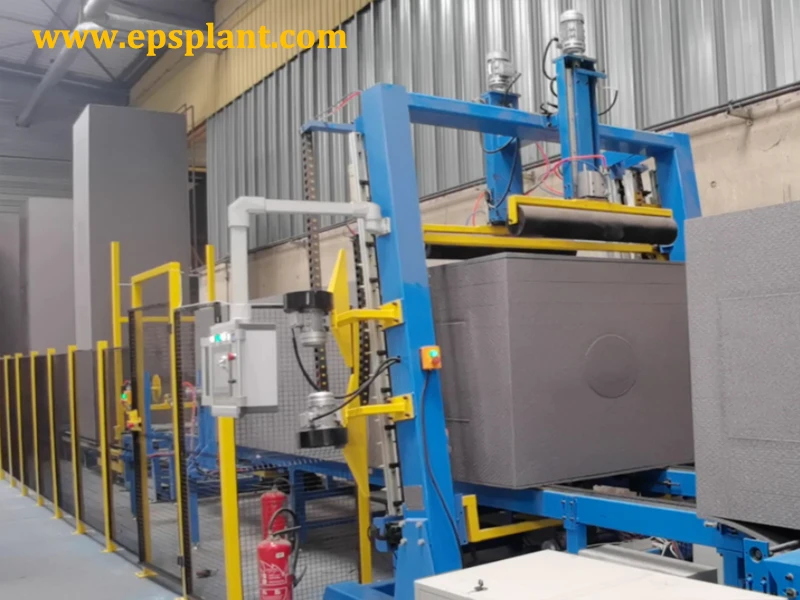
The radiant heat melts the styrofoam cleanly. The wire vaporizes a tiny, microscopic path through the plastic, meaning the metal barely touches the material. This creates a perfectly sealed edge. The microscopic beads are melted shut, so they cannot flake off during transport or installation. This is why thermal processing is the ultimate choice for professionals who demand high-quality results and zero raw material waste.
How Can You Cut Foam Board Using a Blade?
For thin sheets used in housing or packaging, you might wonder if you can simply use a utility knife. Yes, you absolutely can, but your manual technique is everything.
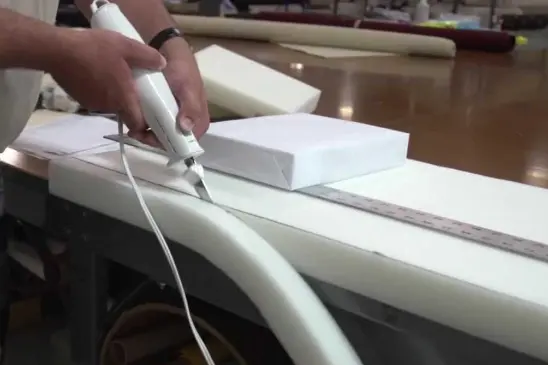
First, lay your panel flat on a stable work surface. Grab a long metal ruler to use as a straight guide. Never use a cheap box cutter with a dull blade; it will catch the beads and ruin your work. You must use a razor-sharp instrument. Take your knife and make very light, gentle strokes along the metal guide.
Do not try to force the blade all the way through the material on the first pass. Instead, start cutting lightly to score the outer skin. Make multiple passes to deepen the groove safely. Once you have a deep score line, move the board to the edge of your table. Press down firmly on the overhanging section to snap the board cleanly. You want to slice the plastic skin, not crush the core. This score-and-snap method works perfectly for a thin piece of foam.
What Is the Top Tip for Using a Heated Tool?
A hot knife is a handheld tool that looks a lot like a heavy-duty soldering iron with a flat blade attached to the end. It is an amazing tool for detailed architectural work and intricate carving.
The biggest tip when using this tool is to let the heat do the actual work. If you push the blade too hard against the block, the metal will bend or break. You must move at a slow, steady pace, allowing the hot metal to melt the plastic slightly ahead of it.
This specific tool is incredibly precise. It is perfect if you need to make internal cavities, like hollowing out a space for electrical wiring in an insulated concrete form (ICF). Because the high temperature seals the plastic as it moves, you get a hard, smooth finish. You can even use a specialized attachment to shape a perfect sphere or ball for custom electronics packaging.
Why Is a Hot Wire System Better Than Saws to Cut?
For perfectly straight lines and smooth architectural curves, nothing beats a tensioned wire. A standalone hot wire cutter uses an electrically heated nichrome wire strung tight like a guitar string across a frame.
When using a hot wire, the results are completely flawless. You get perfectly straight cuts every single time without requiring any sanding. Unlike a hand saw, hacksaw, or heavy equipment, a wire does not create any sawdust or loud noise. You can even use a hot wire foam tool to sculpt one side without accidentally denting or scratching the other side.
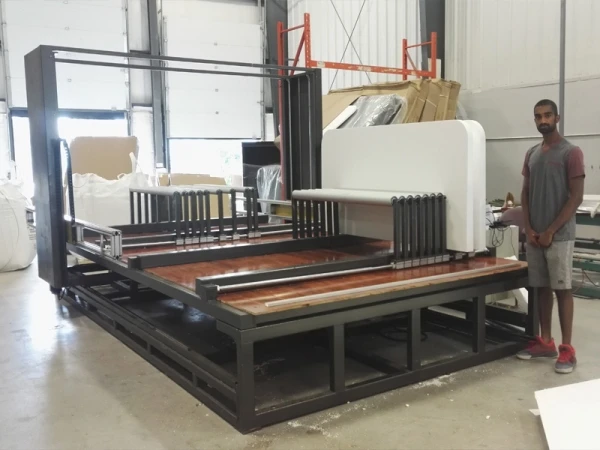
A good tabletop hotwire cutter is essential for serious builders and contractors. However, you must manage the electrical temperature carefully. If the wire is too cold, it drags and warps. If it is too hot, it creates a wide, ugly gap in your block. Also, handle the equipment gently; if you use your hot wire foam cutter too aggressively and push the material too fast, the wire will easily snap under the tension.
Can You Cut XPS Differently Than Beaded Foam?
Construction professionals often ask if they should buy pink or blue boards instead of standard white ones. The rigid pink and blue boards are made of XPS (Extruded Polystyrene).
XPS is manufactured completely differently than white EPS. It is continuously extruded through a die under high pressure, making it much more dense and uniform in its internal structure. Because it is so thick and rigid, it does not crumble into annoying little beads. Processing foam insulation made of XPS feels much more like working with soft wood than plastic.
Because of this structural integrity, you can use a blade with a serrate edge on XPS much more effectively than on EPS. You can even shape XPS manually using a metal rasp or fine grit sandpaper to achieve sloped angles. Just remember to always wear a mask when sanding, as the microscopic dust particles can be harmful to inhale over long periods.
What Tools Should You Avoid When You Cut Styrofoam?
It is very tempting to grab heavy power tools from your garage to speed up the job, but this is usually a terrible idea. Never use a high-speed circular saw or a standard jigsaw on basic packaging EPS.
These power tools spin extremely fast. A high-speed table saw will chew up the material instantly and spit out a massive, statically charged dust cloud that will coat your entire workshop for months. Furthermore, the immense friction from a fast blade generates rapid heat. This heat can melt the plastic directly onto the metal blade, permanently ruining your expensive equipment.
Even a scroll saw is risky, depending heavily on its tooth count and operating speed. Manual friction tools leave a very rough finish that requires hours of manual sanding to fix. If you absolutely must use a manual tool, choose a fine-toothed hand blade, and keep a strong shop vacuum running right next to the work area to catch the debris immediately. Keep in mind that brute force might tear the material if you are not careful.
How to Cut Materials for Scenery Layouts?
Model makers, architects, and creative hobbyists often require highly complex, non-linear shapes. Whether you are building theatrical scenery, a detailed model train layout, or a simple school craft, precision is the absolute key to success.
You can easily glue small pieces of styrofoam together to build massive mountains, terrain blocks, or architectural mockups. When shaping these large structures, you might need to carve a sweeping curve or a realistic slope. This is exactly where handheld electric heating bows shine the brightest.
An electric heating bow allows you to sculpt hills and valleys effortlessly. You can carve out rivers, tunnels, and caves without stressing the delicate glue joints of your assembled pieces. By combining different thermal instruments, you can create highly realistic textures and organic shapes that look completely professional and clean.
What Is the Safest Way to Cut Without Toxic Fumes?
While thermal energy is undeniably the cleanest method for the material itself, it is not the cleanest for your lungs. Melting any petroleum-based plastics releases toxic fumes into the air.
These airborne chemicals smell terrible and will quickly irritate your eyes, nose, and throat. You should never operate thermal tools indoors without proper and active ventilation. In a professional B2B factory setting, powerful overhead exhaust fans and industrial air scrubbers are strictly mandatory over the processing lines to pull the fume away from the machine operators.
If you are working at home or in a small workshop, do it outside or in a wide-open garage with a large fan blowing directly across your workspace. If you absolutely cannot ventilate the area safely, stick to a very sharp knife or cold manual tools to ensure you stay safe and healthy.
Pro Tip: How Does Industrial Machinery Operate Efficiently?
In professional B2B manufacturing, we process materials on a truly massive scale. Factory owners—like our valued clients in Eastern Europe, Russia, and the Middle East—demand maximum output and extreme machinery reliability. They cannot rely on manual labor to slice thousands of insulation panels daily.
This is where advanced CNC (Computer Numerical Control) machines come into play. A modern CNC EPS Cutting Machine uses computer-guided wires to slice giant blocks with zero human error. These machines feature Siemens or Mitsubishi PLC touch screens that automatically adjust the tension and temperature of the wires based on the exact density and moisture content of the block.
For high-volume, continuous production, we implement a fully automated Best Sale EPS Cutting Line. This integrated system handles horizontal slicing, vertical trimming, and cross-cutting in one seamless, continuous motion. It is incredibly energy-efficient and drastically minimizes raw material waste, which directly improves a factory’s Return on Investment (ROI).
Even with the absolute best machinery in the world, some minor scrap is inevitable from edge trimming. However, instead of throwing these off-cuts into a landfill, modern turnkey factories use an EPS Recycling Machine to crush the waste. They then reintroduce this recycled material back into the EPS Shape Moulding Machine. This creates a highly profitable, closed-loop production system that maximizes factory revenue while actively protecting the environment.
Essential Takeaways to Remember
- Friction is the Enemy: Using dull blades will pull the beads apart, creating a massive, statically charged mess.
- Heat is the Solution: Thermal tools vaporize the plastic, leaving a perfectly sealed, smooth surface without any dust.
- Score and Snap for Thin Sheets: If you must use a manual blade, score the surface multiple times along a straight edge, then break it cleanly.
- Avoid High-Speed Saws: Power tools will melt the plastic onto the blade and generate uncontrollable amounts of debris.
- Ventilation is Mandatory: Always work in a well-ventilated space when using thermal tools to avoid inhaling harmful chemical smoke.
- Industrial Efficiency Relies on CNC: For business owners, investing in automated CNC lines ensures perfect accuracy, low waste, and high profitability.
Post time: 02-26-2026