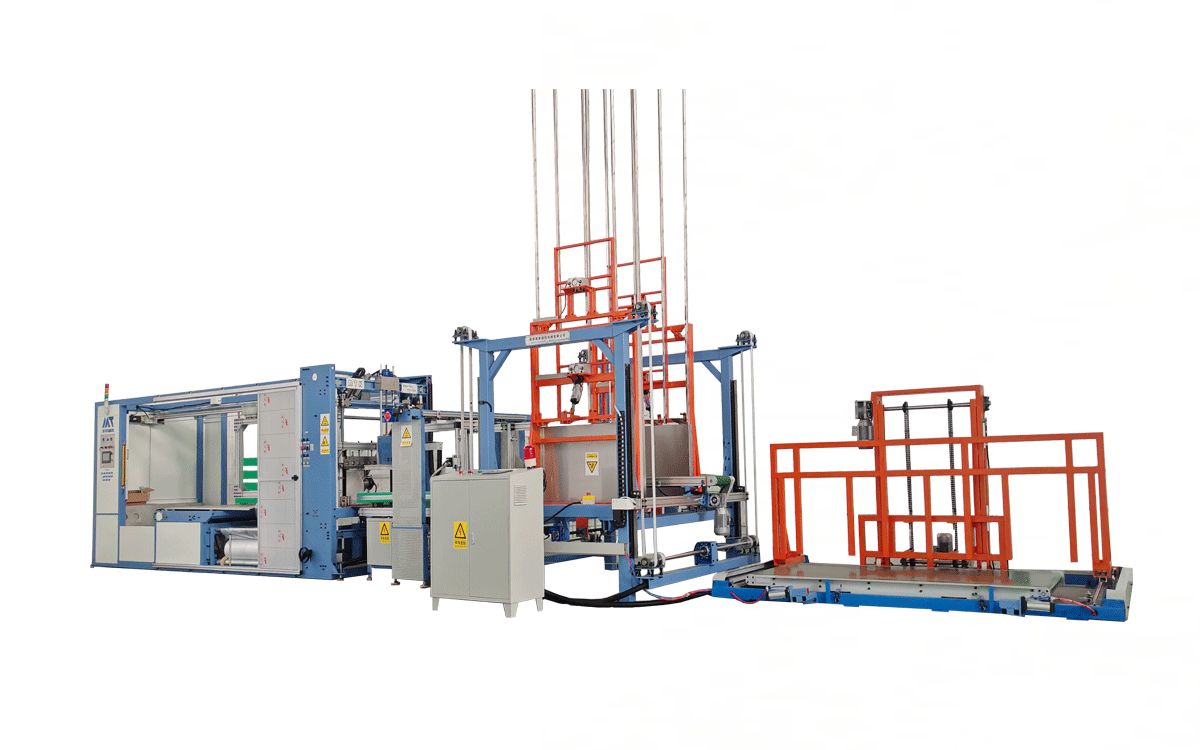
EPS Wrapping Machine Best Practices: Kevin’s Follow-Up Visit to Jiabao (Vietnam)
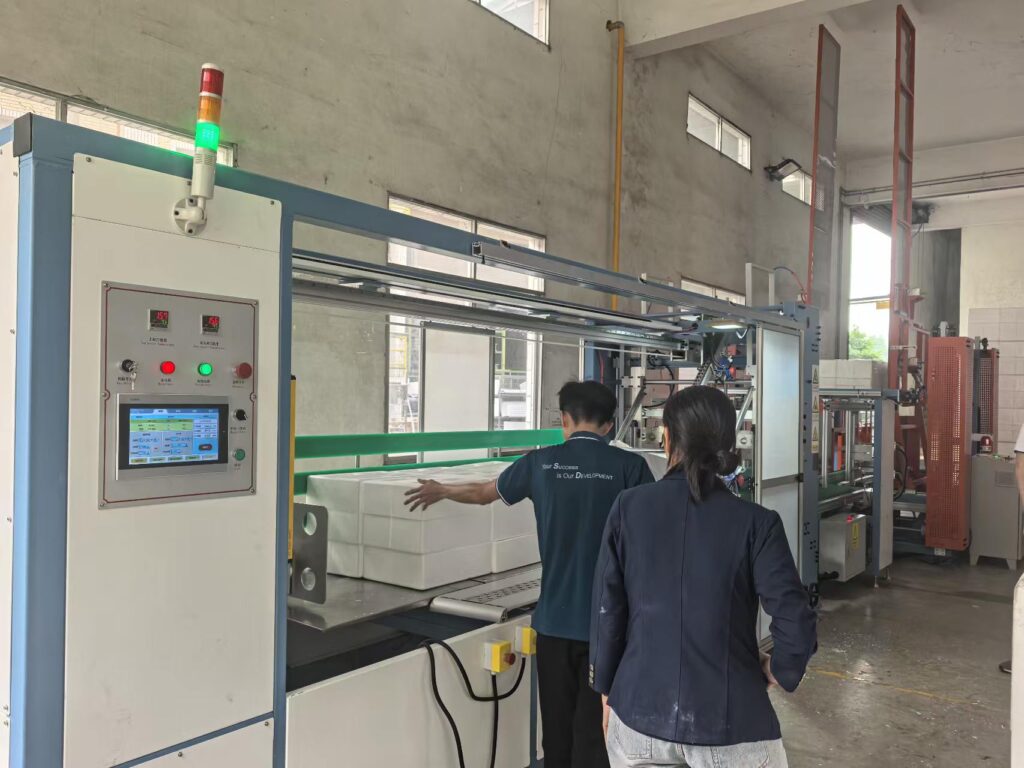
On September 15, 2026, Kevin, Sales Director of YouXin EPS Machinery, paid a follow-up visit to Jiabao (Vietnam) to review how their EPS wrapping machine is running in daily production. Rather than a sales call, the session was a working review on the shop floor: start-up routine, sealing settings, film handling and the small operating habits that decide whether a wrapping line runs smoothly all shift.
Why We Do Follow-Up Visits
An EPS wrapping machine is usually the last step before a bundle leaves the factory, so any inconsistency here shows up immediately as loose wraps, weak seals or film waste. Most of these issues are not machine faults — they come from settings drifting away from the film and product they were originally tuned for. A short on-site review catches that early.
What the Session Covered
Kevin walked through the full operating sequence with Jiabao’s operators, from warm-up and parameter setting to end-of-shift cleaning. The discussion focused on four areas:
Start-up and warm-up
Sealing jaws need a stable temperature before the first bundle runs. Starting too early is the single most common cause of inconsistent seals in the first hour of a shift.
Film tension and sealing temperature
Film type, thickness and ambient temperature all affect the correct setting. Overheating weakens the seal and burns film; underheating leaves wraps that open during stacking. Kevin worked with the team to re-match both parameters to the film they currently use.
Sealing blade care
Residue build-up on the sealing blade is the top reason for seal failure. Wiping the blade after each shift and checking it weekly for wear keeps seal quality consistent and extends blade life.
Bundle handling and inspection
Confirming bundle dimensions before wrapping avoids rework. Jiabao’s team reviewed their check sequence and added a quick visual inspection of the finished wrap before palletising.
Key Takeaways for EPS Wrapping Machine Operators
- Match sealing temperature to the film you actually use, not to last season’s setting
- Keep film tension even — loose wrapping shifts during stacking and transport
- Clean sealing blades every shift; residue causes most seal defects
- Verify bundle dimensions before wrapping to cut rework
- Log run hours and schedule spare-part checks before parts fail, not after
Ongoing Support for Jiabao
Kevin also went through a spare-parts checklist with the maintenance team and confirmed the remote-diagnosis route for control and sealing issues, so downtime can be resolved without waiting for a site visit. Jiabao plans to extend the wrapping line as export orders grow; our team will support the layout and parameter set-up when that happens.
Planning Your Own Wrapping Line
Whether you wrap EPS sheets, blocks or finished shape products, the right settings and a simple daily routine make most wrapping problems disappear. See the YouXin EPS wrapping machine for shape products for specifications, or contact our team to discuss your product size, film type and target output.