
Field Notes: The First Block After a Pre-Expander Service
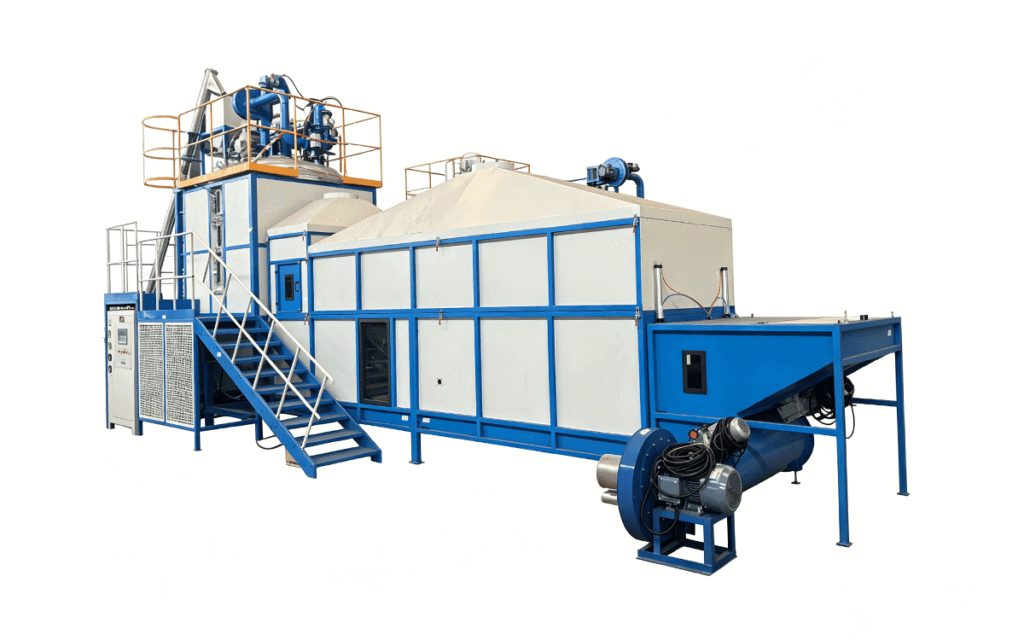
Service day on an eps pre-expander machine is meant to improve quality, yet the first block after it is often the most likely block of the week to fail. The reason is boring: a service resets mechanical reference points, and the process needs one full batch to prove it has settled back in. We keep seeing the same pattern on site, so here is the short checklist we hand to shift leaders.
Verify Before You Trust Block One
Do not push the first post-service batch straight into molding. Work through these points first:
- Draw a density sample and weigh it against the setpoint before committing the batch to the silo.
- Confirm steam pressure at the machine inlet, not just at the boiler header, and compare it with the pre-service log.
- Check that the weighing loop was calibrated as part of the service, and re-verify against an independent balance if anyone worked near the scale.
- Record silo entry time for the batch, and sample again after ageing before the beads reach the mold.
- Walk the steam and drain lines if any pipework was opened; a re-fitted joint can change steam condition quietly.
When the First Block Is Off-Density
Resist the reflex to turn the density setpoint the moment a block comes out heavy or light. After a service, the usual suspects sit upstream of the machine: a shifted sample point, wet steam from a disturbed line, or beads that entered the mold before ageing finished. Change one variable at a time and re-sample after each change, because two corrections made together will hide which one worked.
One batch of verification costs less than an hour. One wrong setpoint decision, made on a bad sample, can cost a full day of off-spec blocks and a difficult conversation with the customer who receives them.
If your line keeps needing a recovery batch after every service, it may be worth reviewing the service procedure itself rather than the operators. Contact our team and we will share the post-service checklist we use with customers.