
How Does EPS Recycling Work: From Offcut to Reusable Bead
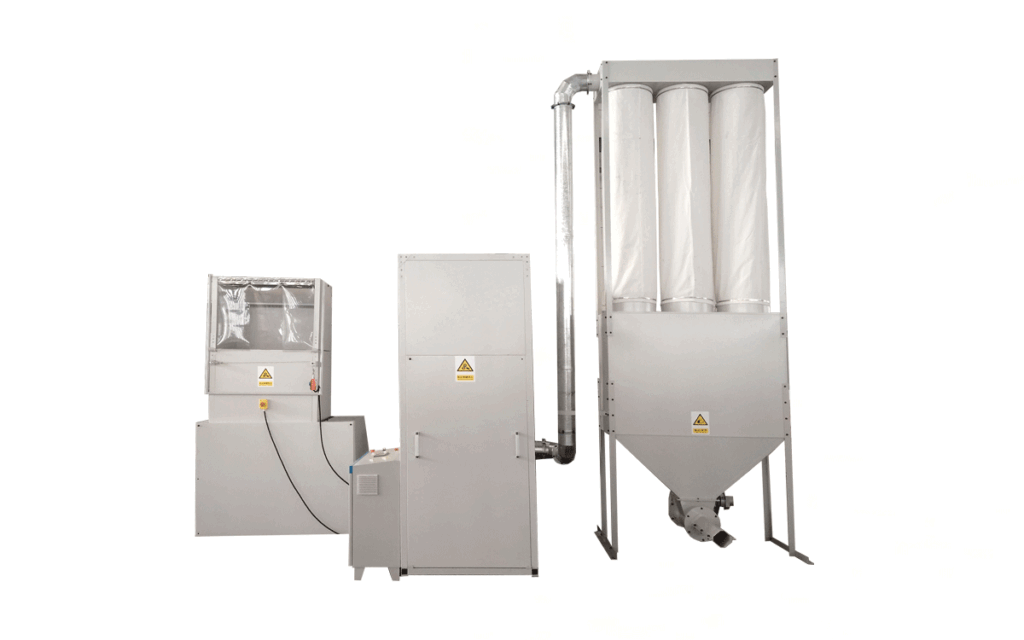
EPS looks like waste but is almost entirely reusable polymer. Every cutting table and shape line throws off offcuts, trim and rejected parts; instead of landfilling them, you can return that material to the bead stream and cut raw-material cost. This guide explains how EPS recycling actually works, the two recovery routes, and where the step fits your line so the foam loop closes instead of leaking to disposal and onto your cost sheet every month.
Why recycle EPS at all
Expanded polystyrene is more than 90% air, so loose scrap is bulky and expensive to ship to disposal. Compacting or densifying it shrinks the volume dramatically and turns trash into a saleable or reusable feedstock. For a busy plant, offcut recovery often pays for the equipment within a season through lower bead purchase and lower disposal cost, before you count the rebate on the ingot, which is ongoing income rather than a one-time saving.
Route 1 — densifier
A densifier melts trimmed EPS into a dense ingot that a reprocessor buys back. It suits steady, high volume where you want the smallest ship-out and the highest rebate. The ingot is pure polystyrene and re-enters the plastics stream cleanly, which is why recyclers pay for it rather than charge to take it, and why a densifier is the better long-term choice once your offcut tonnage is proven.
Route 2 — compactor / de-duster
A compactor squeezes light scrap into a manageable bale for collection. Lower capital and simpler to run than a densifier, it is the practical choice where volume is moderate or a local collector already takes baled foam. You trade some rebate for simplicity and a smaller footprint on the floor, which is the right call when you are not yet sure of your steady tonnage.
Where it sits on the line
Put a collection bin at the EPS cutting machine and at every shape station. Densify or compact on a schedule, then ship the ingot or bale. Many plants feed a small percentage of recovered bead back into block moulding, closing the foam loop on one floor and trimming the raw-material bill a little every month. The bin at the cutter is the single highest-leverage change; without it the offcuts scatter and never reach the recycler.
What you can and cannot do
| Material | Recoverable? | Route |
|---|---|---|
| Clean cutting offcuts | Yes | Densify or compact |
| Shape trim | Yes | Densify or compact |
| Food-soiled foam | No (contaminated) | Dispose per local rule |
| Fused block scrap | Yes (after grind) | Grind then densify |
Common mistakes
- Letting offcuts pile up. A bin at the cutter is cheaper than a cleanup crew later, and it keeps the floor safe and the material recoverable.
- Over-feeding recovered bead. A small percentage back into moulding is fine; too much changes fusion. Validate the blend on a sample block before committing plant-wide, because a bad blend spoils a whole shift.
- Buying a densifier before volume exists. A compactor is the lower-risk start if you are unsure of throughput, and you can add a densifier later when the tonnage justifies it.
- Treating recycling as charity. It is a line-economics decision — measured on bead saved and rebate earned, not on goodwill or a sustainability line in a report.
Putting a number on the saving
Recovery payback is not vague. Track three numbers for a month: offcut tonnes sent to disposal, bead tonnes purchased, and any ingot rebate earned. The disposal cost you stop paying is immediate, and the bead you stop buying is the larger line item across a year. A plant running a few tonnes of scrap a week typically sees the equipment recover inside a season, after which the rebate is ongoing income rather than a one-time saving. Most plants under-estimate the disposal line until they price it per tonne, then wonder why they shipped value to the tip for years. The mistake is treating recycling as a sustainability line when it is really a purchasing decision — measured, modelled and justified like any other capital on the floor.
Recovery also smooths supply. When bead lead times stretch, a densifier and a bin of clean offcuts give you a buffer you can blend back at a validated percentage, so a supplier delay does not stop the line. That resilience is hard to put on a spreadsheet but real on a bad week. Size the recovery step to your steady offcut tonnage, not to a peak you hit twice a year, and add capacity only when the bin proves you need it. Keep contaminated foam in a separate stream so the clean scrap keeps its value and the rebate keeps flowing instead of being dragged down by one dirty bin that a recycler rejects.
Frequently Asked Questions
Can recycled EPS go back into my blocks?
A modest percentage can, if the recovered bead is clean. Test the blend on a sample block before committing plant-wide, because recovered bead behaves a little differently in fusion and you want to learn that on one block, not a truckload.
Densifier or compactor?
Densifier for steady high volume and best rebate; compactor for lower capital and simpler operation. Match to your offcut tonnage and local collection options, not to which demo looked nicer.
Does recycling pay off?
For busy shape plants, lower bead purchase and disposal cost usually recovers the equipment within a season, and the ingot rebate is ongoing, so the payback keeps paying.
What about dirty offcuts?
Contaminated foam should not re-enter the bead stream. Keep a separate bin and follow local disposal rules; only clean scrap closes the loop and keeps the rebate flowing.
Will recovery change my block quality?
Only if you over-blend. A validated small percentage is invisible in the block; the risk is untested high blends, which is why the sample-block step matters.
Commissioning note
A week of baseline data before you buy anything saves a misstep. Weigh offcuts sent to disposal, bead purchased, and any rebate earned, then compare a compactor against a densifier on that same sheet. The number decides the right machine, not the demo, and it keeps the purchase tied to your real offcut tonnage instead of a guess.
Next step
If offcuts are piling up, we can size a recycling step for your line. Talk to our team about densifier versus compactor for your volume and local collectors.