
How to recycle styrofoam, reduce the environmental impact of harmful products, and avoid hidden costs when styrofoam is made

We all see white foam every day. It protects our new televisions. It keeps our morning coffee hot. It even keeps our houses warm during freezing winter snowstorms. But do you know the true price of this amazing material? Many people worry deeply about the damage it causes to our beautiful planet. In this comprehensive guide, we will explore the whole story from start to finish. We will look exactly at how to reuse it and save serious money in your own factory. Read on to learn the best ways to turn scrap into profit, upgrade your equipment, and run a highly successful manufacturing business without destroying the earth.
Content Content 1 How Do We Manufacture This Material and What Are the hidden costs of styrofoam? 2 How Does styrofoam production Affect the environmental Balance? 3 What Chemicals Are used in styrofoam and Are They Safe? 4 Why Is thermal Foam and packaging So Popular Everywhere? 5 How Much Waste Will end up in landfills Each Year? 6 Is It a loss-making proposition to recycle This Light Waste? 7 How Can We Build sustainable and eco-friendly Factories? 8 What Is the estimate for Global Polystyrene Trash Today? 9 How Does New Machinery Change manufacturing styrofoam? 10 What Is the Future of Polystyrene foam? 11 Important Things to Remember
How Do We Manufacture This Material and What Are the hidden costs of styrofoam?
Let us start right at the very beginning of the journey. styrofoam is a material that begins as tiny hard drops. They look almost like grains of white sugar. A factory worker uses hot steam to heat each tiny bead. This is the main part of the manufacturing process. The intense heat makes them swell up fast, growing up to forty times their original size!
But what is the true cost of styrofoam to make? Factory owners face many big bills every single month. There are huge energy drains in running older, broken machines. These old tools waste a massive amount of power. If you waste energy, your basic cost goes up quickly. When your energy bill goes up, the environmental costs rise too because you are burning more coal or gas. A good manufacturer uses brand new equipment to stop this terrible waste and keep profits high.
If you are setting up a new plant, you want a complete turnkey solution. You do not want the headache of buying a boiler from one place and an air compressor from another. A strong supplier helps you design the layout. They calculate exactly how much vapor you need per hour. This prevents you from buying a boiler that is too small, which would ruin your product quality. When the heat enters the chamber, it must be dry and hot. Wet vapor ruins the blocks. They come out heavy and wet, and you cannot sell them.
How Does styrofoam production Affect the environmental Balance?
When we manufacture these items, we must use special liquids. Inside the raw plastic, there is a blowing agent called pentane. As the beads heat up inside the big metal tanks, this agent turns into a powerful gas. The gas causes the beads to puff up like popcorn. But we must be very careful during this step. If the gas escapes into the open sky, it releases greenhouse gases into the air.
These bad gases cause carbon emissions. This creates dirty air and ruins the sky for everyone. Because of this dangerous pollution, our industry is changing rapidly. Modern machines are built tight to trap these gases safely inside. They stop the bad emission from hurting the earth. By upgrading your factory, you protect your local town and follow strict new government rules.
Many factory owners in places like Russia or Eastern Europe worry about changing regulations. Governments want cleaner factories. By installing closed-loop water systems and advanced vacuum cooling, you capture stray gases. The vacuum system is very important. It pulls the heat out of the mold quickly. This speeds up your cycle time. Instead of waiting ten minutes for a block to cool, you wait three minutes. Faster cycles mean you produce more blocks per shift. More blocks mean a faster return on your investment.
What Chemicals Are used in styrofoam and Are They Safe?
People often ask what is exactly inside these white blocks. It is made from two main chemicals: benzene and styrene. These are locked tight together in the factory using high heat and heavy pressure. Some people worry about occupational exposure in the plant. They wonder if the workers will get sick from breathing the air.
If a factory has bad air vents, workers face a potential health problem. In raw liquid form, the chemical styrene can be bad. Some doctors and experts say it is carcinogenic if you breathe a lot of it every day. We also know benzene is strong. But do not worry. By the time it becomes expanded polystyrene, it is totally safe to touch and use. Proper factory ventilation stops all danger. You can safely eat food from it without fear.
Safety is a big deal when running heavy industrial equipment. Your workers need to feel safe. Our machines use thick steel doors and heavy hydraulic locks. If a door opens by accident, hot vapor could hurt someone. We use smart PLC touch screens, like those from Siemens or Mitsubishi. The computer watches all the sensors. If something is wrong, the machine stops automatically. It flashes a warning light. This keeps your factory floor safe and calm.
Why Is thermal Foam and packaging So Popular Everywhere?
We use this plastic everywhere because it has an amazing light weight. It protects TVs, computers, and fragile glass during rough truck shipping. Many businesses rely on good packaging to stop their products from breaking. We also use single-use items every single morning. Think of styrofoam cups and styrofoam food containers.
These food service containers keep your hot soup warm and your hands cool. They are very cheap to buy. We also use thick, heavy blocks for houses. Good thermal insulation keeps homes warm in winter. Great building insulation has strong insulation properties. It stops the cold wind and saves families hundreds of dollars on home heating. In cold places like Eastern Europe, these blocks are absolutely necessary for survival.
Application
Density Required
Primary Benefit
Fish Boxes
20-25 g/l
Keeps fish cold, waterproof
TV Protectors
15-20 g/l
Absorbs shock from dropping
House Boards
12-18 g/l
Traps heat, cuts power bills
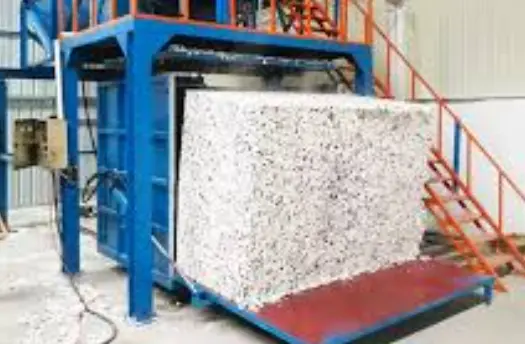
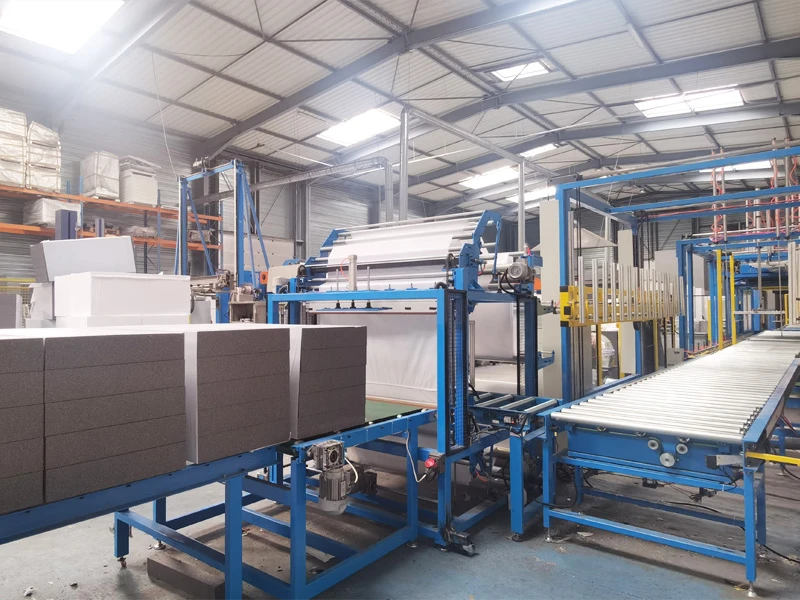
Think about the construction sector. Builders need huge boards to wrap around brick walls. These boards are cut from massive blocks. A standard block might be six meters long! To cut it, we use hot wires. The wires slice through the block like a hot knife through butter. The edges are perfectly straight. This means when the builder puts the boards on the wall, there are no gaps. No gaps mean no cold air gets in. This is why high-precision cutting machines are so important.
How Much Waste Will end up in landfills Each Year?
Sadly, a lot of this white plastic gets thrown in the trash after just one quick use. It will eventually end up in landfills. We throw away about 25 billion foam cups per year. The total volume of this garbage is huge, and it is growing every day.
according to the epa, the u.s throws out over 3 million tons of this plastic trash. That trash takes up a massive amount of space in the dirt because it is mostly trapped air. When styrofoam ends up in landfills, it stays in the landfill for a very long time. It does not break down nicely because it is not biodegradable. We must stop sending it to the dump. We need a better plan for our garbage.
The logistics of moving light materials are terrible. A truck full of empty boxes is mostly carrying air. You pay for the gas, the driver, and the truck, just to move air. This is why people toss it away locally. They do not want to pay to ship it back. But if you have a machine that can crush it flat, everything changes. You can fit fifty times more weight into the same truck. Suddenly, it becomes profitable to collect it from supermarkets and electronics stores.
Is It a loss-making proposition to recycle This Light Waste?
Many people think it is a loss-making proposition to sort and clean this trash. They worry about the high recycling costs of paying workers to pick it up. Finding a good local recycler can be hard in some small towns. The material is very light, so shipping it in big trucks is hard and wastes gas.
But you can easily recycle it if you have the right tools in your shop! When you melt it down, you recover the real value. The price per ton of clean recycled plastic is very good on the open market. You can turn an old foam container back into raw granulate. This makes it highly recyclable. You just need to squash it down first so it fits easily into a shipping truck.
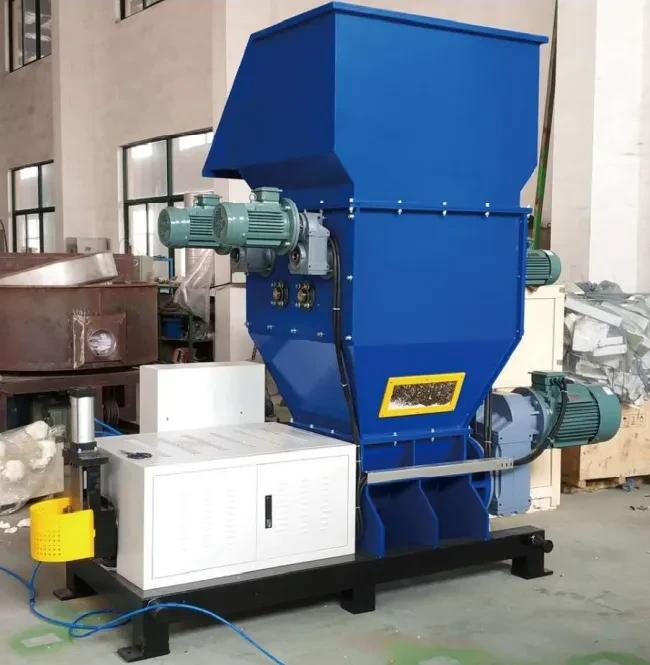
Let me explain how the melting works. You take the crushed pieces and feed them into a hopper. Inside, a big metal screw pushes the pieces forward. Heaters melt the plastic into a thick paste. It looks like hot toothpaste. The screw pushes this paste out through a small hole. It cools down and hardens into a heavy, solid log. This log is super dense. Now, you can stack these logs on a wooden pallet and sell them to a plastic factory.
How Can We Build sustainable and eco-friendly Factories?
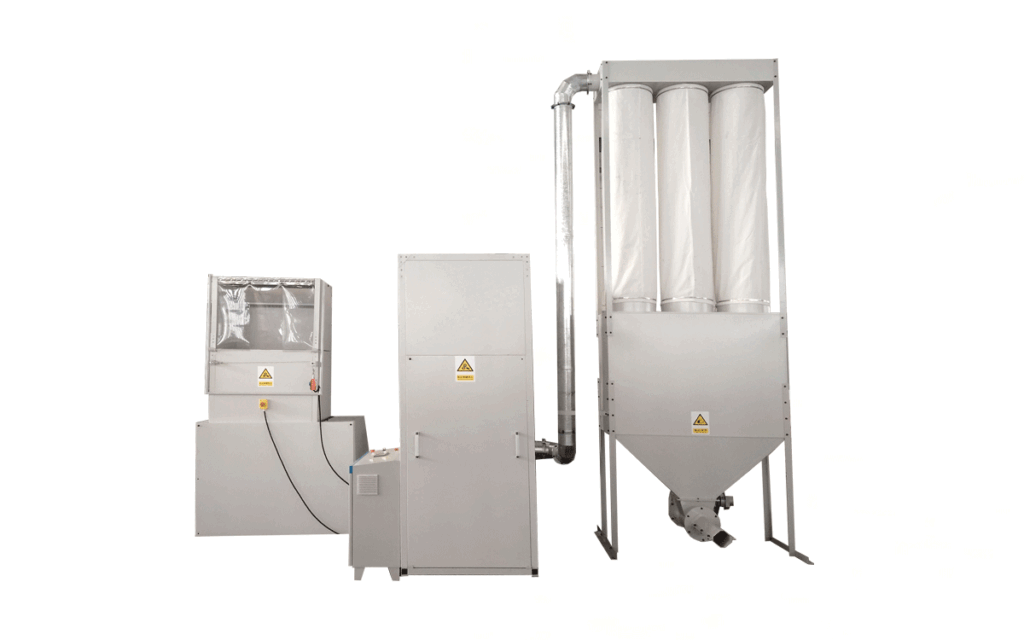
To be truly sustainable, your factory needs an alternative plan for daily trash. An eps waste crusher is a smart choice. Our factory provides the perfect machines to help you. You can use an EPS Recycling Machine EPS Crusher + De-duster+ Dust compactor to chop up the scrap into tiny pieces.
This makes the whole factory eco-friendly. We reduce the million tons of polystyrene dumped in the dirt. When a factory reuses scrap, they save money on buying new materials. They also stop the gases that evaporate from old trash. It is a win for your wallet and a win for nature.
When you set up a crushing line, dust is a big enemy. If you just smash the plastic, tiny pieces fly everywhere. It gets into the workers’ eyes. It gets into the machine motors. That is why our crushing line includes a de-duster. The de-duster acts like a giant vacuum cleaner. It sucks away the tiny floating dust particles. It leaves only the clean, crushed pieces ready for the next step. This keeps your factory floor spotless.
What Is the estimate for Global Polystyrene Trash Today?
Experts give a very scary global estimate. Around the world, we create over 14 million tons of this plastic waste. That is roughly 7 billion annually in lost money that we just bury in the ground!
A huge part of this is just million tons of simple boxes used for shipping fish or vegetables. Sadly, some of it blows out of the garbage trucks and into the river. It clogs the waterway and hurts the fish. We must clean up the mess associated with styrofoam. By using smart machines to grab the tons of styrofoam scrap, we save the water and the land for our children.
“The best way to clean our oceans is to make recycling profitable. When trash becomes money, the trash disappears.” –Industry Recycling Expert
Imagine the ocean. Fish and birds mistake floating white pieces for food. This is a tragedy. We have the technology to stop this right now. Every supermarket that receives fish in white boxes should have a small crusher in the back room. Instead of tossing the boxes in the dumpster, the grocery workers crush them. Then, a collection truck picks up the heavy logs once a month. This simple change would stop thousands of boxes from blowing away.
How Does New Machinery Change manufacturing styrofoam?
We build the strong machines that fix this problem forever. When you need to process a ton of polystyrene, our tools work incredibly fast. We make the best EPS Hot Melt Machine to shrink the big boxes into heavy, solid bricks.
It easily handles the lightweight pieces that fly around. Our systems provide a strong structural frame made of thick steel. They do not break down easily in the production process, even if you run them all night long.
Using these tools, you turn trash into high-quality building blocks. The eps foam gets a second life. You avoid making it too costly to run your business. You cut down on the general expense and become the top supplier in your city. When you buy heavy machinery, you want it to last twenty years. You do not want cheap parts that break after one month. We use heavy-duty motors and thick steel frames. We know that in a busy factory, forklifts bump into things. Workers are rough with the equipment. Our machines are built like tanks. We also send our own engineers to your country to install it. They stay with you, test everything, and teach your workers how to push the buttons.
What Is the Future of Polystyrene foam?
The future is very bright if we work smart and upgrade our shops. The rules are changing. We know the laws are getting stricter everywhere in the world.
When we recycle styrofoam, we protect the earth. We also make a good profit. Every ton of recycled polystyrene saves precious oil from being pumped out of the ground.
Our foam making lines are the best in the entire market. They use less carbon power and cut your monthly bills in half. We offer the Horizontal EPS Block Machine for big insulation jobs. Check out our EPS Pre-expander machine (Basic Type) to start your line right. We believe this plastic will always be needed. We just have to handle it the right way.
To sum it all up, the secret to success is efficiency. You buy the raw beads at a good price. You expand them using the exact right amount of vapor. You mold them perfectly without any wet spots. You cut them cleanly. And finally, you take every single scrap piece, crush it, and reuse it. When you do all these steps perfectly, your profit margins will be huge. You will beat all your competitors.
Important Things to Remember
Stop the Waste: Energy leaks in your factory drive up your monthly bills and hurt the earth. Upgrade to modern, tight machinery.
Capture the Gas: Modern equipment traps blowing agents safely, keeping your factory compliant with strict clean air laws.
Recycling Pays: Crushing and melting your scrap turns useless trash into valuable, heavy logs you can sell or reuse.
Invest in Strength: Always buy heavy-duty steel machines with reliable PLC controls to guarantee decades of safe, fast production.
Close the Loop: The most successful businesses control every step, from raw material expansion to final scrap recovery.
Post time: 04-16-2026