
If you are in the foam business, you know that the quality of your final product starts at the very beginning. The expansion phase is the heartbeat of your production line. Whether you are making insulation blocks for construction or delicate packaging for electronics, the EPS pre-expander machine determines the texture, strength, and cost of your output. This article is worth reading because it cuts through the technical jargon. We will explore exactly how these machines work, the differences between continuous and batch systems, and how to choose the right equipment to get the density and efficiency your business needs to thrive.
What is the Function of EPS Pre-Expander Machine in the Production Line?
The function of eps pre-expansion is essentially about transformation. You start with raw eps beads, which look like grains of sugar or salt. These are dense and hard. To turn them into the fluffy, white foam we all know, we need to expand them. This is where the EPS pre-expander comes into play. It is the first machine in the workflow and arguably the most important. Inside the machine, steam heats the beads. This causes the blowing agent (usually pentane) inside the polystyrene to expand rapidly.
Think of it like making popcorn. You apply heat, and the kernel explodes into a larger size. In an EPS machine, we control this "explosion" precisely. The machine expands the EPS raw material to anywhere from 40 to 50 times its original size. If this step goes wrong, your blocks will shrink, or your shape molding will fail. A high-quality expander machine ensures that every single bead expands uniformly. This consistency is the secret to producing EPS foam that is strong yet lightweight.
How Does an EPS Continuous Pre-Expander Machine Work?
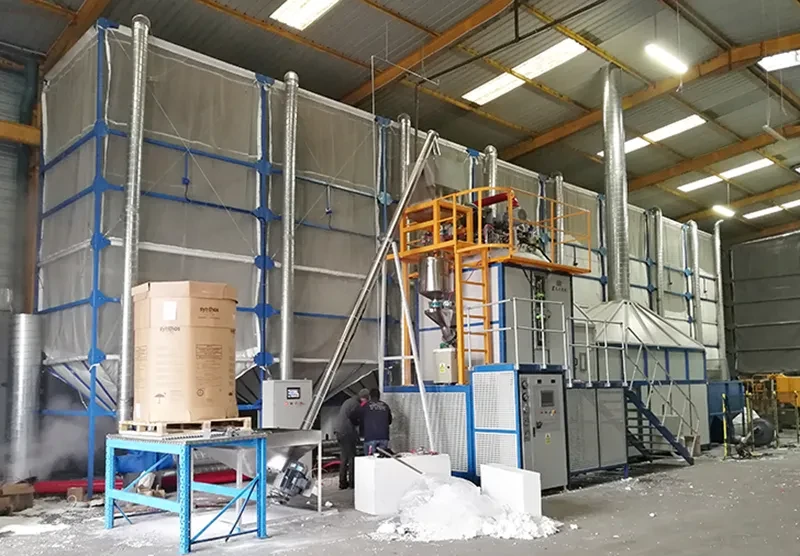
An EPS continuous pre-expander machine is built for speed and volume. As the name suggests, the process does not stop. Raw material enters from one end, and expanded beads flow out the other in a steady stream. This type of machine is fantastic for standard tasks where extreme precision in density is less critical, or when you are aiming for lower densities. The machine continuous operation relies on a mechanical shaft inside the chamber to push the beads forward as they expand.
The EPS continuous process is very popular for producing low-density packaging materials. Because the beads move continuously through the steam chamber, the throughput is very high. It is a workhorse. However, controlling the exact density can be a bit trickier compared to batch systems. You adjust the density by changing the speed of the feeding and the pressure of the steam. For many factories, the continuous pre-expander machine offers the perfect balance between high output and acceptable quality for general applications.
What Makes the Batch EPS Pre-Expander Machine Ideal for High Density?
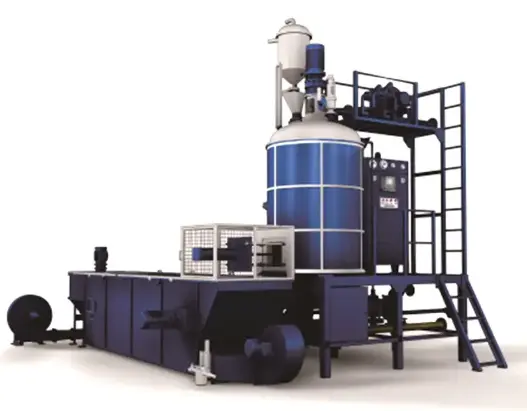
When you need precision, you turn to a batch EPS pre-expander machine. Unlike the continuous version, this machine processes the beads in specific groups, or "batches." It fills the chamber, expands the beads, and then empties the chamber before starting again. This allows for incredibly precise control over the temperature and time. If you need high density EPS for heavy-duty insulation or automotive parts, the batch pre-expander is your best friend.
Modern batch pre-expander machine models use a PLC (Programmable Logic Controller) and a touch screen. This allows the operator to set exact parameters. The machine weighs the raw material precisely before it enters the chamber. This ensures that every batch has the exact same weight and volume. Consequently, you get consistent bead expansion every single time. For markets that demand high standards, such as construction insulation in Europe or North America, batch EPS technology is often the mandatory choice.
What are the Critical Components of EPS Pre-Expander Machines?
Understanding the components of eps machinery helps you maintain them better. First, you have the feeding system. This delivers the raw polystyrene beads into the machine. In a batch pre-expander, this often includes a precision weighing scale. Next is the steam chamber. This is the vessel where the magic happens. It is usually made of stainless steel to resist corrosion and handle high temperatures.
Inside the chamber, there is an agitator. This rotating arm prevents the beads from sticking together into a giant lump. After expansion, the beads are wet and soft. They pass through a fluidized bed dryer. This component blows warm air through the beads to dry them and stabilize their shape. Finally, a screw conveyor transports the dried beads to the aging silos. Every part, from the valve that controls steam to the depressurization system, plays a vital role in ensuring the machine runs smoothly.
Why is Density Control Crucial in EPS Foam Production?
Density is the single most important metric in the EPS world. It defines the weight, insulation value, and strength of the final product. Density EPS is measured in kilograms per cubic meter. High density foam is strong and heavy, used for floor insulation or helmets. Low density foam is light and cheap, used for disposable cups or packing peanuts. The EPS pre expander machine is the tool that sets this value.
If your machine fluctuates, your product quality fluctuates. Imagine selling insulation boards that are supposed to be 20 kg/m³, but your machine produces some at 18 kg/m³ and others at 22 kg/m³. Your customers will complain. The lighter boards won’t insulate well, and the heavier boards cost you more in raw material. Achieving precise density control saves you money. It ensures you use exactly the right amount of material—no more, no less. This is why investing in a quality expander machine is an investment in your profit margin.
What are the Benefits of EPS Pre-Expander Machines for Your Business?
The benefits of eps pre-expanders go beyond just making beads bigger. First, modern machines offer incredible energy efficiency. They use less steam and electricity than older models. This lowers your energy consumption and operational costs. Second, automation reduces labor. A full automatic machine requires very little human intervention, reducing the chance of error.
Third, these machines offer flexibility. A good EPS machine can handle a wide range of raw materials. Whether you are using standard beads or flame-retardant beads, the machine adapts. Finally, high-quality pre-expanders ensure products are of high quality. When your beads are uniform, your molding cycle is faster, and your final blocks look better. Reliability in the pre-expansion stage leads to fewer rejections and less waste in the downstream processes.
What are the Main Applications of EPS Products?
The applications of eps are vast and growing. The most common use is in packaging. Think of the white foam that protects your TV or refrigerator during shipping. These products need to be light and shock-absorbing. EPS foam beads are also used in bean bags. In the construction industry, expanded polystyrene is a superstar. It is used for thermal insulation in walls, roofs, and floors.
High density EPS is used in civil engineering. It is used as a lightweight fill material for building roads and bridges. It is also used to make beehives, fish boxes, and even safety helmets for cyclists. The versatility of EPS foam comes from the ability to change its density. Since the pre-expander machine controls density, it unlocks all these different markets for your business. Whether you are selling to builders or electronics companies, the pre-expander is your key to the market.
Continuous EPS vs. Batch EPS: Which One Should You Choose?
Deciding between continuous eps and batch eps depends on your goals. If you are producing simple packaging items like fruit boxes or fish coolers, a continuous pre-expander machine is often the smart choice. It is generally cheaper to buy and simpler to operate. It gives you high volume output with decent quality. It is a cost-effective solution for products where slight density variations are acceptable.
However, if you are targeting the high-end market, go with a batch eps pre-expander machine. If you produce insulation blocks that must meet strict building codes, you need the accuracy of a batch system. Batch pre-expander machines allow for easier density adjustment during operation. If you need to switch often between different densities, the batch system is more responsive. While the initial investment is higher, the savings in raw material through precise control usually pays for the machine over time.
How to Achieve First and Second Expansion for Lighter Beads?
Sometimes, you need to get the density very low—below 12 kg/m³. To do this, one pass through the machine is not enough. You need first and second expansion. The beads go through the pre-expansion process once, are allowed to rest and stabilize, and then are fed back into the machine for a second time. This is called the second expansion.
A specialized pre-expander with first and second expansion capabilities is required for this. The first pass expands the bead to a certain point. After aging, the bead’s internal pressure stabilizes. The second pass heats it again, stretching the walls of the bead even further. This allows you to produce ultra-light beads for specific packaging needs or loose-fill applications. Not all machines can do this effectively. You need a machine designed to handle the delicate, already-expanded beads without crushing them.
Why Choose Experienced Manufacturers and Supplier in China?
China has become the global hub for machinery manufacturing. Finding reliable manufacturers and suppliers in china can give you a competitive edge. China EPS machinery has improved drastically in quality over the last decade, often rivaling European brands but at a much more attractive price point. You can find equipment that offers high quality and low price.
However, you must be careful. You want a machine manufacturer who is an actual factory, not just a trading company. Look for expander machine manufacturers who have multiple production lines and can show you their machines in action. A professional supplier will offer spare parts, technical support, and installation services. As one of the largest eps machine hubs, China offers variety. Whether you need a simple beads making machine or a complex EPS production line, partnering with a reputable Chinese supplier like Longwell ensures you get your desired eps equipment with the right balance of cost and performance.
Summary
- The EPS pre-expander machine transforms raw beads into foam, determining the quality of your final product.
- Continuous pre-expander machine models are great for speed and high-volume, low-density production.
- Batch pre-expander machine models offer precise density control through advanced PLC systems, ideal for high density applications.
- Key components include the steam chamber, weighing system, and fluidized bed dryer.
- Density control is crucial for cost savings and meeting customer standards in insulation and packaging.
- First and second expansion processes allow for the creation of ultra-light EPS foam.
- Choosing the right manufacturers and supplier in China ensures you get reliable support and efficient machinery.
Post time: 12-23-2025