
Hello! My name is Allen. I have spent many years in the factory, working day in and day out with EPS and EPP foam machinery. I have met many business owners like you, perhaps at a trade show or through an email enquiry. I know the challenges you face. You want reliable equipment, you want a fair price, and you hate it when production stops because a machine breaks down.
Today, I want to talk about the most critical machine in the entire EPS production line: the EPS pre-expander machine. If you are Mark, running a busy factory in the USA, you know that quality starts here. If your bead expansion is wrong, your final product will be wrong. It is that simple.
In this article, I will explain everything you need to know about this machine. We will look at how it works, the difference between batch and continuous types, and how to get the perfect density. I will write this simply and clearly, so we can focus on what matters: growing your business.
What Exactly is an EPS Pre-expander Machine and Why is it Essential?
The EPS pre-expander machine is the starting point for all expanded polystyrene products. You cannot make a coffee cup, a helmet, or an insulation block without it. Think of raw EPS material like popcorn kernels. They are small, hard, and dense. Before you can eat popcorn, you must pop it. The pre-expander does exactly this for EPS. It takes the hard, raw resin and puffs it up into light, airy foam beads.
This machine is essential because it determines the quality of your final foam product. If the pre-expander does a bad job, the beads might be too heavy or too light. They might be wet or clumped together. This leads to poor molding later on. A high-quality eps pre-expander gives you uniform beads. Uniform beads mean strong, smooth blocks and shapes.
For a factory owner, this piece of equipment controls your costs. Raw material is expensive. If you can expand the beads to the exact density you need without waste, you save money. The machine allows you to turn a small amount of raw material into a large volume of product. It is the engine that drives your profit.
How Does the Expansion Process Actually Work Inside the Chamber?
The expansion process is fascinating. It relies on a simple ingredient: steam. The raw polystyrene beads contain a gas called pentane. When you put these beads inside the pre-expander machine and apply steam, two things happen. First, the heat softens the hard plastic shell of the bead. Second, the heat causes the pentane gas inside to expand.
Because the shell is soft, the gas pushes it outward. The bead grows in size. It can expand to 40 or even 50 times its original size! This is causing them to expand into the white, fluffy balls we recognize. The machine has a chamber where this happens. Inside, an agitator (a stirring rod) spins around. This ensures the steam touches every bead evenly so they don’t stick together.
You must control the temperature and pressure very carefully. If the heat is too low, the beads won’t expand enough. If the heat is too high, the beads might shrink or melt. A modern eps pre-expander machine uses sensors to monitor this. It adjusts the steam valve automatically to keep the environment inside the chamber perfect. This creates high-quality pre-expanded beads ready for the next step.
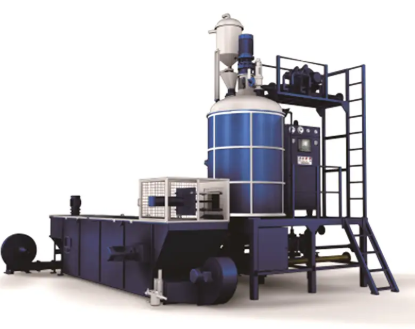
Batch Pre-expander Machine vs. Continuous Expander: Which Should You Choose?
When you look for an expander, you will see two main types: the batch pre-expander machine and the continuous pre-expander. Choosing the right one depends on what you are making.
The continuous machine is all about speed. You feed raw material in one end, and expanded beads come out the other end without stopping. It is simple and efficient. However, it is harder to get a very precise density. It is often suitable for packaging products where a little variation is okay.
The batch machine works differently. It processes the material one group (or batch) at a time. It fills the chamber, expands it, empties it, and then starts again. This method allows for precise control. You can decide exactly how heavy or light you want the beads to be. For high-quality construction blocks or complex mold shapes, the eps batch pre-expander is the best choice. It ensures every single bead is the same. Most modern factories prefer the batch type because quality is so important in today’s market.
How Do You Achieve the Perfect Density with an EPS Pre-expander?
Density is the most important word in the EPS world. It means how heavy the foam is for its size. A high density is strong and hard. A low density is light and soft. Your customer might order insulation boards with a density of 15 kg/m³. You must set your machine to hit that number exactly.
To control density, you adjust the weight of the raw material you put in and the volume it expands to. The batch pre-expander makes this easy. You weigh the input material accurately. Then, you control how long it stays in the steam chamber. The longer it steams, the bigger it gets, and the lighter (lower density) it becomes.
Sometimes, you need a very low density, like 8 kg/m³. To reach this, you might need a "second expansion." You expand the beads once, let them rest, and then put them back into the pre-expander to expand them again. This machinery gives you the flexibility to meet the requirements of different applications. Accurate density control saves you money because you don’t use more raw material than necessary.
Why is the Fluidized Bed Dryer a Critical Part of the Equipment?
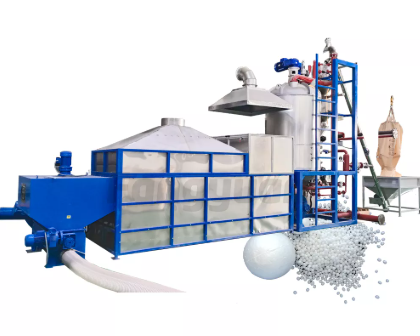
After the beads leave the expansion chamber, they are wet and soft. They are hot from the steam. You cannot use them immediately. They need to dry and stabilize. This is where the fluidized bed dryer comes in. It is usually attached directly to the eps pre-expander.
The fluidized bed dryer is a large, long table with holes in the bottom. A powerful fan blows warm air up through these holes. The wet beads fall onto this bed. The air blows them up, making them float or "fluidize." They behave like a liquid. This gentle movement stops them from sticking together into big lumps.
As they float down the bed, the warm air dries the moisture on the surface of the beads. This process also helps to cool them down. This step is called stabilization. Without a good dryer, your beads would be a soggy mess. They would collapse when you tried to mold them. The dryer ensures the pre-expanded beads are dry, free-flowing, and strong enough to be stored in the silos.
How Does the Electronic Weighing System Ensure Consistency?
In the past, workers had to measure raw material by hand. This was slow and often inaccurate. Today, a modern eps pre-expander machine uses an electronic weighing system. This system is the brain that ensures every batch is identical.
Here is how it works. Above the machine, there is a hopper holding the raw EPS beads. When a new cycle starts, a screw conveyor moves the beads into a weighing bucket. Electronic sensors measure the weight instantly. If you set the machine to take 20kg, it will stop feeding at exactly 20kg.
This precision is vital. If one batch has 21kg and the next has 19kg, your density will change. Your final product will be inconsistent. Mark, my customer, hates inconsistency. It causes problems with his clients. The electronic system removes human error. It guarantees that the quantity of material entering the expansion process is perfect every single time. It helps you run a professional operation.
What Are the Key Applications for Pre-expanded Beads in Industry?
Once the beads are expanded and dried, where do they go? The application of these beads is vast. The most common use is packaging. Manufacturers take the loose beads and inject them into a mold to make shape-molded parts. These protect TVs, computers, and refrigerators during shipping. The lightweight beads absorb shock perfectly.
Another massive sector is construction. The beads are molded into huge blocks using an EPS Block Moulding Machine. These blocks are then cut into sheets for insulation. They keep houses warm in winter and cool in summer. Pre-expanded beads are also used to make Insulated Concrete Forms (ICF) for building strong, energy-efficient walls.
Some niche markets use the beads loose. Bean bag chairs are filled with these soft polystyrene beads. They are also used as a lightweight aggregate in concrete to make it lighter. The eps pre-expander is the versatile tool that supplies all these industries. By changing the settings, you can produce the correct bead for any of these uses.
How Does Automation and PLC Control Simplify the Operation?
Modern manufacturing is all about automation. A good eps pre-expander machine is fully automatic. It uses a PLC (Programmable Logic Controller) and a touch screen interface. This makes the machine very easy to operate. You do not need to be a scientist to run it.
The operator simply types the parameter settings into the screen. You set the weight, the steam time, and the temperature. The PLC takes over. It opens the raw material valve. It turns on the steam. It monitors the pressure. It opens the discharge door when the batch is done.
This precise control improves efficiency. The machine runs continuously without stopping. It also makes troubleshooting easy. If a valve gets stuck, the screen will tell you exactly where the problem is. This helps you fix issues fast. Automation allows one worker to supervise multiple machines, which lowers your labor costs. It makes your factory smarter.
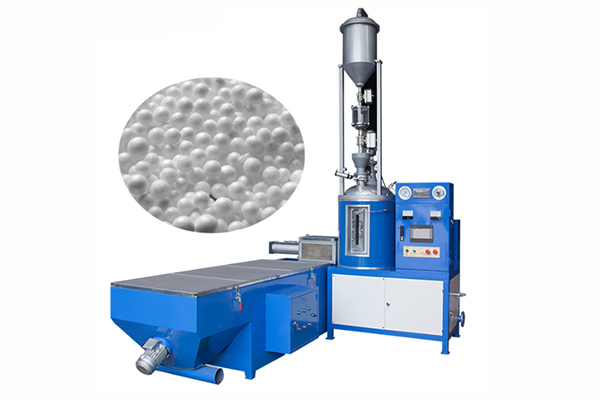
What Maintenance is Required to Keep Your Machinery Running Smoothly?
Like any car, your machinery needs care to keep running. A well-maintained machine lasts for many years. The most important maintenance task for a pre-expander is cleaning. Steam can leave residues, and bits of melted plastic can stick to the walls.
You should regularly check the steam chamber. The walls are usually made of stainless steel to resist rust, but they still need to be wiped down. You must also check the vents and the fluidized bed dryer holes. If these get blocked, the air cannot flow, and the beads will not dry properly.
Check the gaskets and seals around the door. If steam leaks out, you lose energy and pressure control. This increases your steam consumption. Lubricate the moving parts, like the agitator shaft. A strict maintenance schedule prevents big breakdowns. It ensures your production of expanded polystyrene never stops unexpectedly. It protects your investment.
How Do You Select the Right Manufacturer for Your EPS Pre-expander?
This is the most critical decision for a business owner. There are many factories in the world. How do you select the best one? You need a partner, not just a seller. You need a manufacturer who understands your business model.
Look for experience. A company that has built pre-expanders for 20 years knows more than a new company. Look for high-quality components. Does the machine use famous brands for valves and PLC controls? If a part breaks in the USA, you want to be able to buy a replacement locally.
Ask about service. If you have a problem, will they answer the phone? Do they speak English well? Can they send an engineer to help you install the machine? At my factory, we prioritize these things. We know that if you succeed, we succeed. We provide equipment used in factories all over the world. We offer support for the entire EPS Shape Moulding Machine line as well. Choose a supplier who cares about your long-term success.
Key Takeaways
The EPS pre-expander machine is the heart of your foam factory. Understanding how it works helps you make better decisions.
- Foundation of Quality: This machine determines the density and quality of your final product.
- Batch vs. Continuous: Choose batch for precision and high quality; choose continuous for high speed and lower density requirements.
- Steam is Key: The expansion process relies on precise steam and temperature control to puff up the beads.
- Automation Wins: Use PLC controlled machines to reduce human error and save on labor costs.
- Dry Your Beads: The fluidized bed dryer is essential for stabilizing the beads before molding.
- Density Control: Accurate weighing and expansion times save you money on raw material costs.
- Regular Maintenance: Keep the chamber and vents clean to ensure consistent performance and low energy consumption.
- Partner Wisely: Buy from a manufacturer who uses quality parts and offers reliable after-sales support.
Post time: 12-17-2025