
Anyone who has ever tried to slice through a thick block of styrofoam knows the struggle. You start with a simple plan to resize a sheet, but you end up with a jagged edge, a pile of static-charged white beads clinging to your clothes, and a workspace that looks like a snowstorm hit it. Whether you are working with white expanded polystyrene for packaging or dense pink insulation for construction, finding the right way to cut is essential. This article explores the tools and techniques—from simple household hacks to industrial solutions—that will help you cut styrofoam cleanly and efficiently.
Why is Cutting Thick Styrofoam Such a Messy Challenge?
The main issue with styrofoam is its structure. It is made of thousands of tiny beads fused together. When you use a dull tool or the wrong method, you aren’t actually cutting; you are tearing these beads apart. This results in a rough edge and releases those annoying loose beads that create a big mess. The thickness of the material adds another layer of difficulty.
When trying to cut a thick block, keeping the blade perpendicular to the surface is hard. If your hand wobbles even a little, the exit cut will be misaligned with the entry cut. This is why standard scissors or box cutters fail on anything thicker than an inch. The friction of the blade against the foam creates resistance, causing the material to bunch up and snap. To cut styrofoam without losing your mind, you need to reduce friction and use a tool that slices rather than tears.
What is the Absolute Best Way to Cut Thick Styrofoam?
If you are looking for the best way to cut thick foam with a smooth finish, the answer is heat. A thermal cutting method is superior to any mechanical saw or knife. The heat doesn’t just separate the material; it vaporizes it.
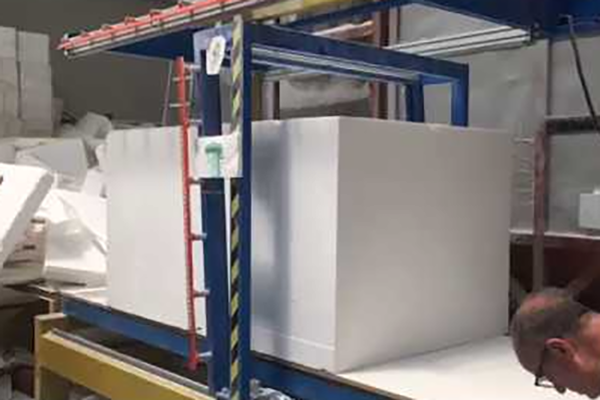
Using a hot wire cutter or a hot knife seals the edge as it passes through. This means there is zero dust, no loose beads, and the cut is perfectly smooth. For straight cuts through thick sheets, a hot wire table or a handheld hot wire bow is the best bet. The wire melts a tiny channel through the plastic, allowing the cutter to glide through without physical resistance. It feels like slicing through warm butter. If you want professional results, heat is the right tool for the job.
Can You Effectively Use a Knife to Cut Styrofoam?
Yes, you can use a knife, but you have to be smart about it. A standard straight blade, like a utility knife, works well for thin sheets (under 1 inch). However, for thick foam, the friction becomes a problem. The blade gets stuck.
A better option for manual cutting is a long serrated knife. Think of a bread knife. The serrated teeth act like a mini saw. When you use a serrated knife, do not just push down. You must use a gentle back-and-forth sawing motion. Let the sharp teeth do the work.
Here is a trick: coat the blade with candle wax before you start. This acts as a lubricant and helps the knife slide through the foam easier. Another old hack is to heat the knife blade over a flame (safely!) before cutting. This turns your kitchen tool into a temporary hot knife, helping it melt through the dense spots. However, be careful, as the metal will cool down quickly inside the foam.
How Does a Hot Wire Cutter Work for Precision Cuts?
A hot wire cutter is the gold standard for cutting methods. It uses a thin wire, typically nichrome wire, stretched tight between two points. When electricity flows through the wire via a transformer, it heats up rapidly.
When you push the styrofoam against the wire, the wire melts the foam just before it physically touches it. There is no force involved. You simply apply steady pressure and let the heat do the work. If you force it, the wire will bow, and your cut will be curved.
For complex shapes, a hot wire allows you to turn and scroll like a jigsaw but without the vibration. You can buy handheld units, but for a way to cut thick styrofoam straight, a table setup with a vertical wire is ideal. The nichrome element stays hot consistently, allowing you to slice through inches of insulation or white foam in seconds. It leaves a hard, sealed skin on the edge which is great for painting later.
Is an Electric Carving Knife a Viable Tool for Thick Foam?
Believe it or not, the electric carving knife you use for Thanksgiving turkey is an excellent tool for this. It is one of the most popular suggestions on any DIY forum. The reason it works so well is the dual blades.
An electric carving knife has two serrated blades that oscillate back and forth at high speed. This rapid movement cuts the foam beads before they have a chance to grab the blade or tear. It allows you to cut thick styrofoam with very little effort.
While it might not leave the glass-smooth surface of a hot wire, it is much cleaner than a hand saw. It is perfect for rough shaping or cutting large blocks down to size. The cleanup is manageable, and the tool is cheap and easy to find. Just keep your hand steady and move the knife slowly through the material.
Can You Use Standard Power Saws Like a Band Saw?
If you have a woodshop, you might be tempted to use your table saw, band saw, or scroll saw. These can work, but they create a messy environment. A table saw spins so fast that it tears the polystyrene and flings static-charged dust everywhere. It can be a nightmare to clean up.
However, a band saw is actually quite decent for thick foam if you use the right blade. You want a blade with very fine teeth (high TPI) or even a knife-edge blade designed for soft materials. The vertical motion of the band saw helps hold the foam down against the table.
When using a saw, feed the material slowly. If you push too fast, the foam will compress and then expand after the cut, leaving a rough surface. A circular saw is generally a bad idea for thick foam because the friction creates heat, which creates a melted, gummy residue on the blade. If you must use a power saw, be prepared for the cleanup.
What is the Best Trick to Minimize Dust and Cleanup?
Cutting styrofoam mechanically (with a saw or knife) inevitably produces waste. The static electricity makes the little beads stick to your hands, clothes, and walls. To minimize this, here is a trick: use a vacuum.
Position a shop vacuum hose right next to the cutter or blade. Catching the dust at the source is much easier than trying to sweep it up later. Another method is to use a spray bottle to lightly mist the foam with water before cutting. This reduces static and keeps the dust from flying, though it makes the foam wet.
Always lay down a drop cloth before you start. Styrofoam bits are notoriously hard to get out of carpets. If you are doing a lot of cutting, wear an apron made of synthetic material, as the beads slide off it easier than cotton. And remember, the best way to cut thick foam without mess is to avoid mechanical cutting altogether and use heat.
How Do Professionals Handle Cutting Large Volumes of Foam?
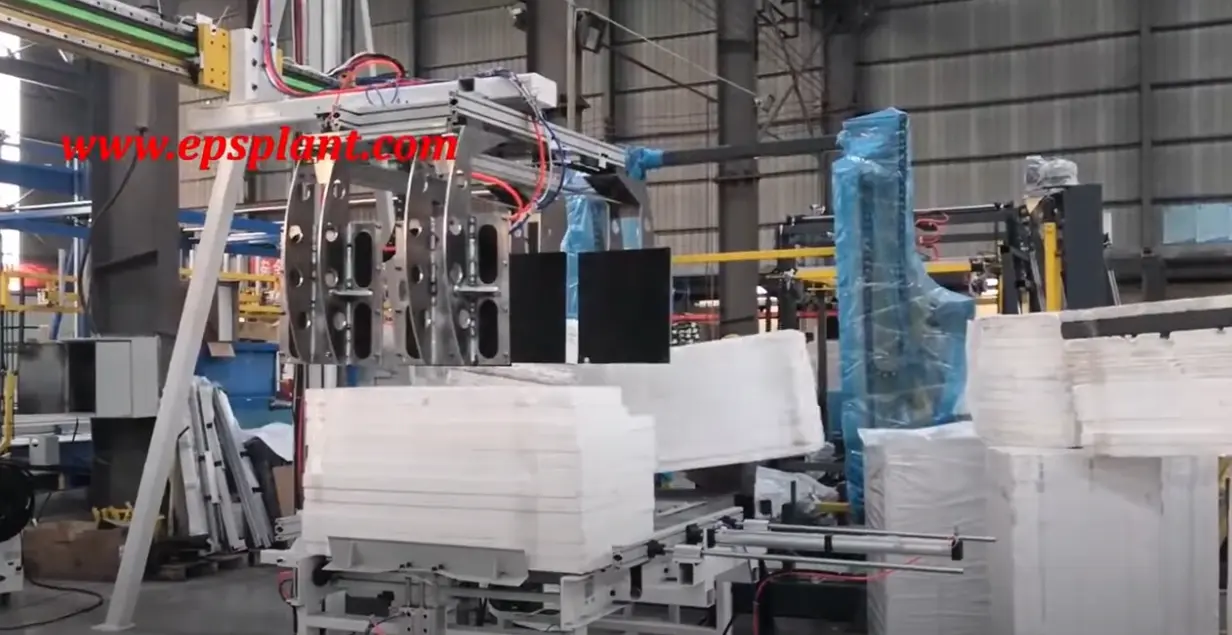
In a factory setting, we don’t use kitchen knives. We use automated machinery designed for speed and precision. A professional EPS Cutting Machine uses multiple hot wires simultaneously.
These machines can take a massive block of expanded polystyrene and slice it into thin sheets or complex profiles in minutes. The wires are computer-controlled (CNC), allowing for incredibly intricate designs that no human hand could match. The setup involves rigid frames to hold the wires perfectly straight, ensuring that every sheet has uniform thickness.
For really dense or rigid foams, we might use a CNC router, but for standard styrofoam, the hot wire cutter is the industry standard. It is fast, clean, and efficient. We also utilize EPS Recycling Machines to immediately process any scrap, keeping the factory floor clean and reducing waste.
What Safety Steps Must You Prioritize When Heating Foam?
When you cut styrofoam with heat, you are melting plastic. This releases fumes. While polystyrene fumes are not as instantly toxic as burning PVC, they are still not good for you. You must prioritize ventilation.
Always work in a well-ventilated area, like a garage with the door open, or use a fan to blow the fume away from your face. If you are doing a lot of hot cutting, wear a respirator rated for organic vapors.
Also, remember that styrofoam is flammable. When using a hot knife or hot wire, never leave the heated tool resting on the foam. It can ignite. Keep a fire extinguisher or a wet rag nearby just in case. The heat source should only be active when you are actually making a cut.
Summary
Cutting thick styrofoam doesn’t have to be a frustration. By choosing the right tool for the job, you can get professional-looking results.
- For clean, dust-free cuts: The best way to cut thick foam is using a hot wire cutter or hot knife. It melts through the material, leaving a smooth, sealed edge.
- For rough cuts without heat: An electric carving knife works wonders on thick blocks.
- For manual cutting: Use a serrated knife and apply a waxing trick to the blade. Use a sawing motion.
- For power saws: A band saw with a fine blade is acceptable, but be ready for dust. Avoid circular saws.
- Cleanup: Use a vacuum to catch beads immediately and reduce static.
Whether you are building a movie prop, insulating a wall, or running a production line with an EPS Block Moulding Machine, respecting the material properties of styrofoam is key. Don’t force it. Let the tool do the work, and you’ll get a perfect cut every time.
Post time: 01-20-2026