
What Is Lost-Foam Casting and How EPS Patterns Make It Work
What lost-foam casting is
Lost-foam casting (also called evaporative-pattern casting) makes a metal part from a consumable EPS foam pattern. The pattern is placed in sand, molten metal is poured in, and the foam vaporises — leaving a cavity the metal fills exactly. There is no parting line and no core to remove, which is why complex shapes come out clean in one pour.
Why EPS foam is the pattern material
Expanded polystyrene is ideal because it is light, easy to shape, and evaporates cleanly when molten metal hits it. The pattern only has to hold its shape long enough to be buried in unbonded sand and gated. That is a low bar mechanically, which is exactly why EPS beats machined wax or wood for one-off and low-volume metal parts.
From bead to pattern: the EPS chain
The pattern starts as raw bead, not as a block. The chain is:
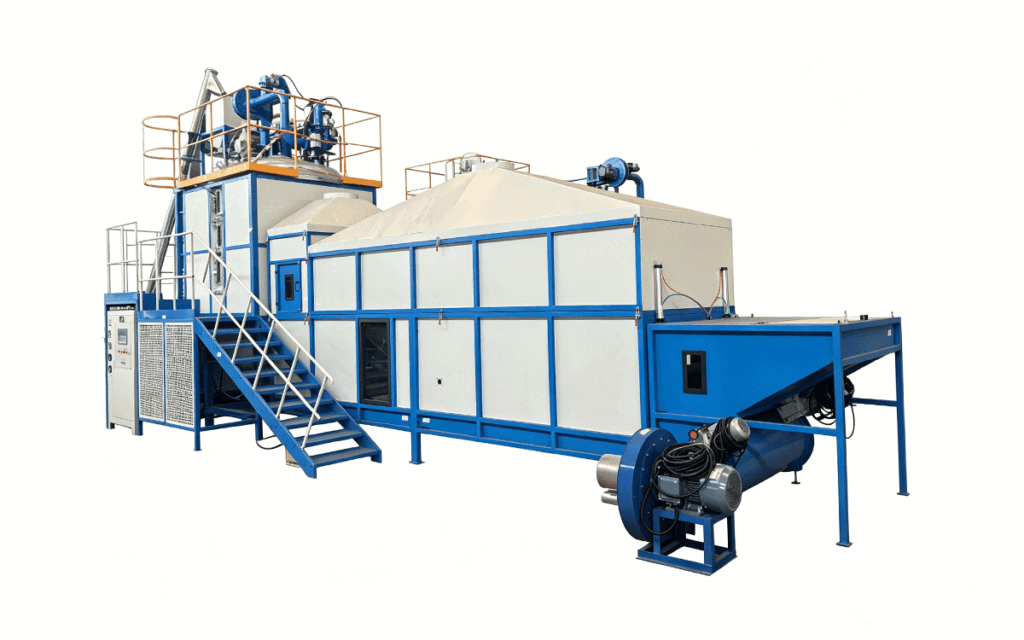
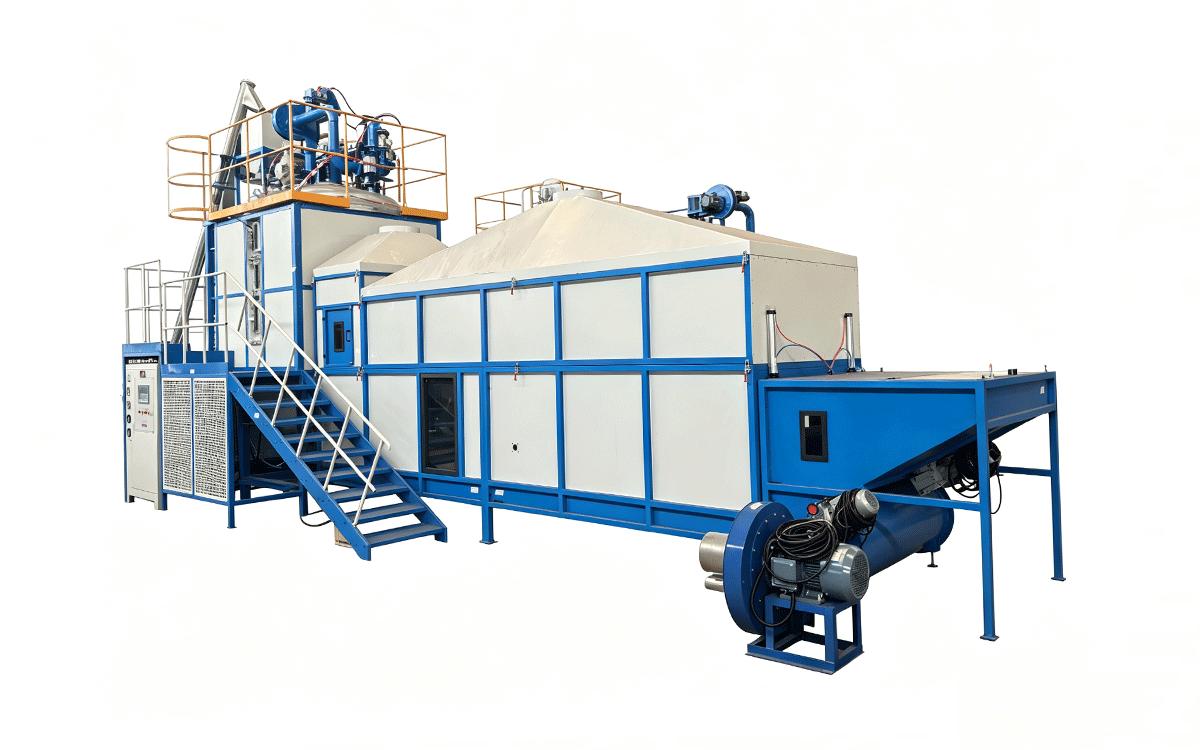
- Pre-expansion. Bead is steamed in an EPS pre-expander machine to the target density (lower density = lighter pattern, but weaker). Density control here sets pattern strength and surface finish.
- Ageing. Expanded bead rests so pressure equalises — skipped ageing causes pattern shrinkage after moulding.
- Shape moulding. Bead is blown into an aluminium pattern die and steamed to fuse. This produces the final expendable shape, from a pump volute to an engine manifold.
- Assembly and coat. Pattern pieces are glued, gated, and coated with a permeable refractory layer that holds the sand back while letting vapour escape.
What the metal sees
At pour, the coating is permeable and the foam degrades to gas that vents through the sand. The metal takes the pattern’s exact geometry. Because the pattern is destroyed, every casting needs a fresh pattern — which is why the pre-expander and shape-moulding step are a small, repeatable production line of their own inside a foundry.
Where it wins and where it does not
- Wins: complex one-piece geometries, no draft, no cores, low tooling cost versus permanent moulds, short lead time for prototypes.
- Weaknesses: not for very high-volume identical parts (permanent mould is cheaper per piece), and pattern density must be controlled or the surface finish suffers.
Common pattern mistakes
- Skipping bead ageing — pattern shrinks after moulding, dimensions drift.
- Wrong density — too low and the pattern dents in handling; too high and it resists clean evaporation.
- Poor coating permeability — vapour cannot vent, causing folds or misruns.
Frequently asked questions
Is lost-foam the same as investment casting?
No. Investment casting uses a wax pattern burned out of a solid mould; lost-foam uses an EPS pattern in unbonded sand and the metal replaces it directly.
Can any EPS machine make patterns?
You need density-controlled pre-expansion plus shape moulding — a plain block line makes board, not patterns.
What density should the pattern bead be?
It depends on part size and handling, but tight density control matters more than the exact number. We size it with you during a trial.
Set up a pattern line
If you want to bring pattern production in-house, start with a pre-expander and a shape-moulding cell — talk to our team about a layout sized to your castings.