
EPS Cutting Line vs CNC EPS Cutting Machine: Which One Fits Your Production?
The Short Answer
If you cut uniform EPS blocks and sheets all day, an EPS cutting line wins on speed and labor. If you cut complex, variable, low-volume shapes, a CNC EPS cutting machine wins on flexibility. Most factories eventually own both — the line for bulk, the CNC for custom.
This guide compares the two on throughput, labor, material waste, and payback so you can size the right machine for your actual orders.
What Is an EPS Cutting Line?
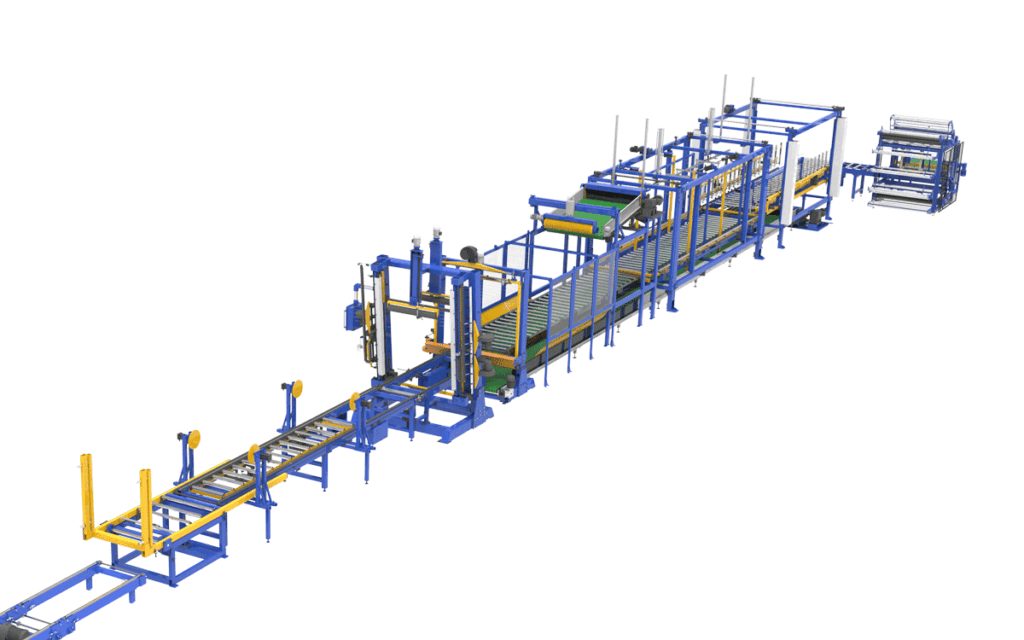
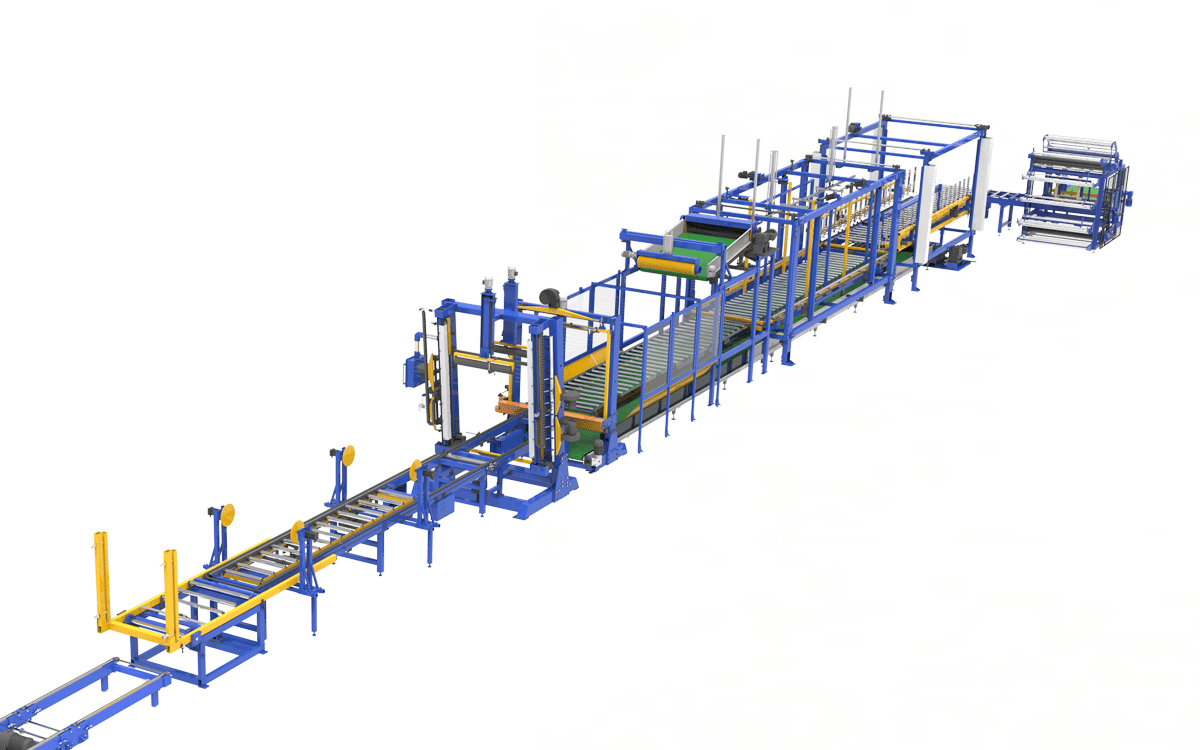
An EPS cutting line is a continuous, often multi-wire system that slices large EPS blocks into sheets, strips, or standard sizes at high throughput. It is the workhorse of insulation-board and packaging-sheet plants. Low skill required, high uptime, predictable output.
A typical line pairs a block feeder, a multi-wire frame, and a stacking table. Because the wires move in fixed pitches, it is unbeatable for repetitive cuts — think 50 mm insulation sheets or 100 mm packaging blanks produced by the thousand.
What Is a CNC EPS Cutting Machine?
A CNC EPS cutting machine uses a programmed hot wire to follow almost any 2D/3D profile. It excels at samples, architectural shapes, and short runs where a fixed line would waste material. The standard EPS cutting machine sits between the two — simpler, lower cost, good for moderate custom work.
CNC models shine when the order changes daily: one minute you cut a letter logo, the next a curved cornice. Programming a new profile takes minutes, not a tooling change.
Side-by-Side Comparison
| Factor | EPS Cutting Line | CNC Cutting Machine |
|---|---|---|
| Best for | Uniform, high-volume sheets/strips | Complex, variable, low-volume shapes |
| Throughput | Very high (continuous) | Medium (per profile) |
| Operator skill | Low | Medium (CAD/CAM basics) |
| Material waste | Low on repeat cuts | Low on custom cuts |
| Changeover | Slow (mechanical pitch) | Fast (reprogram) |
| Investment | Higher upfront | Lower upfront |
How To Choose: A Simple Decision Framework
Answer three questions before you buy:
- Is the cut shape fixed? If 80% or more of your orders are the same sheet or strip sizes, a cutting line pays for itself fastest.
- Do orders change weekly? If you regularly cut logos, samples, or architectural profiles, the CNC is the safer bet.
- What is your labor cost? Lines need one loader; CNC needs an operator who can read a drawing. In high-wage markets the labor saving of a line is decisive.
Throughput, Labor, and Payback
A multi-wire line can out-produce three standalone CNC stations on repeat work, so payback is usually 12–24 months in a busy plant. A CNC pays back differently — by winning custom orders a line cannot touch. Many buyers start with one CNC to prove demand, then add a line as volume grows.
Frequently Asked Questions
Can one machine do both?
Not perfectly. A cutting line is fast but rigid; a CNC cutter is flexible but slower per piece. That is why most plants end up running both — the line for bulk sheets, the CNC for custom profiles.
Which should I buy first?
If you already have steady sheet orders, buy the line. If you are still exploring the market, start with a CNC, then add a line as volume grows.
How much material does each option waste?
Both are efficient in their own territory. A line wastes little on repeat sizes because the wire pitch is fixed; a CNC wastes little on custom shapes because the profile is nested in software. Waste rises when you use each machine for the other’s job.
Do I need CAD skills to run a CNC cutter?
An operator needs basic CAD/CAM familiarity to load and adjust profiles. Programming a new shape takes minutes once the drawings exist.
What about a standard EPS cutting machine?
The standard EPS cutting machine sits between the two: simpler and lower cost than a full CNC, more flexible than a fixed line. It suits moderate custom work.
Need a Recommendation?
Tell us your block size, daily volume, and the shapes you cut most, and we will size a line, a CNC, or a combined cell for your plant. Contact our engineering team for a quote.
Specifications at a glance
EPS Cutting Line — specification snapshot
| Model | Block Length | Block Width | Block Thickness | Cutting Speed (@15 kg/m³) |
|---|---|---|---|---|
| SPQ-2000B to SPQ-6000B | 2000–6000 mm | 1200 mm | 1200 mm | 1.8–2.0 m/min |
EPS CNC Cutting Machine — specification snapshot
| Cutting Platform | Axes | Cutting Speed | Power | Weight |
|---|---|---|---|---|
| 3000 × 2400 × 1200 mm | X and Y | 0.3–0.6 m/min | 11 kW | 1500 kg |
These are YouXin’s current model ranges. Cutting speed depends on density, wire count and profile complexity; confirm the figure for your own product mix. Full options: EPS Cutting Line and EPS CNC Cutting Machine.
What the comparison leaves out
Three practical factors decide the outcome as often as throughput does:
- Block storage. A fast line needs cured blocks waiting. Without storage, upstream curing time — not the cutter — sets your output.
- Dust extraction. Both machines produce fine EPS dust. Budget extraction and housekeeping for whichever you buy.
- Operator availability. A line needs a loader; a CNC needs someone who can read a drawing. In markets where that skill is scarce, the line is easier to staff.
Common mistakes
Buying the CNC for work a line does better. If 80% of your orders are the same sheet sizes, a CNC will be the slowest station in the plant.
Buying the line before the orders exist. A line pays back on volume. Without steady sheet demand it sits idle while a flexible cutter would be earning.
Ignoring changeover time. Mechanical pitch changes take minutes; reprogramming takes minutes too — but the operator skills differ, and so does the error rate.
Comparing only the machine price. Labour per tonne, scrap and the orders you can accept are what actually decide the return.
Three real plant configurations
The insulation board producer. Long campaigns on a few thicknesses, thousands of sheets per week. One EPS cutting line does almost all of the work, and a CNC cutter is added later for the occasional shaped order.
The packaging converter. Sheet blanks plus custom inserts and corner protection. Here the CNC earns its place first, because the order book changes daily, and a line is added once a few sizes become permanent.
The architectural profile shop. Cornices, letters, curved sections and samples. This plant is a CNC shop by definition; a straight line would only be justified by a standing contract for standard sheet.
If you recognise your plant in the middle case, the honest answer is often “CNC now, line later” — and the reverse if you are the first case.
Does a CNC cutter need a different block quality?
Yes, in the sense that profiles expose defects. Blocks with consistent density and no fusion faults cut cleaner and waste less, so the moulding stage matters more when you cut shapes.
How do we justify a second machine internally?
Measure queue time. If sheets wait for the CNC or profiles wait for the line, the second machine is already paid for by the orders you are turning down.