
How to Choose an EPS Wrapping Machine for Shape Products: A Buyer’s Checklist
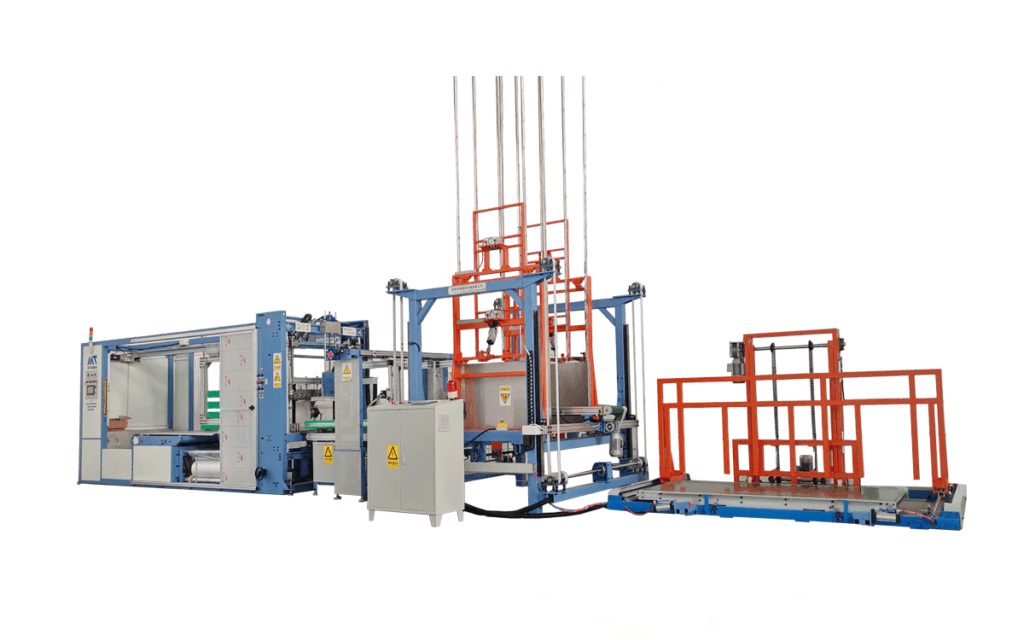
EPS shape-molded products — decorative cornices, insulation boards, fish boxes and custom molded parts — do not behave like rectangular blocks on a packing line. They are irregular, often fragile at the edges, and they need protection on all six sides before they can survive storage and export shipping. Choosing the right wrapping machine for these products is therefore a different decision from choosing a block packaging line.
Why shape products need a dedicated wrapping machine
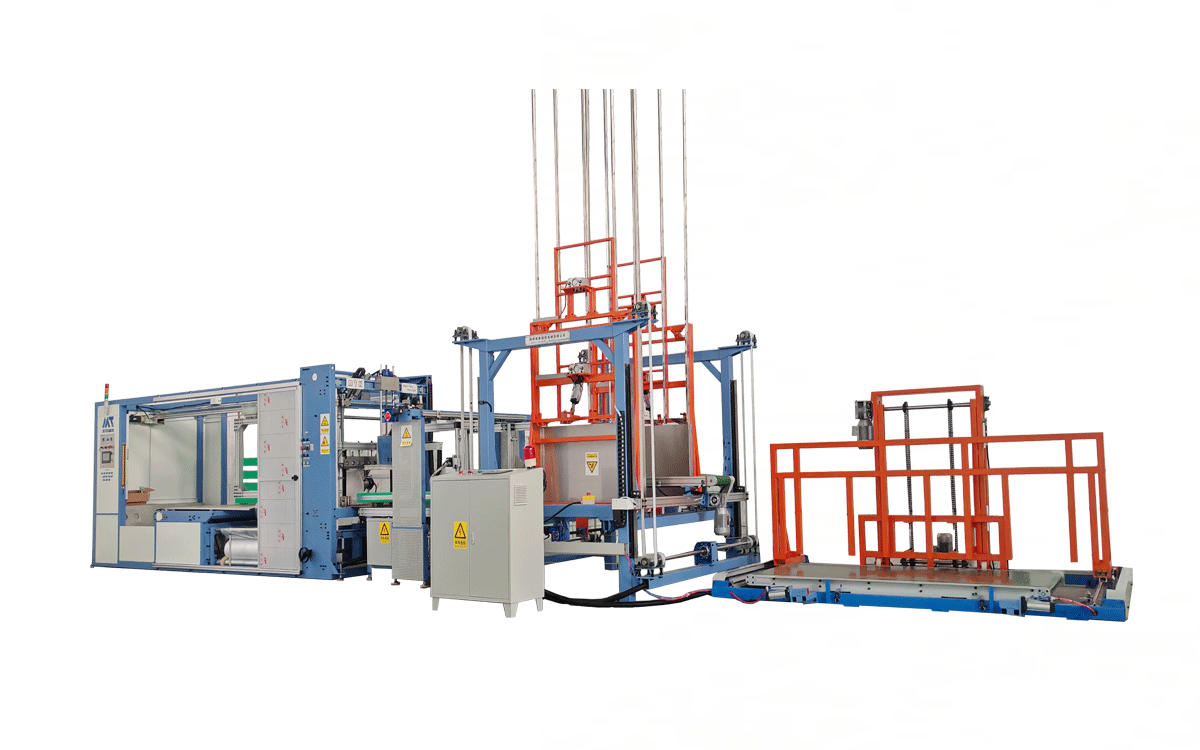
A standard EPS packaging machine for blocks handles uniform, stackable blocks. Shape products vary in profile and length, arrive in bundles, and frequently have decorative surfaces that must not be scuffed. Wrapping them manually with shrink film is slow, inconsistent, and labour-intensive — and any exposed face becomes a point of damage in transit. A dedicated six-side wrapping machine encloses the bundle completely and seals it in one pass.
Seven points to check before you buy
1. Size envelope — length, width and height
Start with your largest and smallest product bundles. On the YouXin EPS Wrapping Machine for Shape Products (model SPLM-CA20/W800H600), the packing width is adjustable across roughly 600–800 mm and the packing height across 300–600 mm, with product length up to 2000 mm depending on configuration. If your cornice runs or board stacks fall outside that window, you need a different frame size — not a workaround.
2. Throughput — packs per minute
Request a realistic cycle figure, not a theoretical maximum. Depending on model and film, this class of machine runs at roughly 2–3 packs/min with 0.02 mm PE film at 1200×800×600 mm, or up to 4–6 packs/min with thinner 0.01 mm HDPE film in a different configuration. Match that number to your molding output, otherwise the packer becomes the bottleneck of the whole plant.
3. Film type and thickness
Film is a recurring cost, so check which gauges and materials the machine accepts. PE at 0.02 mm and HDPE at 0.01 mm are both used in this range. Thinner film costs less per pack but needs clean sealing control; thicker film resists puncture on sharp molded corners. Ask the supplier to run your actual product before committing.
4. Wrapping method — six sides, one pass
The efficient design pushes the bundle forward, draws the film along with it, wraps all six faces, then heat-seals and cuts automatically. Foil positioning, fastening, welding and cutting happen in a single cycle. Machines that need a second manual pass to close the ends are not true six-side wrappers.
5. Adjustment and changeover
If you run several product families, changeover time matters more than peak speed. Width and height should be adjustable on the frame, with reproducible settings so an operator can return to a previous product size without re-measuring.
6. Control system and components
Look past the frame to the parts that fail. This machine is built around a Siemens (Germany) touch screen and PLC with Schneider (France) electronics, Airtec pneumatics and Autonics (Korea) photo sensors; an alternative configuration uses Xinje PLC and servo motor with the same Schneider electronics. Well-supported brands mean shorter downtime when a sensor or drive eventually needs replacing. CE certification is also available on this line.
7. Optional automation
An automatic stacker, automatic labelling machine and automatic loading system can be added. If you are already running an EPS CNC cutting machine upstream, upstream automation is usually the better first investment than a faster wrapper.
Match the packer to the whole line
A wrapping machine is the last step in a chain that starts at the EPS pre-expander and continues through block molding and shape molding. Sizing it in isolation is the most common buying mistake — specify it against the output of the molding and cutting stages, then add 15–20% headroom.
Next step
Send us your product drawings, bundle dimensions and target packs per minute, and we will confirm the right model and configuration. Contact the YouXin team or review the full specification of the EPS Wrapping Machine for Shape Products.
Typical specifications
EPS Wrapping Machine for Shape Products — specification snapshot
| Model | Product Length | Product Width | Product Height | Speed | Film |
|---|---|---|---|---|---|
| SPLM-CA20/W800H600 | 2000 mm | 600–800 mm (adjustable) | 300–600 mm (adjustable) | 2–3 packs/min @ 1200×800×600 | PE, 0.02 mm |
These are YouXin’s current model ranges. Exact configuration depends on block size, density target and the layout you run. Full options: EPS Wrapping Machine for Shape Products.
Sizing the wrapper against your moulding output
A wrapping machine is the last step of a chain, and it is the step most often bought in isolation. The arithmetic is simple:
- Count the parts or bundles you mould per shift. That is what has to be packed, not what you hope to sell.
- Decide how many parts go into one bundle. Fewer, larger bundles pack faster; more, smaller bundles sell better. It is a commercial decision that changes the machine rate.
- Convert bundles per shift into packs per minute. Divide by productive minutes, then compare with the machine’s realistic cycle.
- Add 15–20% headroom. Seasons, rush orders and rework all arrive at once.
- Check the upstream automation first. If stacking and loading are manual, a faster wrapper only moves the queue.
Common mistakes
Buying on packs per minute alone. A high theoretical rate with slow changeover loses to a slightly slower machine that switches product sizes quickly.
Ignoring the film supply. Check that the gauge the machine is tuned for is available locally and at a stable price.
Skipping the trial. Sealing behaviour depends on your product, your film and your ambient conditions. Run your own bundles before committing.
Forgetting the operator. One person supervises the cycle; if that person also stacks by hand, the line rate is set by the stacking, not the wrapper.
No spares plan. Sealing blades and photo sensors are inexpensive and are the parts that stop the line.
Frequently Asked Questions
What size range does the machine cover?
Packing width adjusts across roughly 600–800 mm and height across 300–600 mm, with product length up to 2000 mm depending on configuration. Bundles outside that window need a different frame size.
How fast does it run?
Expect roughly 2–3 packs/min with 0.02 mm PE film at 1200×800×600 mm, and up to about 4–6 packs/min with thinner 0.01 mm HDPE film in a different configuration.
Is it a true six-side wrap?
Yes. Film positioning, fastening, welding and cutting happen in one pass. A machine that needs a second manual pass to close the ends is not a six-side wrapper.
Can we add automation later?
Yes — automatic stacker, labelling and loading can be added. If you already run an EPS CNC cutting machine upstream, automating there usually pays back first.
How do we get a recommendation?
Send product drawings, bundle dimensions and target packs per minute. Contact the YouXin team and we will confirm the model and configuration.