
EPS Packaging Machine vs Wrapping Machine: Which One Do You Need
When a new EPS factory plans its packing section, one question comes up almost every time: do we need an EPS packaging machine, or an EPS wrapping machine? The two names sound similar and both put a protective film around foam, but they solve different problems on the production floor. This guide explains what each machine does, where they differ, and how to pick the right one for your block and shape output so you do not overspend on capacity you will never use.
What an EPS packaging machine does
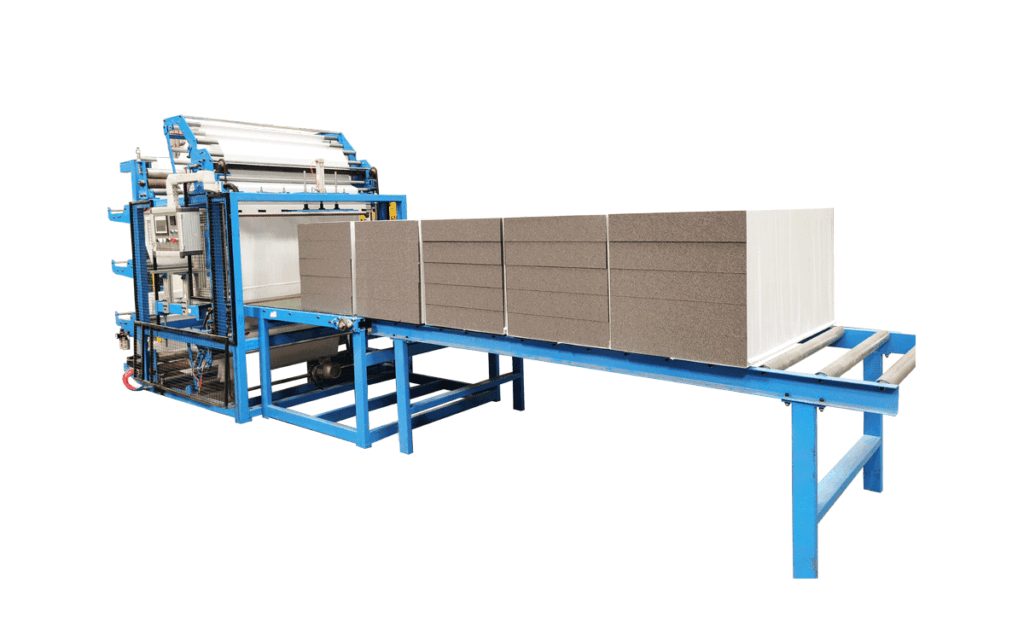
An EPS packaging machine for block foam is built to wrap large, regular rectangular blocks — the stacked panels that leave the block molding machine — in a tight PE film and seal them into a stable, dust-free pack. The goal is to protect the block during storage and long-distance export, keep the edges square, and make the pack easy to fork-lift and stack. YouXin’s block packaging machine runs on a continuous PE film and seals a pack in seconds, so it slots straight into a high-volume block line without a bottleneck. Because the film hugs the block, it also stops surface beads from shedding in the warehouse.
What an EPS wrapping machine does
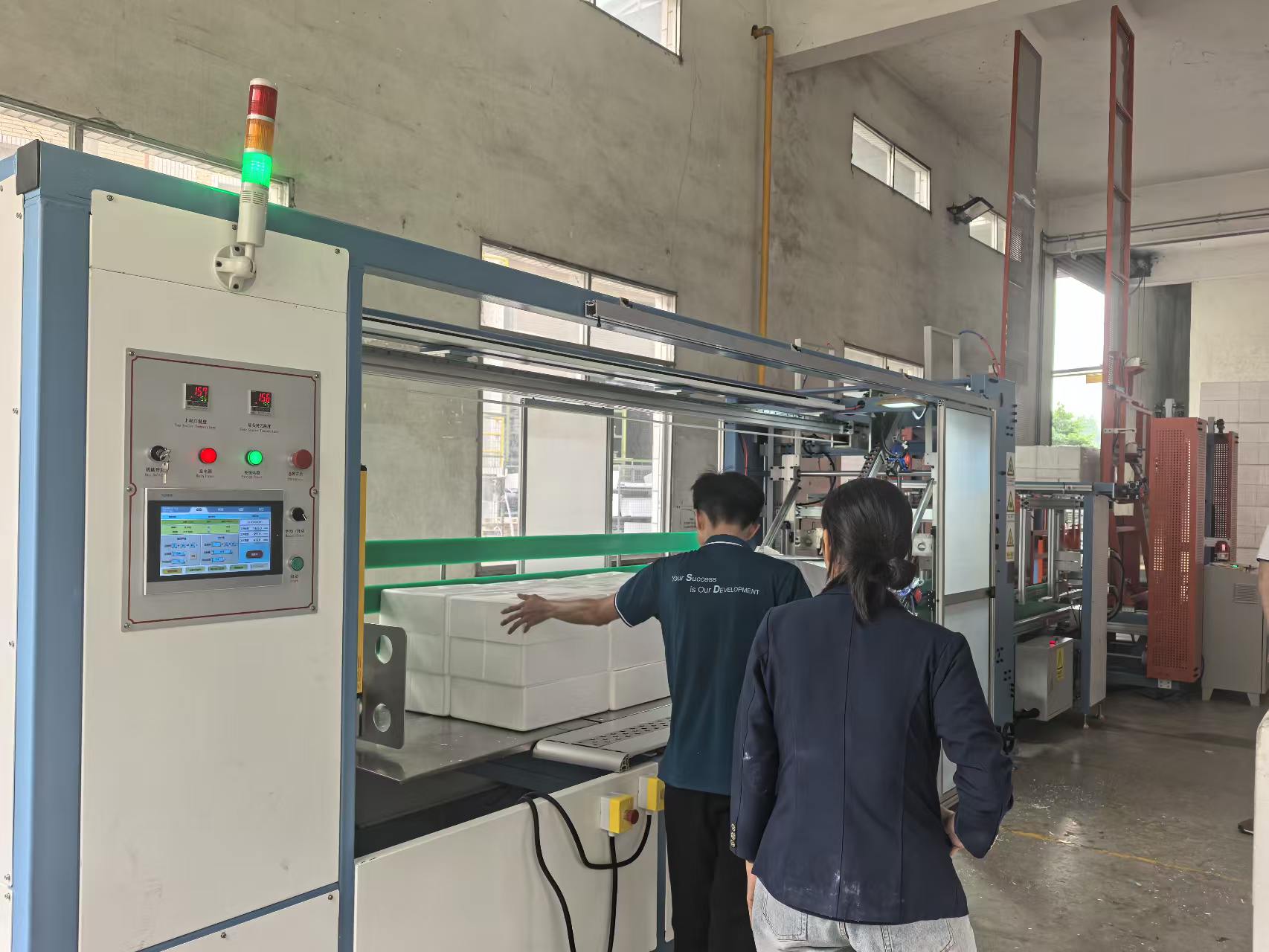
An EPS wrapping machine for shape products, often called a 6-side PE film wrapping machine, is aimed at irregular, lighter pieces — shape-molded parts, fish boxes, edge profiles, and stacked sheets that do not form a neat block. It rotates or indexes the product and wraps all six sides, which is why buyers ask specifically for “6-side wrapping.” The film keeps shaped parts from chipping at the corners and stops them sliding inside the carton or container. For a mixed order book this flexibility is the whole point of the machine.
EPS packaging machine vs wrapping machine: the core difference
The simplest way to separate them is by product geometry. If you mostly ship full-size blocks, a block packaging machine is faster and cheaper per pack. If your mix is dominated by shape parts and mixed-size orders, a wrapping machine for shape products is the better fit because it handles non-rectangular loads. Many factories run both: block packaging for the main slab output, and a wrapping machine for the shaped and sample orders. The two are complementary, not competing, and buying the wrong one for your mix is the most expensive mistake in this part of the plant.
Why packing matters for export
Foam is light but bulky, so container space and damage in transit decide your real delivered cost. A square, film-sealed block pack stacks and braces far better than loose foam, which shifts and crushes in a container. For shaped parts, a tight 6-side wrap prevents the corner chips that trigger claims at the destination port. Good packing is not a finishing touch — it is part of the product your customer receives, and it is where many first-time exporters lose money.
Typical specifications
| Model | Block Size | Speed | Film Material | Film Thickness |
|---|---|---|---|---|
| SPLB-1200 | 1200 × 600 × 600 mm | 8 packs/min | PE | 0.03 mm |
Figures above are current model ranges; exact configuration depends on your block size and film specification.
How to choose the right packing equipment in 5 steps
- Measure your dominant product geometry. Blocks that are consistently 1200 mm wide suit a block packaging machine; mixed shape parts suit a wrapping machine for shape products.
- Count packs per hour at peak. A single block packaging machine handles around 8 packs/min at standard density; confirm the wrapper speed matches your real order mix, not the supplier’s best-case number.
- Match film width and thickness. Block packaging on YouXin’s SPLB-1200 uses 0.03 mm PE; thin shaped parts may need a different gauge to avoid tearing on corners.
- Check integration with the upstream line. The packer should sit after cutting and cooling, with a roller table or conveyor so packs flow without manual lifting.
- Confirm export and operator needs. For container export, square, film-sealed packs stack and brace better; train one operator and confirm spare seals and film are stocked locally.
Common mistakes when buying foam packing equipment
The most common trap is trusting the quoted “packs per minute” at face value. That number is almost always measured at the lowest foam density and the smallest block. At 15–20 kg/m³ and a full 1200 mm block, real throughput drops noticeably. Always ask the supplier for speed at your actual density and block size, and get it in writing before you order.
A second trap is buying a wrapping machine sized for blocks when most of your orders are thin shaped parts — you pay for capacity you never use, while the shaped parts get a loose wrap that slips in transit. Match the machine to the real product mix, not the brochure photo. A third trap is ignoring film cost: a small step up in gauge adds up across thousands of packs, so size the film to the handling, not the habit.
Maintenance and running cost
Both machines are simple to run. On a block packaging machine, keep the seal bar clean and the film tension steady; a dirty bar gives weak seals that open in the container. On a wrapper, check the film carriage and the turntable bearings. Neither machine needs a specialist technician for daily care, but a short weekly check list — seal bar, film path, sensors — keeps packs consistent and avoids the one bad pack that starts a claim.
Frequently Asked Questions
Can one machine do both blocks and shape parts?
A block packaging machine is optimised for rectangular slabs; a 6-side wrapping machine handles irregular loads. If your output is genuinely mixed, run both. Trying to force blocks through a wrapper wastes film and slows the line.
What film thickness should I use?
For block packaging, 0.03 mm PE is the standard on YouXin’s SPLB-1200. Thinner film saves cost but tears more easily on sharp corners; thicker film protects better but raises per-pack cost. Match gauge to how the pack is handled in your warehouse and container.
How fast is a block packaging machine in practice?
Around 8 packs/min at standard density with a continuous film. Real speed depends on block size, density, and how quickly packs are removed from the outfeed table, so budget for the downstream handling, not just the sealer.
Do I need a wrapper if I already have a block molding line?
If you only ship blocks, a block packaging machine is enough. Add a wrapping machine for shape products only when shaped orders become a steady part of your business — it protects corners that a block packer cannot hold square.
Ready to specify a packing line? Contact YouXin with your block size and daily output and we will match an EPS packaging machine or wrapping machine for shape products to your line, alongside your cutting line.