
EPS Bead Density: How It Shapes Your Block Quality
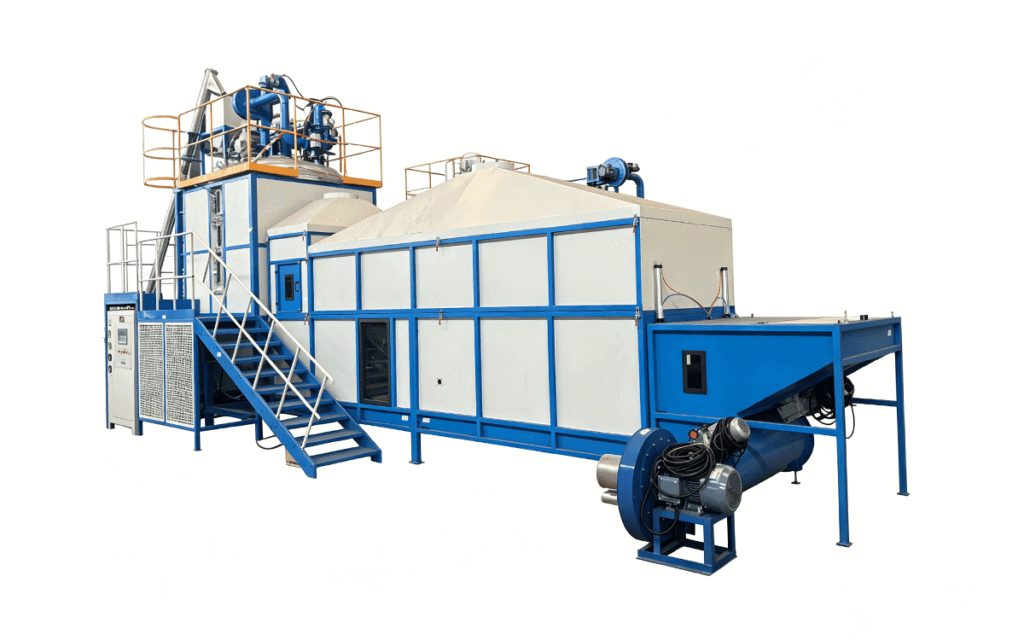
Every EPS block carries the density it was given at the pre-expander. Get that number right and consistent, and the rest of the line has a chance; get it wrong and no amount of moulder tuning fixes it. Density is the first quality gate, not a spec sheet footnote that operators can ignore when they are behind on a shipment.
The chain
A pre-expander raises raw bead to target density, the silo lets it rest, and the block moulder fuses it. If density scatters at step one, blocks vary in weight, fusion and surface — exactly the complaints that arrive months later from the field, long after the cause is forgotten and the pre-expander has been blamed for everything except the real fault. Holding density is cheaper than chasing the defects it causes downstream, where each one costs a block and a customer’s trust.
What good control looks like
Weighed density control that holds around ±1.5% run to run is what turns a variable product into a repeatable one. It is the difference between selling on spec and hoping the block holds together when the customer cuts it. For buyers weighing machines, density control is the line item worth the most attention, ahead of raw throughput and ahead of the colour of the paint. See our pre-expander selection notes for the rest. Talk to our team about holding density on your line.