
EPS CNC Cutting Machine: From CAD Drawing to Accurate 3D Foam Shapes
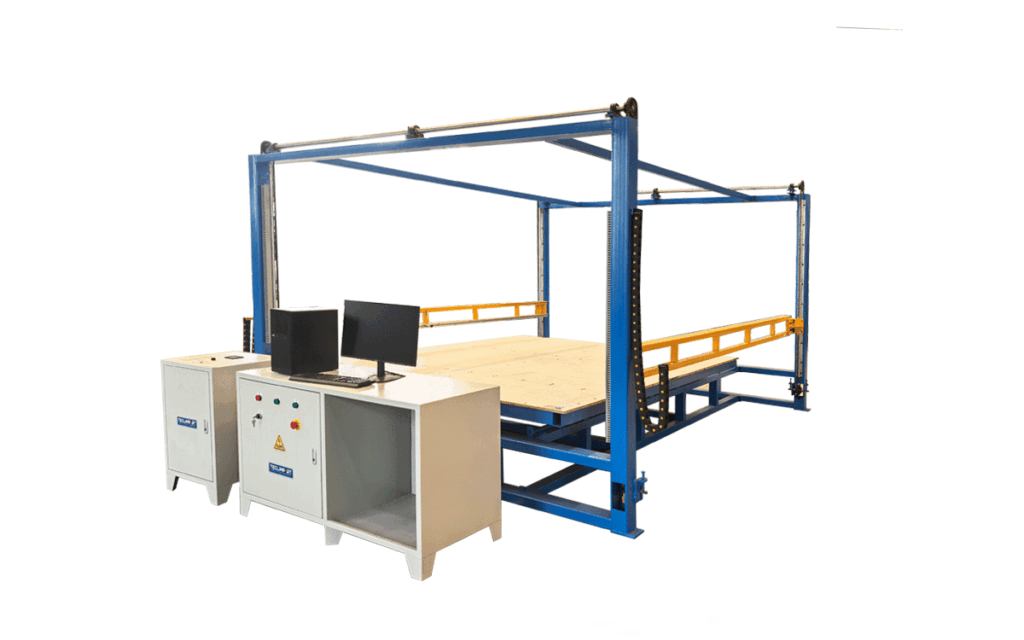
YouXin EPS CNC cutting machines turn a digital 3D model into a physical EPS or EPP foam part without a mold. A cutting line slices blocks into flat sheets, and a block molding machine makes the raw block in the first place. The CNC cutter is the machine you reach for when the shape is not a simple box: architectural cornices, signage letters, stage props, insulation profiles, packaging inserts, and prototypes. This guide explains how the machine works, which specifications actually matter, how to choose one in five steps, and the mistakes that quietly ruin cut quality.
What Is an EPS CNC Cutting Machine?
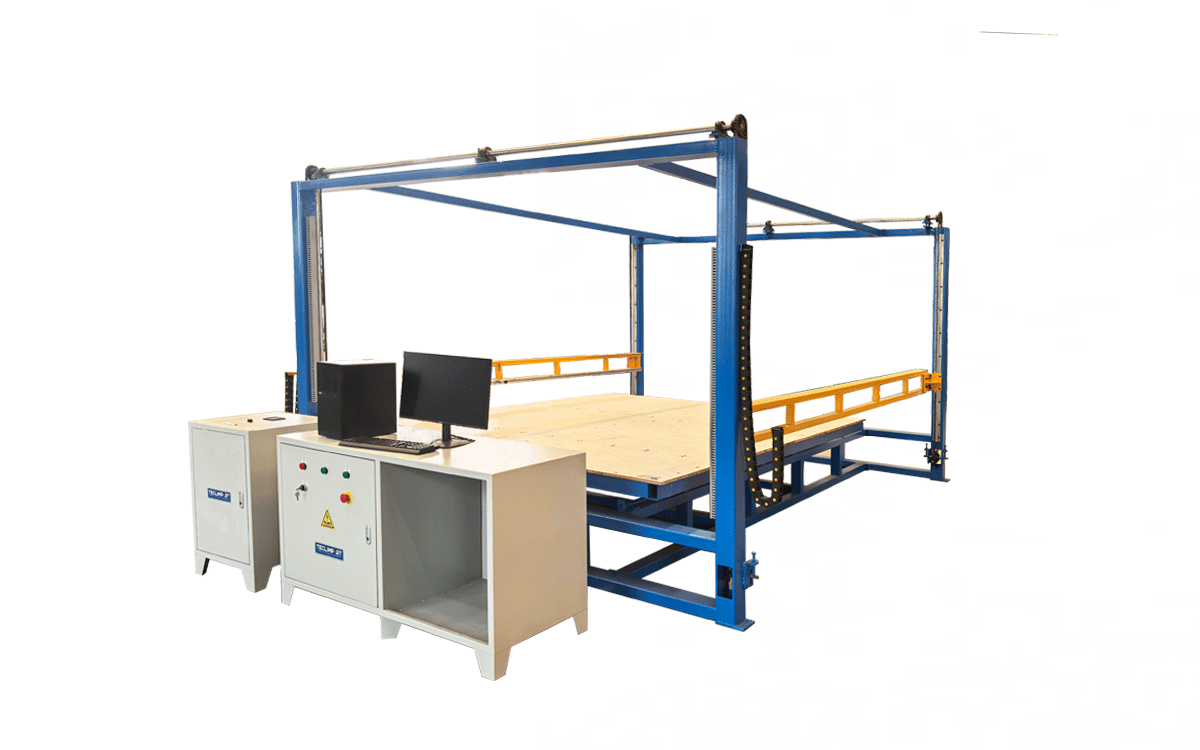
An EPS CNC cutting machine is a computer-controlled foam cutter. A thin resistively heated NiCr wire is moved along the X and Y axes by stepper or servo motors under the control of CAD/CAM software. The wire is hot enough to vaporize a hair-thin kerf as it passes through the foam, so the cut leaves almost no dust and no swarf. Because the path is driven by a digital file, every part is identical to the last one — which is exactly what architectural and signage customers demand.
Unlike a shape molding machine, a CNC cutter does not need a tooling cavity. You load the foam, import the DXF or STEP file, set the wire temperature, and the machine traces the contour. For low and medium volumes of irregular shapes this is dramatically cheaper than building an aluminum mold, and it lets you revise a design in minutes instead of weeks.
How a CNC Foam Cutter Turns a CAD File into a Shape
The workflow is short, but each step affects the result:
- Model the part in any CAD software and export a 2D profile (DXF) or a 3D surface.
- Import the file into the cutter’s CAM software, which nests parts and generates the toolpath.
- Mount the EPS block on the cutting table and secure it so it cannot shift mid-cut.
- Heat the wire to the temperature the material needs for a clean pass.
- Run the job; the carriage moves the wire along the path and the shape drops out.
A good EPS CNC cutting machine keeps the wire tension constant and the feed steady, so the finished edge is smooth enough to paint or laminate without filling. That repeatability is what separates a production cutter from a hobby hot-wire bow.
Typical Specifications
The table below shows the current model range for the YouXin CNC cutting machine. Figures depend on platform size and option configuration; confirm the exact platform for your largest planned part before ordering.
| Cutting Platform | Axes | Cutting Speed | Power | Weight |
|---|---|---|---|---|
| 3000 × 2400 × 1200 mm | X and Y | 0.3–0.6 m/min | 11 kW | 1500 kg |
How to Choose an EPS CNC Cutting Machine in 5 Steps
Follow these five steps and you will avoid the most common expensive mistake — buying a platform that is one size too small.
- Measure your largest part. Add clearance for fixturing and pick a platform at least 10% larger on every axis. A 2400 mm panel will not fit a 2400 mm table once you account for clamps.
- Decide 2-axis versus 3-axis or rotary. Pure contour cutting needs X and Y. If you must bevel, chamfer, or cut a full 3D surface, you need a Z or rotary attachment. Specifying this up front is cheaper than retrofitting later.
- Check wire control and heating stability. Look for closed-loop wire tension and a stable temperature controller. A wire that sags or drifts mid-cut leaves a waisted edge that no amount of sanding fully fixes.
- Confirm software and file formats. The machine is only as useful as the files it accepts. Verify DXF, STEP, and SVG import, and ask whether nesting and common-line cutting are included or cost extra.
- Plan for dust extraction and power. Cutting is clean, but trimming and shaping are not. Size the dust hood and confirm the shop can supply the rated power without voltage drop, which otherwise slows the carriage.
Common Mistakes When Buying or Running a CNC Cutter
Most field failures are not mechanical — they are specification or process errors made before the machine is even ordered.
- Trusting the quoted cutting speed at the lowest density. Vendors quote speed at roughly 15 kg/m3, the easiest foam to cut. At 30–40 kg/m3 the same wire must move slower or the edge burns. Size your throughput against the density you will actually run, not the brochure number.
- Undersizing the platform. Buyers often size the table to today’s biggest order and forget the next one. A slightly larger platform is a small premium; a too-small table is a permanent limitation.
- Ignoring wire tension. A cold-start cut with a slack wire curves inward at the bottom. Tension the wire and let it thermally settle before the first production pass.
- Skipping extraction. Fine EPS dust is static and clings to rails and electronics. Without extraction, switches and guides clog and accuracy falls within a season.
Frequently Asked Questions
Can a CNC cutter also cut XPS and EPP?
Yes. A hot wire cuts extruded polystyrene (XPS) and expanded polypropylene (EPP) as well as EPS, though denser foams need a slower feed and a slightly higher wire temperature. Always qualify the material on a scrap block before a production run.
What file formats do I need?
At minimum DXF for 2D profiles and STEP or STL for 3D surfaces. SVG is useful for signage. Ask whether the CAM software nests parts automatically to save material.
How accurate is the cut?
With a stable wire and a rigid frame, edge repeatability is typically within a millimeter across a 3 m panel. Accuracy is set by wire tension, table flatness, and feed consistency more than by the motor spec sheet.
Do I need compressed air?
Not for the cut itself. Compressed air matters only if you add a trimming or blasting station. The cutter runs on electric power and a clean, grounded supply.
Build a Cutting Cell Around the CNC Cutter
A standalone EPS CNC cutting machine is only one station. Most shops pair it with a full EPS cutting line for sheet production and a standard EPS cutting machine for straight blocks, then route odd shapes to the CNC. If you are specifying a complete cell, talk to our team through the contact page and we will size the platform, wire control, and software to your actual parts.