
EPS Cutting Accuracy Starts at Block Handling
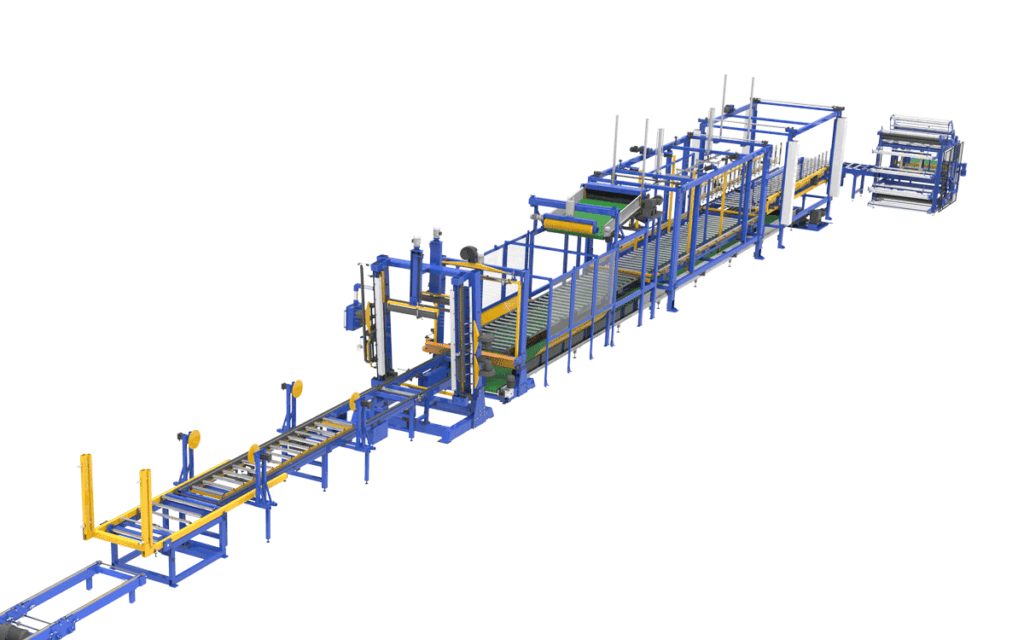
When a customer reports tapered sheets or parts that vary from one end of a block to the other, the first instinct is to blame the blade or the eps cutting line settings. In most of the cases we are shown, the cut is doing exactly what the block told it to do.
A bowed block cannot be cut square
A block that has cooled unevenly, or was pushed out of the mould before it was stable, arrives with a slight bow and a density gradient through its thickness. Clamp that block on a flat table and the bow is forced straight, which stores stress. Cut it, release the clamps, and the part springs back to the shape it wanted to be. The blade was straight; the block was not.
The same applies to blocks that were stacked green. Stacking warm blocks under their own weight flattens the bottom ones and rounds the edges, and no amount of guide adjustment recovers a square corner from a rounded edge.
Frame level and block seating
Two checks take ten minutes and settle most arguments. First, put a level on the cutting frame and confirm it has not moved since installation; frames settle, and a frame out of level cuts a taper that looks like a blade fault. Second, watch how the block is seated. A block resting on a chip or on a lifted section of the roller table is being cut at an angle for its whole length.
What to fix first
- Let blocks cool and stabilise before stacking, and never stack warm blocks more than two high.
- Trim the reference face square, then cut from that face rather than from the as-moulded surface.
- Check frame level and roller table height on a schedule, not after a complaint.
- Keep the block clamped evenly; uneven clamping bends the block into the cut.
- Log the block batch with the cut part, so a tolerance complaint can be traced back to a moulding run.
None of this is blade work, and none of it costs capital. It is handling discipline. If you are commissioning a line and want the upstream checks built into the acceptance routine, contact our team; the cutting line datasheet lists the speed range, and the tolerance it holds depends on the block it is given.