
EPS Cutting Line with Automatic Wire Setting: Key Advantages
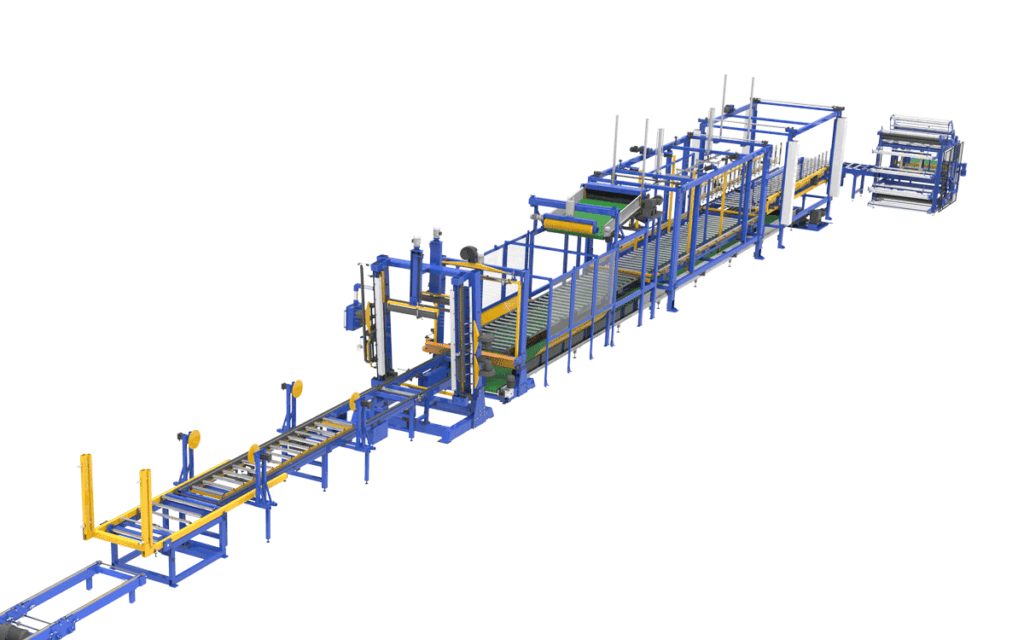
On a conventional EPS cutting line, setting the cutting wires by hand is one of the slowest jobs in the plant. An automatic wire setting system removes that bottleneck: setup drops from more than 30 minutes to roughly 2-3 minutes, and the wires land in exactly the same position on every changeover.
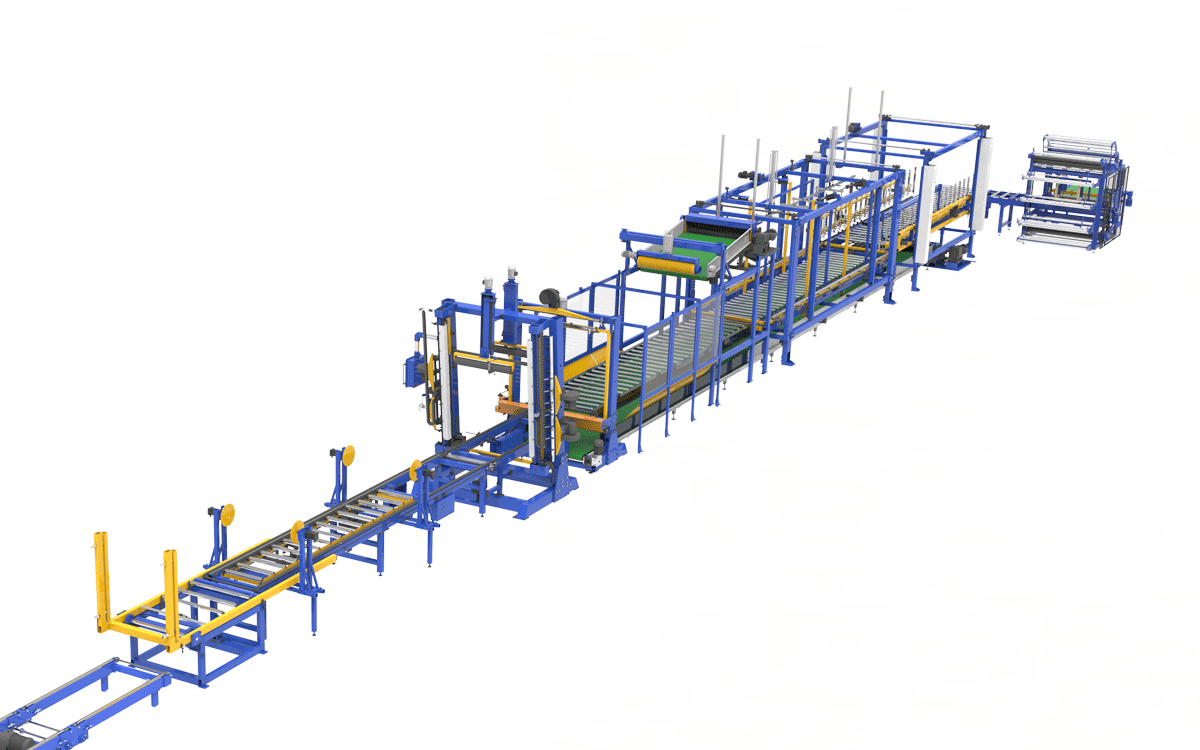
Why manual wire setting costs more than it looks
Operators have to loosen, measure, tension and re-clamp every wire. On a wide machine that is 20 to 60 wires, and each one is a chance for a measurement error. A wire set 2 mm off spec produces sheets that fall outside tolerance, and those sheets either get re-cut or scrapped. The labour shows up on the timesheet; the scrap usually does not.
What automatic wire setting changes
- Setup time — 30+ minutes reduced to about 2-3 minutes
- Repeatability — stored programmes recall exact wire positions for every thickness
- Cutting precision — consistent tension keeps each sheet within tolerance
- Labour — one operator can handle changeovers that used to need two
- Machine availability — more cutting hours per shift instead of setup hours
Where it pays back fastest
Payback is shortest in plants that change thickness several times a day: insulation board producers, packaging converters and any factory running small custom orders. If your line cuts the same thickness for weeks at a time the saving is smaller, but still real, because tension drift hurts quality on long runs too.
Related equipment
Automatic wire setting is often paired with oscillation cutting for cleaner surfaces. When profiles and decorative shapes are part of the order book, an EPS CNC cutting machine is the better complement. See our overview of EPS cutting machines to compare both approaches.
Tell us your block size, daily thickness changes and target output and we will size the right EPS cutting line for your plant — contact our team.
How to specify automatic wire setting: a five-step check
- Count your real changeovers. Note how many times per shift you actually change thickness or profile, not how many you plan to. That number drives payback more than anything else.
- List the thicknesses you cut. Every thickness becomes a stored programme. Ask how many programmes the control holds and how quickly an operator can recall one.
- Confirm wire count and pitch range. The automatic frame must cover your widest block and your thinnest sheet with the same tensioning system.
- Check how tension is applied and monitored. Even tension is what keeps sheets parallel. Ask whether tension is measured per wire or assumed across the frame.
- Request a trial on your own block. Run your block size and density, then measure sheets at several points. A supplier confident in the machine will offer this.
Typical specifications
EPS Cutting Line — specification snapshot
| Model | Block Length | Block Width | Block Thickness | Cutting Speed (@15 kg/m³) |
|---|---|---|---|---|
| SPQ-2000B to SPQ-6000B | 2000–6000 mm | 1200 mm | 1200 mm | 1.8–2.0 m/min |
These are YouXin’s current model ranges. Cutting speed depends on block density and the number of wires engaged; confirm the figure for your own product mix. Full options: EPS Cutting Line.
Common mistakes when buying a cutting line
Buying on maximum wire count. A frame that holds 60 wires is no advantage if you cut three thicknesses. Capacity you never use is capital you cannot spend on automation that pays back.
Ignoring block storage. A faster line exposes every upstream bottleneck. Blocks need hours to stabilise after moulding; without cured stock the line waits.
Under-specifying dust extraction. Fine EPS dust is a housekeeping and fire-safety issue, not just a nuisance. Budget extraction alongside the machine.
Forgetting the operator interface. If recalling a programme takes a technician, your changeover saving disappears the moment that technician is on another shift.
Frequently Asked Questions
How long does a changeover really take?
With stored programmes and automatic setting, typically two to three minutes to recall a recipe and confirm position, against more than thirty minutes for a manual re-set of a wide frame.
Does automatic wire setting improve accuracy, or only speed?
Both. Repeatability is the bigger gain: the wires land in the same position on every changeover, so sheet thickness stops depending on who set them.
Is it worth it if we cut one thickness for weeks?
Less dramatic, but still real. Tension drift over long runs causes bowed sheets, and automatic tensioning holds tolerance without constant operator attention.
Can it be retrofitted to an existing line?
Often yes, depending on frame design and control system. Send us photos of your cutting bridge and control cabinet and we will tell you what is possible.
What should we send YouXin to get a quotation?
Block size, density range, thicknesses you cut, changeovers per shift and target output. Contact our team and we will size the line from there.
What to prepare before installation
Automatic wire setting is a control and mechanical upgrade, and preparation determines whether commissioning takes hours or days. Have the following ready:
- A list of the thicknesses you cut, with the tolerance you sell — these become stored programmes
- Clean, stable power for the control cabinet, with a dedicated earth
- Correct wire stock in the diameter and alloy the machine is specified for
- Test blocks in your normal density, cured and ready
- An operator present for the trial, so the training happens at the machine rather than from a manual
With those in place, the usual commissioning sequence is: set programmes, verify position repeatability, cut and measure, then hand over to the operator. Most plants are in production the same day.
How to judge whether it is worth it for your plant
The honest test is arithmetic on your own shift data. Multiply the number of changeovers per shift by the minutes each one takes today, then multiply that by the number of shifts you run per month. Those are the cutting hours you are currently losing to setup. Compare that against the sheets you could have cut in the same time, and you have the value of the upgrade in your own currency.
Scrap belongs in the same calculation. Every changeover produces a settling-in period where thickness is out of tolerance, and on a manual frame that can mean several sheets re-cut or downgraded. Because automatic setting lands the wires in the same position every time, that settling-in period largely disappears.
Does automatic setting work with oscillation cutting?
Yes. The two are frequently combined, because consistent wire position and oscillation together give cleaner surfaces on dense block.
What if our blocks vary in length?
Programmes are stored per thickness, and block length is handled by the frame and conveyor setting. Tell us your block range and we will confirm the configuration.