
EPS Cutting Offcut Reduction: Nesting, Block Size and Recovery
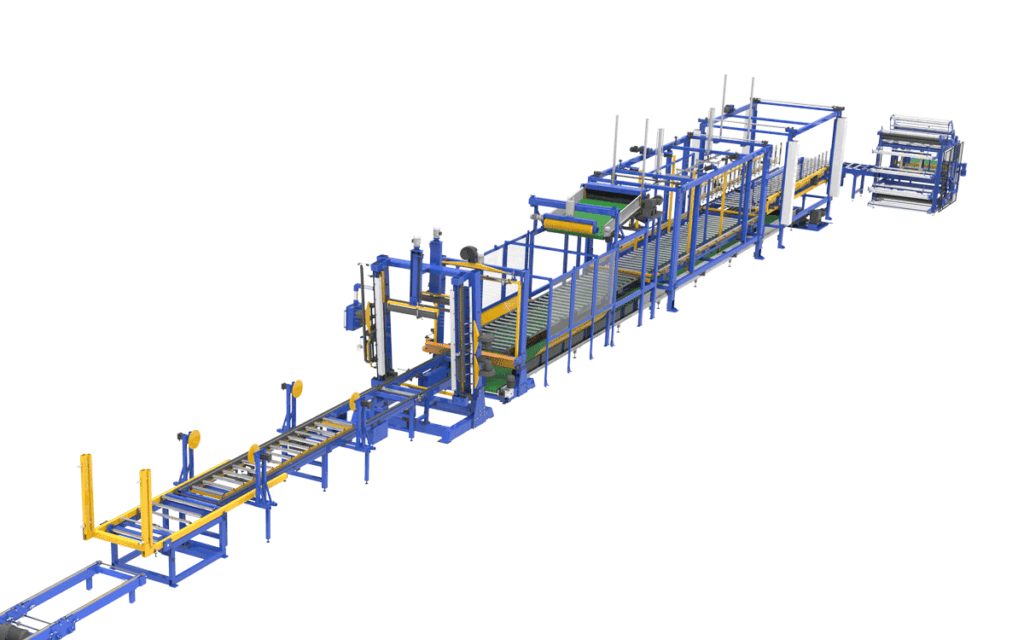
Offcuts are the quiet tax on every EPS cutting operation. Raw material that was expanded, molded and cured gets removed by the saw and leaves as waste, and nobody notices because it leaves a few kilograms at a time. Over a year it is a meaningful number. This guide looks at where offcuts on an eps cutting line actually come from, how to cut the avoidable ones through block sizing and nesting, and how to route the unavoidable ones back into production instead of out the door.
Where Offcuts Actually Come From
Trim is not one problem but several, and each has a different fix. End trim appears when the block is longer than the order lengths being cut from it. Edge trim appears when sheet widths do not line up with customer widths. Kerf loss is the material each wire pass consumes. Damaged ends and reject sheets add waste that looks like a cutting problem but usually starts upstream, in curing, handling or density control.
The important distinction: kerf and edge trim are largely structural and can only be minimized, while end trim and reject waste are planning problems that can often be eliminated almost entirely.
Match Block Size to the Order Mix
Block length is the biggest lever. SPB-series block molding machines produce blocks in the 2000-6000 mm range, which means the plant chooses the length of every block it molds. Molding everything at the longest length feels efficient at the molding machine, but if the orders behind it are mostly short lengths, each block sheds large end trim on the saw. The pattern we see in well-run plants: block length is planned per production run against the actual order mix, not set once and forgotten.
Trim Sources and Countermeasures
| Offcut source | Why it happens | Countermeasure |
|---|---|---|
| End trim | Block length not matched to the order lengths behind it | Plan block length per production run within the 2000-6000 mm range |
| Edge trim | Fixed cutting widths versus customer widths | Group orders by width before scheduling the saw |
| Kerf loss | Every wire pass consumes a slice of material | Nest parts so adjacent pieces share cuts where the pattern allows |
| Damaged ends | Rough handling or unstable curing | Fix storage and curing first; the saw is not the cause |
| Reject sheets | Density or fusion drift upstream | Catch drift at the pre-expander, not at the cutting stage |
Nesting and Cut Pattern Planning
On a contour or CNC saw, pattern planning matters as much as machine speed. A CNC cutting machine can hold the rated cutting pace and still lose the day to a badly sequenced pattern that forces extra wire travel and repositioning. Sequencing jobs so that similar widths and thicknesses run together reduces both trim and setup time, and it costs nothing but planning discipline.
For flat sheet work, the rated cutting speed on SPQ-series lines is around 1.8-2.0 m/min at 15 kg/m3, and the realistic daily output depends far more on pattern quality and block availability than on squeezing the last fraction of speed out of the wire.
A Five-Step Offcut Reduction Process
- Measure a baseline. Weigh offcut bins for two weeks and split them by source: end trim, edge trim, rejects, damaged material. You cannot manage what you have not counted.
- Group the order book. Pull recent orders and group them by width and thickness; the groupings will show which block sizes the plant should be molding.
- Plan block lengths per run. Match block length to the grouped orders instead of defaulting to one length for everything.
- Sequence the saw intelligently. Run similar widths together and nest patterns so shared cuts do the work of two passes.
- Recycle what remains. Keep clean offcuts separated by density and send them through crushing and reclaiming instead of disposal.
Common Mistakes Around Offcuts
- Chasing kerf while ignoring order mix. A block length mismatched to the orders behind it wastes more in a single block than a day of kerf differences across the whole saw.
- Treating offcuts as waste instead of material. Clean EPS offcut is reclaimable feedstock; sending it out the gate is paying twice for the same raw material.
- Mixing densities in the offcut bins. Reclaimed bead from mixed densities lands at an unpredictable density and becomes hard to sell or reuse.
- Not measuring at all. Without a weekly offcut weight, every improvement is a guess and every regression goes unnoticed.
- Molding long blocks by habit. Longest blocks feel efficient at the molding machine and quietly cost the most at the saw when the order mix does not support them.
Routing Offcuts Back Through Recycling
The offcuts that cannot be avoided still have value. Crushed and reclaimed EPS returns as recycled bead or as feedstock for secondary products, and an eps recycling machine is what closes that loop inside the plant. Keep bins separated by density at the saw, label them, and make the handoff to recycling part of the daily routine rather than an end-of-week cleanup. Plants that close this loop reduce raw material purchases measurably, and the ones that do not are effectively buying raw material to fill the skip.
Frequently Asked Questions
What offcut rate is normal?
It depends entirely on the order mix; a plant cutting to order with matched block lengths runs far leaner than one cutting stock sheets from fixed-length blocks. Measure your own baseline first rather than comparing against other plants.
Does nesting slow the saw down?
Well-planned patterns usually run faster overall, because shared cuts and sensible sequencing reduce wire travel and repositioning. The rated 1.8-2.0 m/min cutting speed is available either way; pattern quality decides how much of each block becomes product.
Can all offcuts be reused?
Clean EPS offcut can be crushed and reclaimed. Contaminated material, painted material or mixed-density piles are worth far less, which is why separation at the saw matters more than the recycling equipment itself.
Where does offcut reduction pay first?
In raw material purchases. Every kilogram of trim that becomes product or reclaim is a kilogram of bead the plant does not buy, and the saving repeats every production day.
If you are planning a cutting line or want a review of how your block sizes and order mix interact, contact our team with your typical order profile, and we will help you size the line around it.