
EPS Packaging Machine for Block Foam: Throughput, Film and Selection
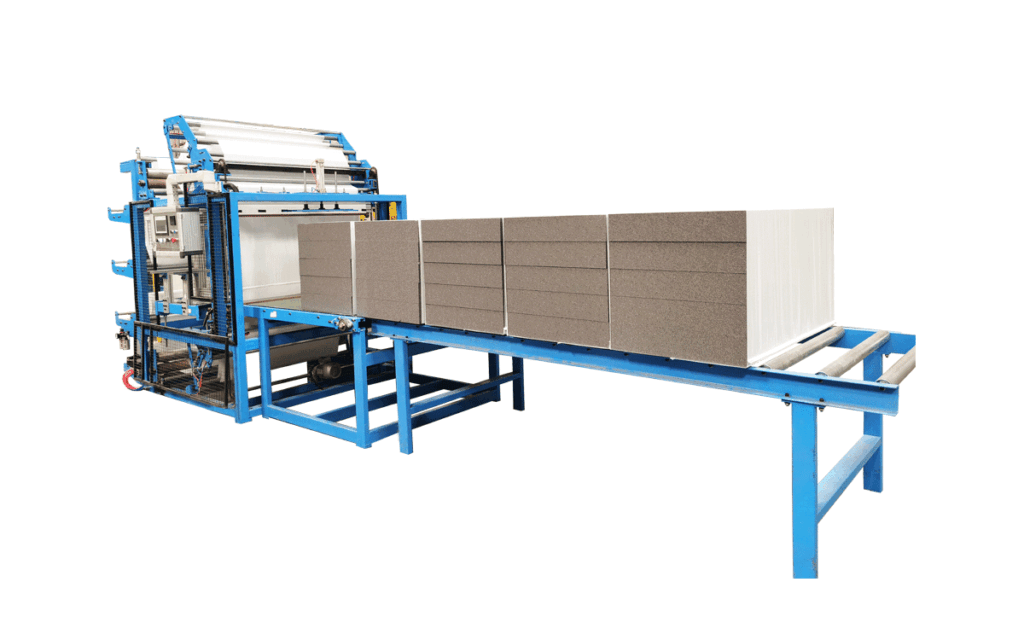
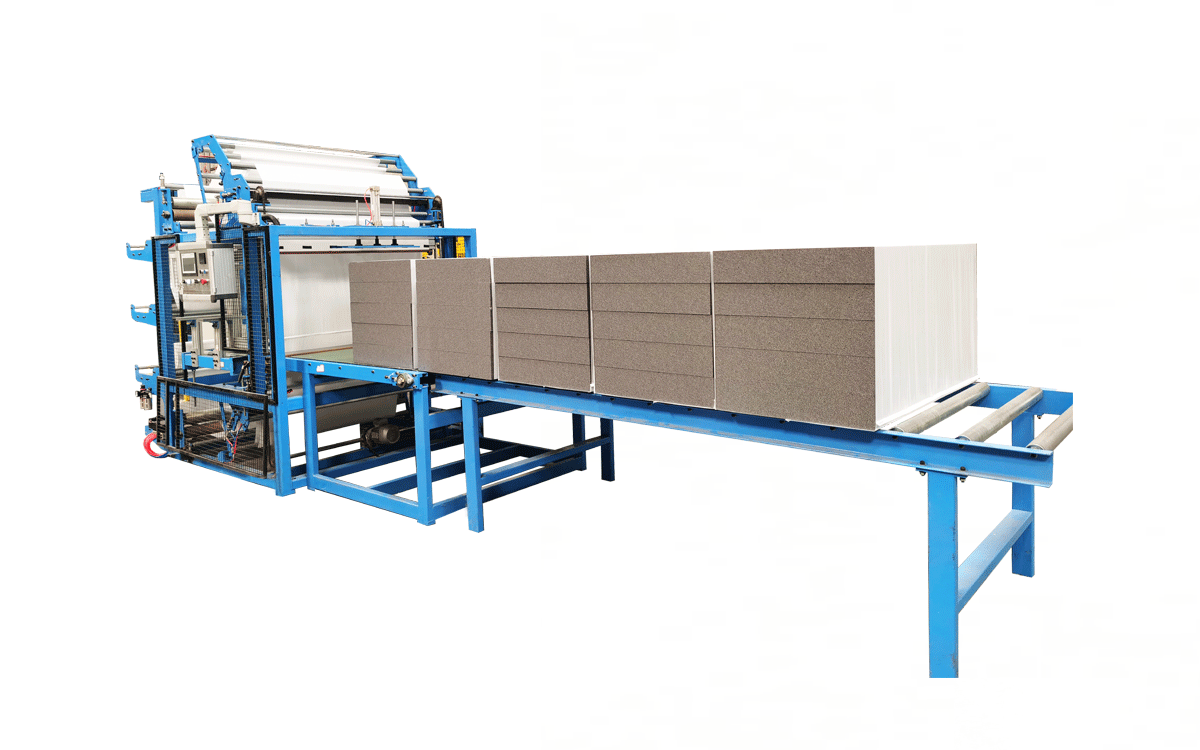
Once EPS blocks leave the molding press they are large, light, and awkward to move. An EPS packaging machine for block foam wraps them in a tight PE film skin so they stack, store, and ship without chipping the corners or picking up dirt. Getting this right protects product quality and keeps your dispatch area moving. Here is how the machine works, where it sits in the plant, what to specify, and the mistakes that quietly cost money.
What an EPS packaging machine for block foam does
The machine indexes each block, draws a sheet of PE film around it, and shrinks or seals the film so the block is fully enclosed. The film acts as a protective skin and a unitizing layer—several blocks can be handled as one stable pack. It is the last step before the block heads to the cutting line or the customer. Without it, block corners crush in transit and dust and debris cling to the surface.
How the block packaging cycle works
A block is pushed onto the infeed conveyor, centered by guides, and wrapped as the film carriage travels the block length. The sealed pack then exits to a roller table or strapping station. Cycle time is set by block size and film speed; faster is not always better, because seal quality falls apart if the film does not fully shrink. A good machine balances speed with a complete, gap-free seal.
Where the packager sits in the plant
Place it directly after the block molding press and before cutting or dispatch. The shorter the distance a bare block travels, the less damage it picks up. Many plants link the packager to a strapping and palletizing station so finished packs move straight onto the truck. Tying it to your cutting line throughput keeps the whole downstream flow in balance.
Typical specifications
Below is a representative EPS packaging machine for block foam specification. Figures are current model ranges.
| Model | Block Size | Speed | Film Material | Film Thickness |
|---|---|---|---|---|
| SPLB-1200 | 1200 × 600 × 600 mm | 8 packs/min | PE | 0.03 mm |
For larger blocks, train the film width and carriage travel to the block dimensions rather than over-specifying motor power you will not use.
How to choose the right model in 5 steps
- Measure your real block size. The EPS packaging machine for block foam must clear your maximum block length, width and height with margin for jigging.
- Count packs per minute you need. Match speed to your molding and cutting output. An 8 packs/min unit covers most single-line plants; twin lines may need more.
- Pick film thickness deliberately. 0.03 mm PE is a common balance of strength and cost; thinner film saves money but tears on rough handling.
- Decide seal vs shrink. Shrink film gives a tighter skin; simpler seal-only wraps are cheaper but less protective for long transit.
- Plan the downstream hand-off. Pair the packager with a strapping or palletizing step so packs flow straight to dispatch without manual double-handling.
Common mistakes when specifying block packaging
Chasing maximum speed. Running the film faster than it seals leaves gaps at the corners. A slightly slower, fully sealed pack beats a fast one that opens in transit.
Wrong film for the journey. Blocks shipped long-distance or handled roughly need thicker film or double wrapping. Under-specifying here shows up as damaged corners and customer complaints.
Confusing packaging with shape wrapping. Block foam is rectangular and uniform; shape products are irregular. A wrapping machine for shape products solves a different problem—don’t expect one machine to do both well.
Skipping the strapping step. Film alone can shift under load. Adding strapping stabilizes the pack for stacking and long hauls.
Frequently Asked Questions
What film should an EPS packaging machine for block foam use?
PE film around 0.03 mm is standard. Choose thickness based on handling and transit roughness rather than the lowest price per roll.
Can it wrap different block sizes?
Yes, within the machine’s rated envelope. Adjust guides and film width between runs; very different sizes may need changeover time.
Is shrink wrapping better than simple sealing?
Shrink gives a tighter, more protective skin and looks cleaner. Seal-only is cheaper and fine for short, gentle moves.
How fast can it run?
A typical unit handles about 8 packs/min on a standard block. Real speed depends on block size and seal quality, not just the motor rating.
Does it connect to the cutting line?
It should. Line it up with your EPS cutting line and strapping so packs move continuously to dispatch.
What does the film skin actually protect against?
Corner crushing, surface dirt, and moisture pickup during storage and transit—the three things that turn a good block into a rejected one.
Film handling and storage tips
Store PE film in a dry, temperature-stable area; cold film cracks on the seal and warm film stretches out of gauge. Keep spare rolls on the same stand the machine uses so changeovers take minutes, not half-shifts. Train operators to spot a partial seal early—a thin, uncrimped edge at the pack corner is the first sign film tension or temperature has drifted, and catching it at the machine prevents a whole pallet of opened packs reaching the customer.
Should I wrap blocks before or after cutting?
Wrap whole blocks before cutting when the block goes straight to a customer as stock; wrap cut sheets only if the order needs it. Wrapping intact blocks is faster and protects more surface per pack.
Can the packager handle wet blocks?
Avoid it. Moisture traps under the film and weakens the bead at the surface. Let blocks cure and dry to spec before they reach the packager.
What maintenance does the packager need?
Keep the film carriage rails clean and the seal bar free of residue; a dirty seal bar is the most common cause of weak seals. A quick daily wipe and a periodic blade check keep packs consistent.
Need a packaging setup matched to your block size and dispatch volume? Talk to our engineers for a recommendation.