
EPS Recycling System: Turn Production Waste into Profit
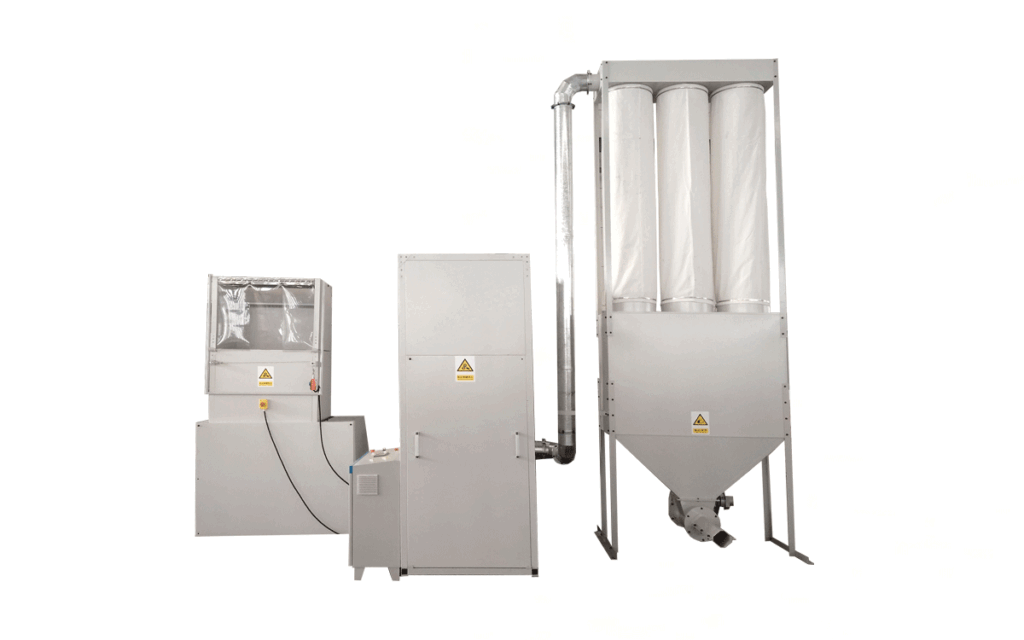
Every EPS plant produces waste: block scraps from trimming, cutting dust, off-spec blocks and rejected mouldings. Left untreated, that material has almost no value and costs money to haul away. An EPS recycling machine turns it back into raw material and lets you blend it into fresh production.
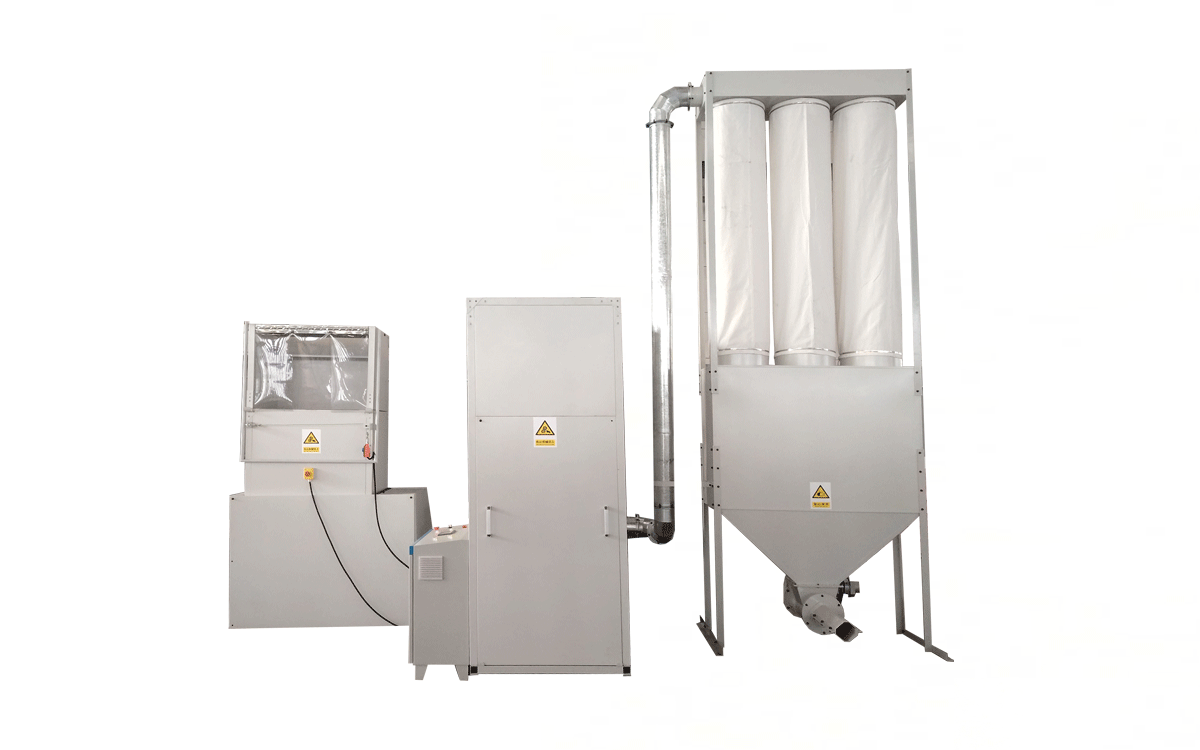
What the system does
A standard EPS recycling system works in three stages:
- Crusher — reduces blocks, sheets and moulded parts to loose beads
- De-duster — separates fines and dust, which otherwise cause surface defects and block steam vents in the mould
- Mixer — blends recovered beads with fresh raw beads at a controlled ratio before they enter the pre-expander or silo
With all three stages running, plants routinely recover more than 93% of their production waste by weight.
How much recycled bead can you blend in?
Typical mixing ratios are 5-15% recycled bead into fresh material. The safe ceiling depends on what you make: insulation block accepts a higher share, while thin-wall fish boxes and appliance inserts need a cleaner mix and usually stay near the lower end. Pushing above the safe ratio shows up as surface roughness, weak fusion and lower compressive strength.
Why the saving is bigger than the material
- Lower raw material cost per block
- Less waste leaving the site, cutting disposal and transport cost
- Smaller raw bead inventory, because scrap becomes stock
- A credible recycling story for customers facing packaging EPR rules
Where it fits in the line
Crushed and de-dusted beads are normally returned to the silo or fed back ahead of the EPS pre-expander machine. Pairing the recycling unit with an EPS silo system keeps the material dry and free-flowing, which matters more than most buyers expect.
One practical note: keep recovered and virgin bead clearly separated until the mixer stage. Blending by eye, or tipping scrap straight into the pre-expander hopper without de-dusting, is the most common reason plants give up on recycling after a few months. A controlled ratio at the mixer is what keeps the recovered material invisible in the finished block.
Want a recovery estimate based on your monthly scrap volume? Talk to our engineers.
Five steps to size your system
- Measure the scrap, do not guess it. Weigh every stream for two weeks: block ends, trim, dust, rejects. Most plants underestimate by a wide margin.
- Match crusher throughput to your worst day. Clean-ups and rejected runs arrive in bursts; average-day sizing leaves material piling up.
- Keep the de-duster in the specification. Fines are the difference between recycled bead that disappears into the block and recycled bead that ruins the surface.
- Decide the blend point. Mixing ahead of the pre-expander is common; blending into silo storage gives a more consistent ratio.
- Plan the floor space and the traffic. Scrap has to reach the crusher without crossing finished-product routes.
What can and cannot go back in
| Material | Accepted? | Handling note |
|---|---|---|
| Block ends and trim from the cutting line | Yes | Cleanest and most valuable stream |
| Cutting dust and fines | Yes, after de-dusting | Separate before blending; fines block steam vents |
| Off-spec and rejected blocks | Yes | Crush whole; investigate the cause before returning the material |
| Rejected shape mouldings | Yes | Remove tape, labels and any inserts first |
| Damp or wet foam | After drying | Moisture causes density drift and steam faults |
| Foam contaminated with oil, solvent or adhesive | No | Keep out of the recycling stream |
Common mistakes
Buying a crusher only. Crushing without de-dusting is the fastest way to conclude that “recycling does not work here”. All three stages matter.
No controlled ratio. A hopper of recovered bead tipped in by eye makes the blend impossible to repeat, and product quality becomes unpredictable.
Storing recovered bead in the open. Rain and humidity undo the work of the dryer. Store indoors, ideally in a silo.
Raising the ratio without trial blocks. Increase in small steps and test compressive strength and surface quality at each step.
Expecting recovered bead to behave like virgin bead. It has already been expanded once. It blends well within a controlled range; it is not a drop-in replacement.
Frequently Asked Questions
What recovery rate should we expect?
With crusher, de-duster and mixer running, plants routinely recover more than 93% of production waste by weight.
How much recycled bead can we blend?
Typically 5–15%. Insulation block accepts more; thin-wall fish boxes and appliance inserts should stay near the lower end.
Where does the recovered bead re-enter the line?
Usually at the mixer, feeding the EPS pre-expander machine or the silo. Pairing with an EPS silo system keeps it dry and free-flowing.
Does recycled content show in the finished block?
A controlled ratio should be invisible. Visible change means the ratio is fluctuating or the fines have not been removed.
Can we start small and expand later?
Yes. Many plants start with crushing and de-dusting, then add controlled blending and silo storage once volumes justify it. Talk to our engineers about a staged system.
How recycled bead behaves in the mould
Recovered bead has already been expanded once, so it enters the process with different characteristics: lower residual blowing agent, slightly higher bulk density and a wider particle size distribution unless the fines have been removed. Within a controlled blend that is invisible. Outside it, the symptoms are familiar — uneven filling, weak fusion, rough surfaces and density drift.
The practical controls are simple. Keep the ratio constant, keep the material dry, and never let fines through. If you see surface defects after raising the ratio, step back to the previous level rather than adjusting steam: steam changes will mask the symptom and create a second problem.
Plants that run recycling well treat it as a controlled ingredient, weighed and recorded like any other. That is the whole difference between a recycling system that pays back and one that gets switched off.
Can recycled bead be used in shape moulding?
Yes, at the conservative end of the range. Thin-wall parts and visible surfaces are the first to show problems, so trial parts are essential before raising the ratio.
Do we need to change mould settings when blending?
Usually not, within a stable 5–15% range. If you find yourself adjusting steam or filling to compensate, the ratio is probably too high or the fines are not being removed.