
EPS Shape Molding Tooling and Die Care
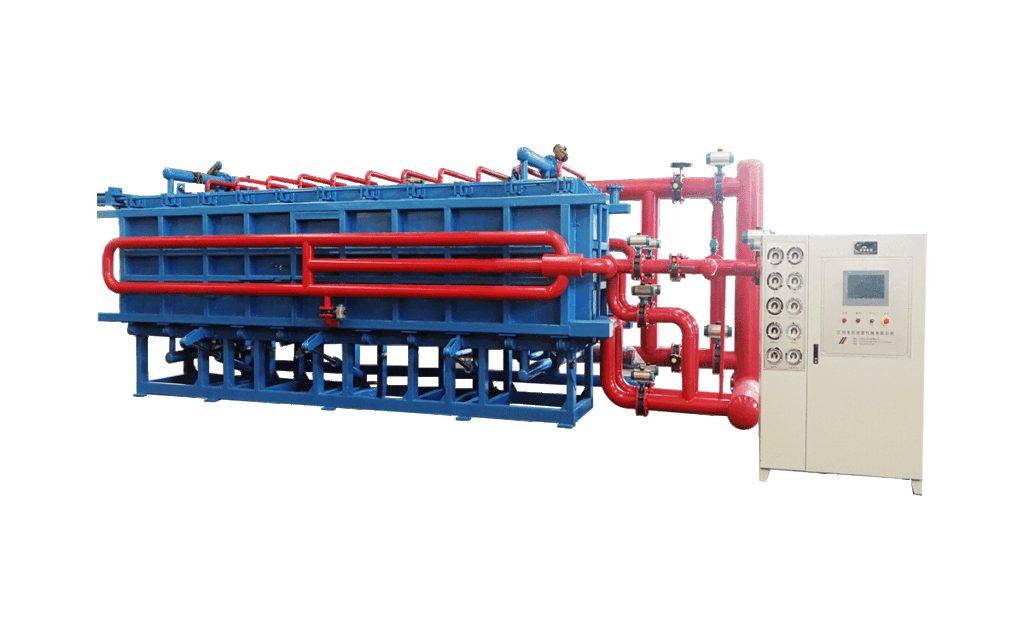
A good EPS shape part is decided as much by the tooling as by the machine. The die is where steam, vacuum, cooling water and bead quality all meet, and most surface defects, cycle drift and dimensional complaints trace back to how the mold was built and how it has been cared for since. This guide covers what shape molding tooling consists of, a practical care routine for an eps shape molding machine line, and how to decide when a die is worth refurbishing instead of replacing. It also looks at what happens after demolding, because wrapping finished shape products is part of protecting the work the die put in.
What Shape Molding Tooling Actually Is
For a given part, the tooling is a pair of aluminum halves: a cavity side and a core side, closed to form the part shape between them. Around and behind that shape sits the engineering that makes it work: steam jacket channels that distribute steam evenly, fill gun ports that inject bead into the closed mold, vent slots that let air and condensate escape, and an ejection system that releases the cured part without damage. On vacuum-equipped machines, the tooling also carries the vacuum path that pulls steam through the part and shortens the cycle.
Two identical-looking dies can perform very differently in production. Vent layout, jacket design and parting face quality decide fill consistency, fusion and cycle time, which is why tooling quality shows up on every single cycle, not just on delivery day.
Construction Choices That Affect Daily Work
Aluminum remains the standard die material because it transfers heat quickly and machines precisely. What varies is the quality of execution: how flat the parting face is, how cleanly the vent slots are cut, how the jacket channels are balanced across the mold. A die with poorly balanced steam distribution will force the operator to run longer steam times to compensate, and that extra time quietly costs production every day. When comparing tooling quotes, ask how venting and steam balance are engineered, not only what the surface finish looks like.
A Daily and Weekly Care Routine
Die care is mostly routine, and the routine is short. Daily, the crew should check the first article of each cavity against dimensions, wipe and inspect the parting face, confirm fill gun filters are clean, and look for water or steam leaks around the tooling. Weekly, the vent slots deserve a proper inspection and cleaning, ejector movement should be cycled and checked, and jacket condition reviewed through the pattern of cycle times. None of these tasks takes long, but skipping them is how a die that ran beautifully in month one degrades into a source of scrap by month six.
Common Symptoms and First Actions
Most die-related problems announce themselves through the part before they appear in any measurement. The table below maps the usual symptoms to the first thing worth checking.
| Symptom on the part | Likely cause | First action |
|---|---|---|
| Blistered or peeling surface | Wet steam or condensate in the jacket | Check steam traps and drainage, run a dry purge before production |
| Unfilled corners or short shots | Blocked fill ports or dirty gun filters | Clean filters and ports, verify fill pressure |
| Craters where beads pulled away | Blocked or dirty vent slots | Clean the vents and re-check that cavity |
| Parts sticking at demold | Damaged parting face or worn release surface | Inspect and re-polish the parting face |
| Cavities disagreeing on dimensions | Uneven venting or steam distribution | Compare fill and cycle behavior cavity by cavity |
| Cycle time creeping upward | Jacket scaling or vacuum leakage | Review water treatment and check seals |
A Five-Step Die Care Program
- Log first articles. Measure and record each cavity’s first part every shift, so drift is caught in days rather than in customer complaints.
- Clean vents on a schedule. Set vent cleaning by production count, not by feel, because blockage is gradual and cycle time creeps a few seconds at a time until a week of output is quietly gone.
- Track cycle time per part. A rising trend points at jacket condition, vacuum tightness or vents long before the parts themselves look wrong.
- Watch water quality. Scaling in jacket channels is slow, invisible and expensive; water treatment costs far less than re-cutting a die.
- Store dies properly between runs. Cleaned, dried, vents protected and faces protected, or the next production run starts with defects you did not earn.
Common Mistakes with Shape Molding Tooling
- Blaming the machine first. When parts go wrong, the die and the bead are checked after everything else, yet they are the more common culprit.
- Cleaning only after defects appear. By the time a dirty vent shows on the surface, the cycle has been paying for it for weeks.
- Storing dies bare and stacked. Damaged parting faces and dented vents turn a storage problem into a production problem.
- Refurbishing too late. A parting face re-cut is routine work; a die that ran rough for a year may need far more than that.
- Ignoring the bead side. Aging time and density drift in the pre-expander show up as die symptoms; fix the cause, not only the symptom.
Frequently Asked Questions
How long does a shape molding die last?
There is no fixed number; it depends on cycle counts, water quality and how consistently the care routine is followed. Dies that are cleaned on schedule and stored properly routinely outlast neglected ones by a wide margin.
When is refurbishing better than a new die?
If the part is still selling and the wear is limited to the parting face, vents or ejection hardware, refurbishing is usually the faster and cheaper route. If the design itself needs changes, a new die is the better investment.
Can one die run on machines from different suppliers?
Only if the tie-in dimensions and connections match. Confirm tie-in plate size and utility connections with both suppliers before planning to move a die between machines.
What supports die quality upstream?
Consistent bead. Density and aging discipline at the pre-expander reduce fill problems, and the silo system is what makes that aging time controllable rather than improvised.
Whether you are ordering a new die or rescuing an old one, the care routine above costs little and pays on every cycle. If you are planning shape molding capacity, contact our team with your part drawings and target cycle times, and we will review tooling and machine together.