
How to Choose the Right EPS Pre-expander Machine
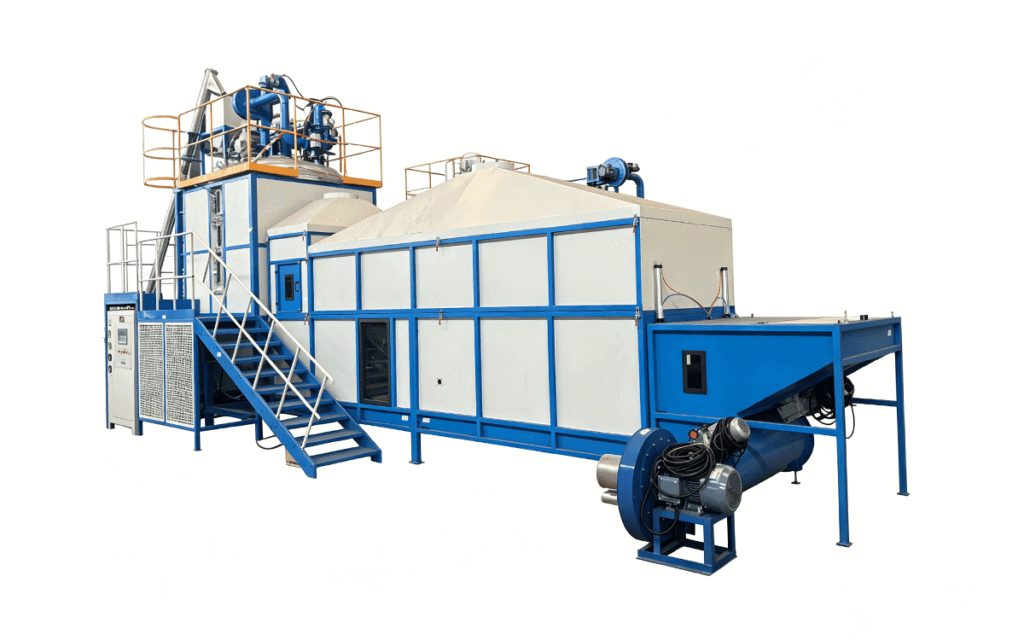
The EPS pre-expander machine sets the density of every bead that enters your block mould or shape mould. Get it wrong and no downstream machine can correct it: blocks come out heavy, uneven or slow to cure. Choosing the right pre-expander therefore starts with your target density, your output and the bead grade you run.
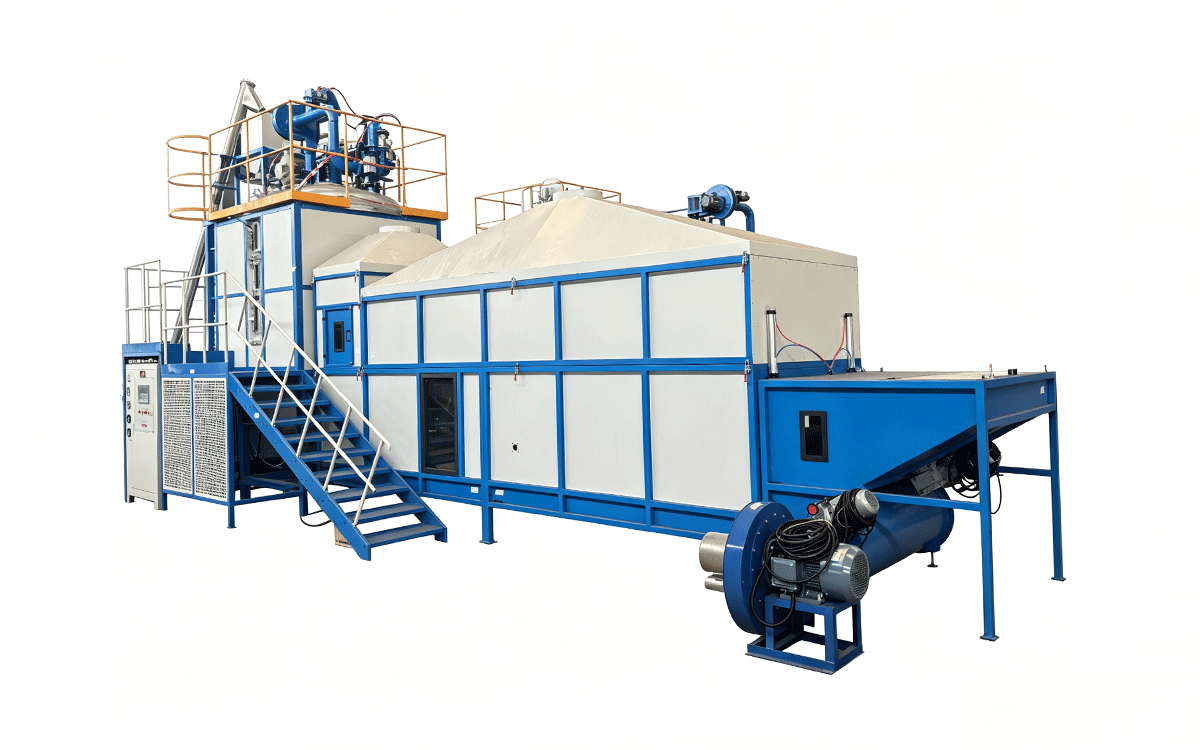
Batch or continuous?
- Batch pre-expander — expands a weighed charge in one vessel and then discharges it. Because each batch is weighed and steam-controlled separately, density accuracy is high. This is the right choice for plants running several densities, fish box grades or EPP.
- Continuous pre-expander — feeds and discharges without stopping, which suits high-volume plants making one or two grades. Throughput is higher, while density control depends more on sensor quality and steam stability.
Specifications that actually matter
- Density range — confirm the machine covers your lightest and heaviest grade, not just the average
- PID steam control — proportional steam valves hold expansion temperature steady when boiler pressure fluctuates
- Weighing system — load-cell weighing of each charge is what makes repeatable density possible
- Fluid bed dryer — beads must be dried and de-agglomerated before silo ageing, or they bridge and block the feed
- Chamber volume — an undersized chamber forces faster cycles, which increases bead breakage
Matching the pre-expander to your line
A pre-expander should be sized against your moulding capacity rather than bought in isolation. It normally runs fewer hours per day than the block moulding machine, so a buffer of aged beads in an EPS silo system decouples the two and keeps density stable shift to shift.
If you also process EPP, note that it needs higher steam pressure and a different expansion curve — see our EPP pre-expander machine. Send us your bead grade, target density and daily output and we will recommend the right model — get in touch.
Typical specifications
EPS Pre-expander Machine — specification snapshot
| Model | Chamber Diameter | Chamber Height | Density Tolerance | Output (@15 kg/m³) |
|---|---|---|---|---|
| SPJY-1600G | 1600 mm | 2500 mm | ±1.5% | 1600–1800 kg/h |
| SPJY-2000G | 2000 mm | 2000 mm | ±1.5% | 2000–2200 kg/h |
These are YouXin’s current model ranges. Exact configuration depends on block size, density target and the layout you run. Full options: EPS Pre-expander Machine.
Sizing a pre-expander in five steps
- Calculate the bead volume your moulds actually consume. Work in kilograms per hour at your target density, not in machine “size”.
- Decide whether you run one density or several. Several grades every day points to a batch machine with weighed charges; one or two grades at volume points to continuous.
- Check the steam you have, not the steam you plan for. Stable pressure matters more than peak pressure. A pre-expander cannot hold density on a fluctuating boiler.
- Size the ageing volume. Beads need hours to stabilise before moulding. Under-sized silos are the most common hidden cause of density drift.
- Ask for a trial with your own bead grade. Expansion behaviour differs between grades and suppliers; a trial settles it in a day.
Common mistakes
Sizing to the moulding machine’s maximum instead of its average. A pre-expander bought for peak demand runs short bursts and long idle periods, and density suffers at every restart.
Ignoring the fluid bed dryer. Wet beads bridge in the silo, feed inconsistently and block the mould filling guns. Drying is part of expansion, not an accessory.
Assuming one density setting covers the range. The lightest and heaviest grades you sell need different steam and cycle control. Confirm both ends of the range.
Forgetting the weighing system. Load-cell weighing of each charge is what makes repeatable density possible in practice.
Skipping maintenance of the steam valves. A pre-expander is a steam machine. Worn valves and wet steam show up immediately as density spread.
Frequently Asked Questions
Batch or continuous — which should I buy?
Batch if you run several densities, fish box grades or EPP, because each charge is weighed and steam-controlled separately. Continuous if you make one or two grades at high volume.
How accurate is the density control?
YouXin pre-expanders hold density within about ±1.5% at 15 kg/m³. Real accuracy also depends on stable steam pressure and correctly dried bead.
How much ageing capacity do we need?
Enough to cover your longest production run plus the ageing time your grade requires. As a rule, buffers protect you from boiler or shift interruptions.
Can one machine run EPS and EPP?
EPP needs higher steam pressure and a different expansion curve. If EPP is part of your plan, specify it up front or run a dedicated EPP pre-expander machine.
What happens if the pre-expander is undersized?
The moulding machines wait, or you push the pre-expander into faster cycles, which increases bead breakage and density spread. Either way the cost lands downstream.
Can scrap bead be fed through the pre-expander?
Yes, within a controlled blend. Recovered bead is normally crushed, de-dusted and mixed before it reaches the pre-expander — see our EPS recycling machine.
Steam: the specification buyers forget
A pre-expander is a steam machine, and steam quality does more to determine your density spread than any control feature. Three things matter: pressure stability at the machine, dryness of the steam, and condensate removal. A boiler that swings by a bar during simultaneous draws will show up as density variation no matter how good the PID loop is.
Before you buy, measure what you have. Log steam pressure at the machine inlet for a full shift; if it moves more than you are comfortable with, budget for pressure regulation or a larger boiler as part of the pre-expander project. This is the single most common cause of “the machine does not hold density” complaints that turn out not to be machine faults.
Then look at condensate. Wet steam wastes energy, lengthens cycles and leaves bead damp, which creates feeding problems downstream in the silo and the mould.
How much steam does a pre-expander use?
It depends on model, density target and bead grade. Ask for a consumption figure at your density, and compare machines on steam per kilogram of bead rather than on connected load.
Can we improve an existing pre-expander instead of replacing it?
Often yes: valve maintenance, steam regulation and drying upgrades recover a surprising amount of consistency. Send us your model and symptoms and we will tell you honestly whether an upgrade is enough.