
How to Choose the Right EPS Packaging Machine for Your Factory
Why the Right EPS Packaging Machine Matters
Expandable polystyrene (EPS) is still one of the most cost-effective protective packaging materials in the world — light, shock-absorbing, and cheap to produce at scale. But the quality of the final pack depends less on the raw bead and more on the EPS packaging machine that shapes and wraps it. Choosing the wrong model means scrap rate, slow cycles, and packages that fail on the shelf. Choosing the right one means stable output, lower labor, and a product your buyers trust.
Two Main Types of EPS Packaging Equipment
1. EPS Block & Sheet Packaging Machine
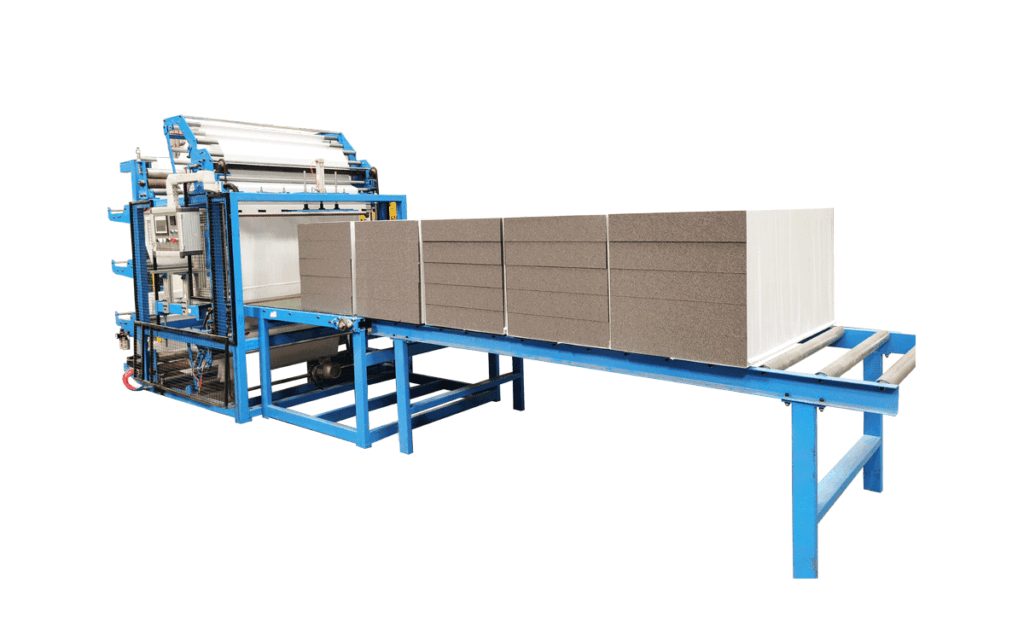
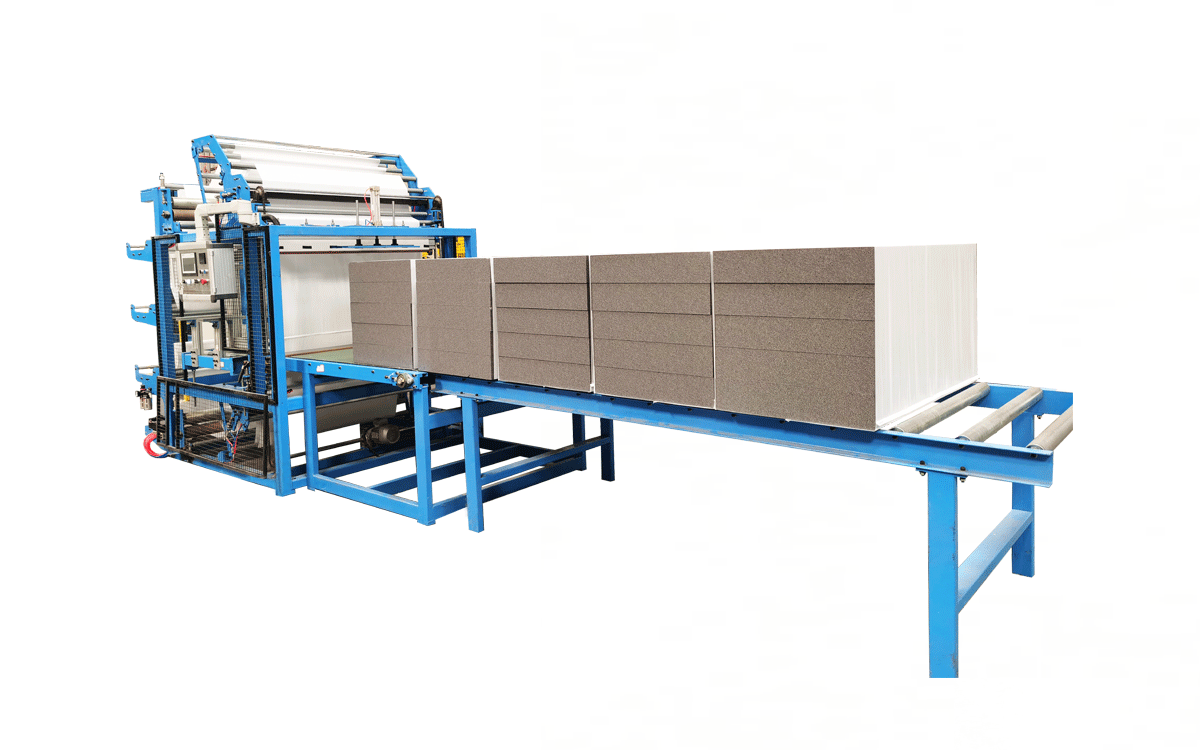
The EPS packaging machine for EPS blocks and sheets is built for high-volume protective sheets and cushions. It forms flat or contoured EPS packs used in electronics, appliances, and fragile industrial parts. If your business ships uniform panels or stacked sheets, this is usually the first machine to install.
2. EPS Wrapping Machine for Shape Products
The EPS wrapping machine for shape products targets irregular geometries — molded corners, custom inserts, and complex protective shells. It wraps pre-molded EPS around a product profile, giving a tight, presentable pack without manual fitting.
Key Selection Factors
- Product shape: flat sheets → block packaging machine; irregular parts → wrapping machine.
- Daily output: continuous lines suit 5,000+ packs/day; batch wrappers suit lower volumes.
- Automation level: PLC + servo control reduces operator skill needs and rejects.
- Floor space: wrapping cells are compact; full block lines need more footprint.
- Budget & ROI: a slightly higher-spec machine often pays back in scrap savings within a year.
Matching the Machine to Your Output
A small workshop serving a local appliance brand may only need a single EPS wrapping machine for shape products plus a pre-expander. A regional packager supplying supermarkets needs an integrated line: pre-expander → block molding → EPS packaging machine for blocks → cutting. Map your monthly pack count before sizing the line.
Why Choose YouXin EPS Packaging Machines
YouXin (YouXin EPS Machinery) builds both machine families on a shared PLC platform, so operators train once and run both. Bead density is stable, scrap is low, and spare parts are standardized across the range. We also supply the upstream EPS pre-expander machine and downstream EPS cutting line so you can build a complete, matched plant.
Get a Configuration Quote
Tell us your product shape, target daily output, and available floor space. We return a matched machine list with cycle time, power, and footprint — no obligation.
Looking for the right EPS packaging machine for your factory? Request a quote and our team will size the line to your block size, daily output, and target market.
Related categories: EPS packaging machines · EPS block molding machines · EPS pre-expander machines
Typical specifications
EPS Packaging Machine for EPS sheets — specification snapshot
| Model | Block Size | Speed | Film Material | Film Thickness |
|---|---|---|---|---|
| SPLB-1200 | 1200 × 600 × 600 mm | 8 packs/min | PE | 0.03 mm |
These are YouXin’s current model ranges. Exact configuration depends on block size, density target and the layout you run. Full options: EPS Packaging Machine for EPS sheets.
Five steps to the right configuration
- Define the pack, not the machine. Bundle or block dimensions, product shape and whether edges are fragile decide the machine family before any other factor.
- Count packs per shift, not per day. Continuous lines make sense at high daily volumes; a batch wrapper is the honest answer at lower ones.
- Choose the film and gauge. Film is a recurring cost and it interacts with sealing temperature. Confirm which gauges the machine accepts before you buy.
- Decide the automation level. PLC and servo control reduce operator skill requirements and rejects. If labour is expensive or hard to keep, this pays back first.
- Check the floor space and the flow. A wrapping cell is compact; a full block packaging line needs room for infeed, wrapping and outfeed stacking.
Common mistakes
Buying for the largest pack you might ever make. The machine then runs far below its natural rate every day. Buy for the sizes you ship weekly.
Sizing the packer without looking upstream. If the moulding and cutting stages out-produce the packer, the plant queues at the last step. Add 15–20% headroom against upstream output.
Comparing machine price only. Film waste, rework and labour per pack usually decide the real cost. A slightly higher-spec machine often wins on scrap alone.
Ignoring film availability locally. A machine that only runs a gauge you cannot buy locally becomes a sourcing problem.
No trial with your own product. Sealing behaviour depends on your product shape, film and ambient conditions. Always run your own packs before committing.
Typical applications
- Insulation board and sheet — stacked boards wrapped for site delivery, handled on an EPS packaging machine for blocks and sheets
- Shape-moulded parts — corners, inserts and fish boxes enclosed on six sides by an EPS wrapping machine for shape products
- Cut profiles and cornices — fragile edges protected before palletising, usually downstream of an EPS CNC cutting machine
Frequently Asked Questions
Block packaging machine or wrapping machine?
Flat sheets and uniform blocks suit the block packaging machine. Irregular shape-moulded parts suit the six-side wrapping machine. Many plants eventually run both.
What output should we plan for?
Match the packer to the output of the moulding and cutting stages plus 15–20% headroom, so packing never becomes the bottleneck.
Which film should we use?
PE film around 0.02 mm and thinner HDPE around 0.01 mm are both common in this range. Thinner film costs less per pack but needs clean sealing control.
Can we start manual and automate later?
Yes, and many plants do. The point to watch is labour: once wrapping needs two people per station for the whole shift, automation pays back quickly.
Can YouXin supply the upstream machines too?
Yes — pre-expander, cutting line and packing are supplied as a matched line. Request a quote with your pack size and daily output.
Integrating packing with moulding and cutting
Packing is the last step, which makes it the place where every upstream fluctuation becomes visible. A rush of blocks from the moulding stage, a cutting changeover, or a late order all arrive at the packing station as a queue. Two design choices make that manageable:
- Buffer capacity. A short accumulation conveyor between cutting and packing absorbs upstream bursts without stopping either machine.
- Standard bundle sizes. Fewer bundle formats mean fewer changeovers and a packing rate you can actually predict.
It is also worth matching the packing rate to the cutting rate rather than to the moulding rate. Blocks are produced in batches and cut over days, so the flow that matters is the one arriving at the packing station.
Can one machine pack both blocks and shape products?
Not optimally. Uniform blocks suit a block packaging machine; irregular shape products need a six-side wrapper. Plants with both product families usually run one of each.
How do we reduce film cost per pack?
Metered film per cycle, correct tension and no rework. Most film waste comes from overlap and from bundles that have to be wrapped twice — both are settings issues.