
How to Make an EPS Block Making Machine?
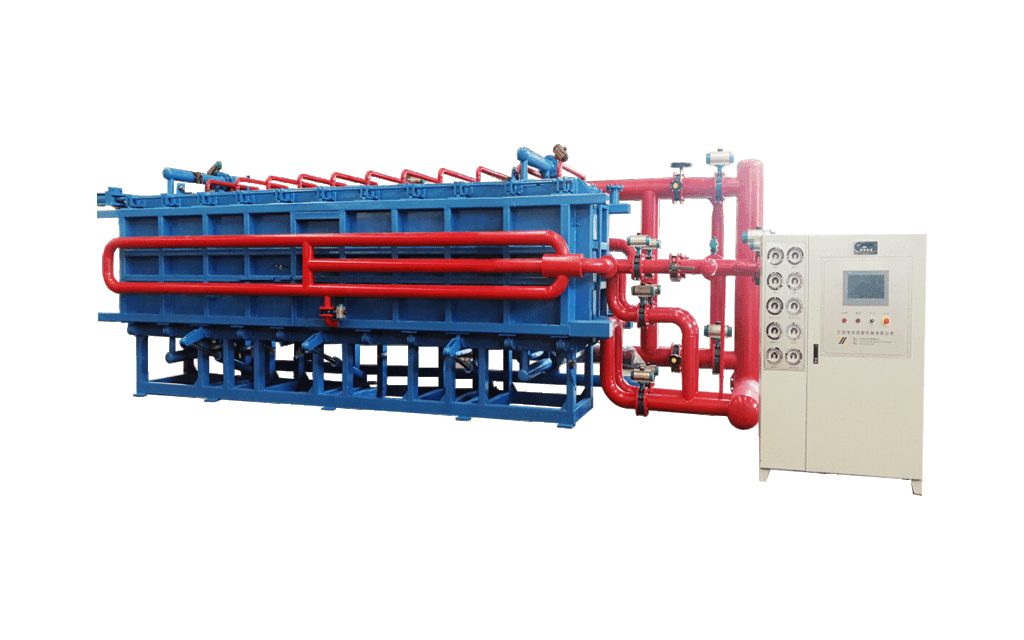
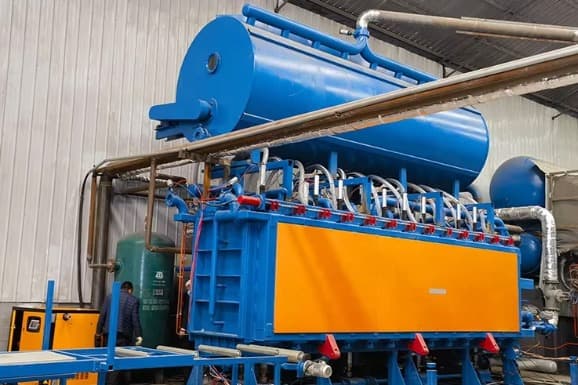
Making an EPS block-making machine is not a simple assembly project. It requires mechanical design, steam engineering, pressure control, vacuum cooling, mold fabrication, electrical automation, and a clear understanding of expanded polystyrene production. In modern EPS factories, the machine must do more than form foam blocks. It must produce stable density, strong bead fusion, accurate dimensions, and repeatable output for cutting, packaging, insulation, and construction applications.
An eps block making machine is typically built around a large molding chamber where pre-expanded EPS beads are filled, steamed, fused, cooled, and ejected as a solid foam block. The finished block can then be cut into sheets, panels, insulation boards, packaging inserts, or customized foam products.
Content Content 1 Start With the Production Requirement 2 Core Structure of an EPS Block Making Machine 3 Mold Chamber Design 4 Steam System Engineering 5 Filling System 6 Vacuum Cooling and Block Stability 7 Hydraulic and Ejection System 8 Electrical Control and Automation 9 Machine Testing Before Delivery 10 Why Professional Manufacturing Matters 11 Conclusion
Start With the Production Requirement
Before designing the machine, manufacturers must define the production target. A machine for small packaging workshops will not have the same structure as a high-capacity block molding line for insulation board production.
Key planning questions include:
What block size is required?
What density range will be produced?
How many blocks per hour are needed?
Will the machine use automatic filling?
Is vacuum cooling required?
What steam pressure is available?
What factory power supply is used?
Will the block be cut into boards later?
What level of automation is expected?
These answers determine machine size, chamber design, steam layout, cooling capacity, hydraulic system, and control configuration.
Core Structure of an EPS Block Making Machine
The main body of an eps block making machine is usually a welded steel frame designed to withstand repeated heating, cooling, pressure changes, and mechanical movement. The frame must be rigid enough to keep the mold chamber aligned during operation.
Important structural parts include:
Main machine frame
Fixed mold wall
Moving mold wall
Side panels
Steam chamber
Filling system
Hydraulic or pneumatic clamping system
Ejection mechanism
Vacuum and cooling channels
Safety guards
Control cabinet
Good frame design is important because EPS block molding depends on dimensional stability. If the mold chamber deforms, the finished block may have uneven size, weak corners, or inconsistent density.
Mold Chamber Design
The mold chamber defines the final block shape. It must provide enough internal space for bead filling, steam penetration, expansion balance, and cooling.
A well-designed chamber should support:
Even bead distribution
Uniform steam flow
Fast air removal
Stable pressure control
Smooth block release
Consistent block dimensions
Easy cleaning and maintenance
The internal mold surface is often made from corrosion-resistant metal or treated steel. The surface should be smooth enough to reduce sticking but strong enough to handle repeated cycles.
Steam System Engineering
Steam is the heart of EPS block production. It softens and expands the pre-expanded beads, allowing them to fuse into a solid foam block.
A proper steam system includes:
Steam inlet valves
Pressure control valves
Steam distribution pipes
Drainage lines
Condensate removal
Pressure sensors
Temperature monitoring
Safety relief components
Uneven steam distribution can cause weak fusion, wet blocks, density variation, and longer cycle times. This is why steam pipe layout and valve control are critical when making an EPS block making machine.
Filling System
The filling system moves aged EPS beads into the mold chamber. It must fill the chamber evenly without crushing the beads or leaving empty areas.
Common filling methods include vacuum filling, pressure filling, or air-assisted filling. For larger machines, multiple filling ports may be used to improve bead distribution.
A good filling system helps reduce:
Voids inside the block
Uneven density
Poor corner filling
Excess material waste
Long cycle time
Vacuum Cooling and Block Stability
After steaming, the block must be cooled before ejection. If cooling is poor, the block may shrink, deform, crack, or remain too soft for handling.
Vacuum cooling is widely used because it removes moisture and heat more efficiently. A vacuum system may include a vacuum pump, condenser, cooling water circuit, vacuum valves, and control sensors.
For high-output factories, vacuum cooling can improve block quality and shorten production cycles. This makes it an important feature in many modern EPS block molding systems.
Hydraulic and Ejection System
The machine needs a reliable system to open, close, clamp, and eject the foam block. Hydraulic systems are often used because they provide strong and stable movement for large mold chambers.
The ejection system must push the block out evenly. If the force is uneven, the block may bend or crack during removal.
Important design points include:
Stable guide rails
Strong cylinders
Smooth mold opening
Controlled ejection speed
Accurate positioning
Safe interlock design
Electrical Control and Automation
Modern EPS machines rely on PLC control, touch-screen operation, sensors, timers, and automatic valves. Automation helps operators control filling, steaming, heating, cooling, vacuum, drainage, and ejection more accurately.
A professional control system should include:
PLC program
HMI touch screen
Steam timing control
Pressure monitoring
Vacuum control
Temperature display
Fault alarm system
Manual and automatic modes
Emergency stop
Safety interlocks
Good automation reduces operator error and improves repeatability between production cycles.
Machine Testing Before Delivery
After assembly, the machine should be tested before shipment or factory use. Testing should confirm mechanical movement, valve response, steam sealing, vacuum performance, sensor accuracy, and control logic.
Trial production is especially important. A test block can reveal whether the machine has problems with filling, fusion, cooling, shrinkage, or block release.
Inspection points include:
Block surface quality
Density consistency
Bead fusion strength
Block size accuracy
Cycle time
Steam consumption
Vacuum efficiency
Water drainage
Machine noise and vibration
Why Professional Manufacturing Matters
Although the basic idea of EPS block molding seems simple, building a reliable machine requires experience. Poor design can lead to high energy use, slow cycle time, weak block quality, frequent maintenance, and unstable production.
A well-made eps block making machine should be designed for the full production process, not only the mold chamber. Steam supply, cooling, bead aging, air pressure, electrical control, and cutting equipment all affect the final result.
Conclusion
To make an EPS block making machine, manufacturers must design a strong frame, accurate mold chamber, efficient steam system, reliable filling system, vacuum cooling unit, hydraulic movement system, and automated control platform. Each part must work together to produce stable EPS blocks with good fusion, consistent density, and accurate dimensions.
For factories, the best machine is not only the one that can form a block. It is the one that can produce quality blocks repeatedly, reduce energy waste, simplify operation, and support long-term production efficiency.
For EPS block making machine product information, visit EPS Plant.
Post time: 08-18-2026
Typical specifications
Horizontal Styrofoam EPS Block Molding Machine — specification snapshot
| Model | Block Length | Block Width | Block Thickness | Output (@15 kg/m³) |
|---|---|---|---|---|
| SPB-2000WZ to SPB-6000WZ | 2000–6000 mm | 1000–1200 mm | 1000–1200 mm | 12–15 blocks/hour |
These are YouXin’s current model ranges. Exact configuration depends on block size, density target and the layout you run. Full options: Horizontal Styrofoam EPS Block Molding Machine.