
CNC Foam Cutting: Tools, Bits and Techniques for EPS
What "CNC foam cutting" actually covers
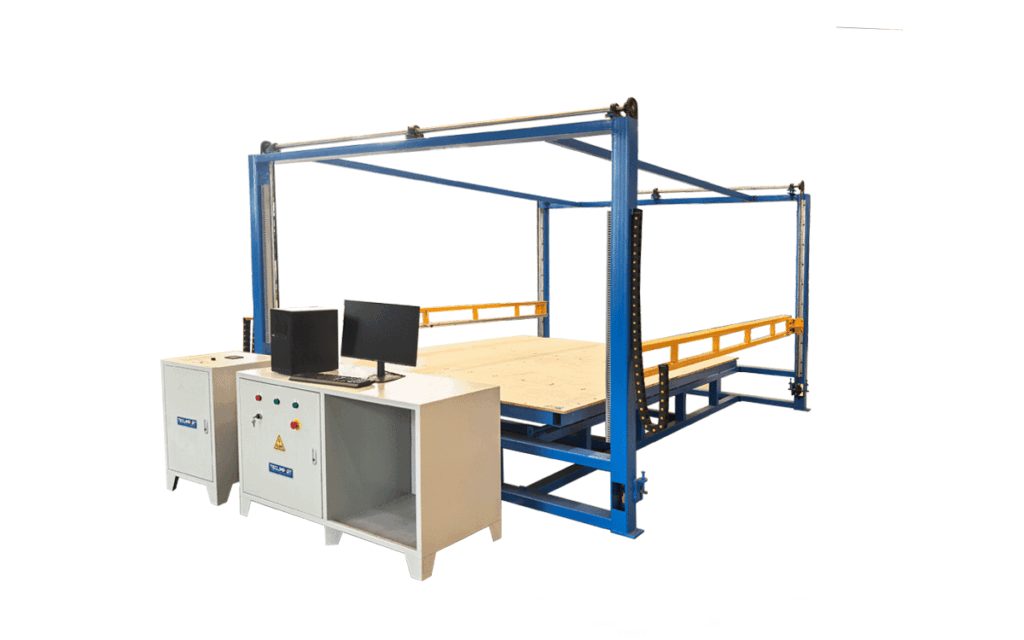
"CNC foam cutting" is a family, not one machine. It spans router-based mills that spin a bit through foam, driven hot-wire machines that pull a wire along a CAD path, and hybrid cells that do both. What they share is the input: a digital file. That is the real shift – the part is defined by a drawing, and every copy matches it.
If your parts are flat blocks and simple profiles, a straight hot-wire EPS cutting machine is cheaper and faster. CNC earns its place the moment parts are 3D, contoured, or need to repeat exactly from a file.
The three CNC approaches
Router and milling
A spinning bit cuts EPS, XPS, EPP and PU. Best for 3D contours, pockets, rebates and lettering. It produces dust, so extraction is not optional – see our dust and fume FAQ for hoods and filtration.
Driven hot-wire
A CNC-driven wire cuts large 3D forms fast and leaves a near-sealed surface. Ideal for big architectural and packaging shapes where a router table would be too small.
Hybrid cell
One gantry, both heads: rough with the wire, detail with the router. Fewer machines, one setup, one operator.
Bits and wire: matching tool to job
| Job | Tool | Note |
|---|---|---|
| Fast stock removal | Large 2-flute up-cut bit | Clear chips, watch heat build-up |
| Fine detail and lettering | Small ball or V bit | Slower feed, light passes |
| Large 3D blocks | Driven hot wire | Sealed surface, no dust |
| Deep pockets | Long end mill | Rigid hold-down is critical |
Feeds, speeds and hold-down
Foam rewards a fast spindle and a moderate feed: too slow and the bit rubs and melts the wall, too fast and you tear the surface. Start conservative and increase feed until chips look like snow, not dust. Hold-down is the other half of quality – vacuum tables work well for sheet, but thick blocks usually need mechanical clamps or sacrificial tabs, because foam is too light to stay put on its own.
Getting clean edges
- Use the largest bit that fits the feature; small bits flex and chatter.
- Take a roughing pass and a light finishing pass to eliminate witness marks.
- Keep the extraction running – recut dust is what smears a finished edge.
- For tolerance expectations, read our accuracy and tolerances FAQ.
Where CNC sits in the line
CNC is the finishing stage after a cutting line rough-cuts blocks. Most plants run a hot-wire line for volume blocks and one CNC cell for shapes – the two are complementary, not either/or. Pair both with a recycling machine so offcuts come back as usable bead instead of waste.
Buying checklist
- Table or gantry size vs your largest part.
- Axis count: 3-axis covers most work; 4/5-axis only for true 3D.
- Extraction designed in, not bolted on later.
- Cam software and post-processor you can actually run.
- Service and spares for the control you choose.