
EPS Molding Machine Automation: What Buyers Should Know in 2026
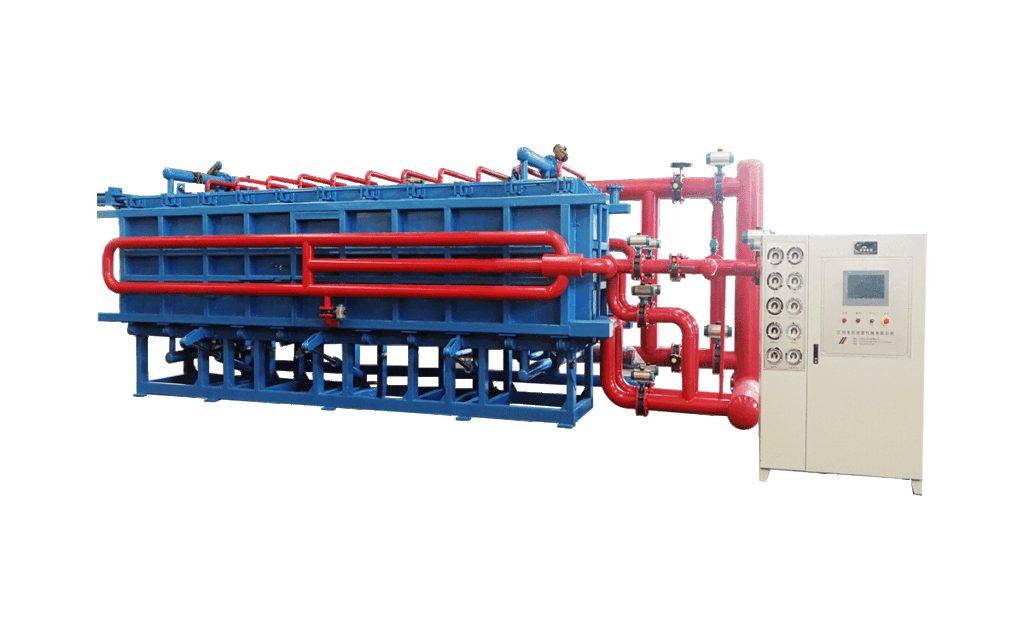
When buyers compare EPS molding lines in 2026, the conversation is less about whether a machine moulds and more about how consistently it moulds while you are not watching it. The features that separate a stable line from a drifting one are automation of the things operators used to tune by feel, and those are the lines worth paying for because they protect the product when the experienced operator is on holiday.
What to check
- PLC control with recipe storage. A block molding machine that stores steam and fill recipes per product removes operator guesswork and keeps blocks on spec across shifts and across operators, so the night shift makes the same block as the day shift.
- Steam pressure staging. Low-then-high steam fusion protects corners and surface; automation that holds the stage beats a manual valve that drifts as the shift wears on and the operator tires.
- Automated block handling. Eject and convey without manual pry bars cuts damage and lets the line run unattended longer, which is where the labour saving actually shows up on the payroll.
Why it matters
Consistency is the product. A line that holds density and fusion without constant attention is a line that ships salable blocks at 2 a.m. The capital gap between a basic and an automated machine is small next to the rejected-block cost it avoids, and the labour it frees is real every day. For the rest of the cell, our cutting line and silo notes cover the adjacent decisions. Talk to our team for a configuration matched to your output and your staffing plan.