
Why Steam Quality Decides EPS Block Consistency
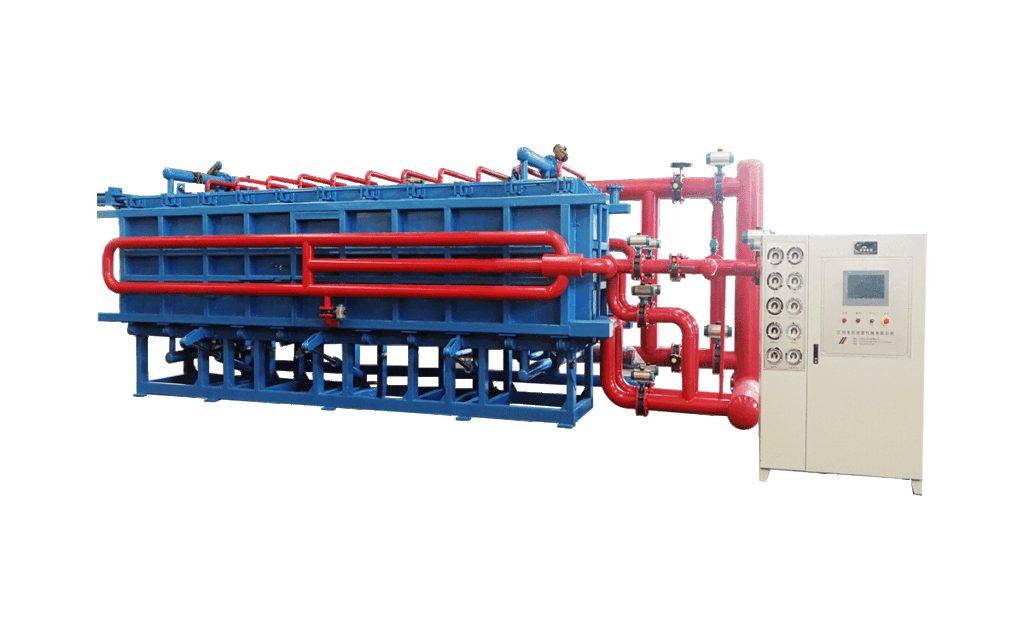
A block came off the line with a sugary, under-fused core this morning, and the first reaction was to blame the beads. It was not the beads. A trap passing wet steam and a pressure dip at the mould during the fusion shot told the real story. On an eps block molding machine, most “fusion problems” are steam problems wearing a different name.
Dry saturated steam is the target
Beads fuse because steam condenses on their surfaces and releases heat evenly. You want dry saturated steam at the mould, with as little carried-over water as possible. Free water floods the bed, blocks the channels between beads and leaves cold spots that never reach fusion temperature, while the gauge still reads correctly. The block is heavy enough by weight but full of loose beads.
Stable pressure at the mould, not the boiler
A boiler gauge says little about what the mould sees during a fusion shot. Long headers, undersized valves and several machines drawing at once pull the local pressure down when it matters. A mould that loses pressure mid-shot under-fuses in the zones furthest from the steam entry. A correctly sized accumulator stores steam close to the machine and holds mould pressure steady through peak demand.
Traps and drainage do the quiet work
None of this holds if condensate is not getting out. A failed-open trap wastes steam; a failed-closed trap fills the header with water. A short routine catches most of it:
- Check that traps discharge condensate, not live steam, and listen for a change in the cycling pattern.
- Confirm separators and drain legs ahead of the mould are clear, especially after a cold start.
- Watch the mould pressure trace during a shot, not the static header gauge.
- Verify the accumulator is in circuit and at pressure before a run.
- Check steam dryness and drainage before changing the bead lot or cycle time.
Why the diagnosis keeps getting missed
Poor fusion looks like a material fault, so the instinct is to change the bead lot. Log steam conditions beside each block result and bad blocks cluster around start-ups, when traps and header pressure are least stable.
If you are chasing inconsistent fusion, start at the steam system before the silo. See our vertical eps block molding machine and horizontal eps block molding machine pages, or contact our team to talk through your steam header and trap layout.