
How to Commission a New EPS Production Line
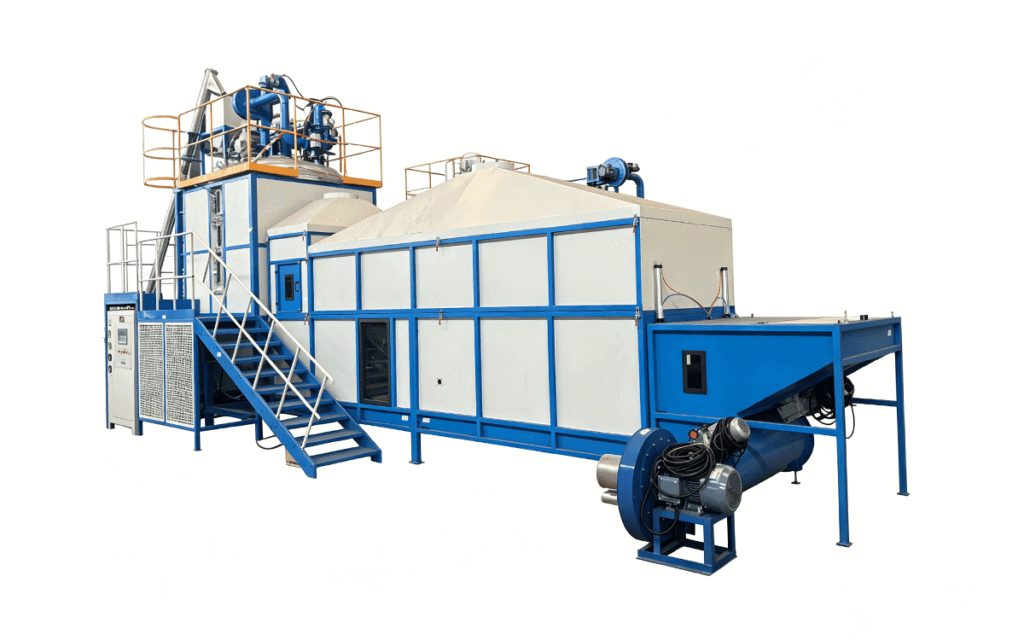
Commissioning is where a good installation becomes a good factory. Done in disciplined phases, it catches wiring, steam and software issues while they are cheap to fix and ends with a line your operators actually understand. Done in a rush, it produces a plant that “sort of works” and spends years paying for shortcuts. This guide lays out a phased checklist for commissioning a complete EPS line, from site readiness through the first cuts, with acceptance checks defined before each phase starts. The logic applies whether the line centers on an eps pre-expander machine feeding a block moulder or a fuller configuration with cutting and packing.
Phase 1: Site Readiness Before Anything Ships
Most commissioning delays are actually site readiness delays that surface too late. Before the supplier’s technicians travel, verify the fundamentals on your side and agree the checklist in writing.
| Item | What to verify | Why it matters |
|---|---|---|
| Civil works | Foundations, anchor bolt patterns, pits and floor levels match the layout drawings | Machines cannot be levelled on an out-of-tolerance floor; rework here stops everything downstream |
| Power supply | Correct voltage, phases, breaker sizing and earthing per the electrical drawings | Under-sized feeders trip during first motor starts and mask other faults |
| Steam plant | Boiler capacity, pressure and condensate return ready; mains insulated and drained | Wet or short-of-pressure steam turns every later test into a false failure |
| Compressed air | Capacity, dryness and line pressure at the machines | Fill systems and actuators behave unpredictably on wet air |
| Water and drainage | Cooling water quality, pressure, drains for condensate and vacuum water | Missing drainage floods pits during the first steaming tests |
| Consumables | Raw bead of the agreed grades on site, plus steam, water and film for packing trials | Technicians on site without bead to run are the most expensive idle hours in the project |
Phase 2: Mechanical and Electrical Installation Checks
As machines are set, resist the urge to power anything on immediately. Each station gets verified against its drawings first: anchor torques, levelling, conveying alignments between stations, and the routing of steam, air, water and electrical connections as drawn rather than as improvised. Then energize section by section, checking rotation directions, emergency stops, safety interlocks and guard switches before any process medium is connected. A fault found with a torque wrench costs minutes; the same fault found with steam in the line costs a week.
Phase 3: Dry Runs and First Bead
With utilities live, run each machine empty through full cycles. Watch for smooth motion, correct valve sequencing and clean alarm handling. The first process material should be introduced one machine at a time, starting upstream.
On the pre-expander, acceptance is about the numbers you will live with for years: density repeatability at the target grade, first-fill behavior into the silos, and stable conveying. Record densities across a defined number of batches and compare them against the specification agreed in the contract. This is also the moment to train the bead-side operators properly, because habits formed in week one last for years.
Phase 4: First Block and First Cut
Once silos hold matured bead at a verified density, mold the first blocks. Expect iteration: first articles rarely hit target fusion immediately, and the adjustments made now, to steam staging and fill pressure, become the plant’s baseline recipes. Judge the first blocks by tear-test and cross-section inspection, not by appearance alone.
When a block meets the agreed quality standard, send it to the cutting line. Verify infeed alignment, first-cut squareness, and blade performance at the densities you actually plan to sell. Then close the loop: run material from bead intake through cutting to packed sheets continuously, and measure the line’s real output over a full shift rather than a best-case hour.
A Five-Step Handover Sequence
- Define acceptance criteria in advance. Density tolerance, block quality checks and hourly output at a reference density, agreed in writing before commissioning begins, so nobody negotiates success at the end.
- Commission upstream to downstream. Pre-expander first, then silos, then moulder, then cutting, then packing. Each phase must pass before the next consumes its output.
- Log every change. Parameter, date, who changed it, result. The log becomes your plant’s baseline and your first diagnostic tool later.
- Train operators on the running line. Demonstrate normal cycles, then deliberately simulate common faults so operators see the alarms and the correct response, not just the happy path.
- Formalize the handover. Walk the checklist with the supplier’s engineer, sign off phase by phase, and keep the drawings, recipes and spare parts list with the maintenance team, not in a drawer.
Common Commissioning Mistakes
- Starting before the site is ready. Technicians standing idle while a pit is re-cast is the most predictable waste in the whole project. Gate the arrival date on a signed site-readiness checklist.
- Accepting “it runs” as acceptance. A line that runs once is not a line that repeats. Density repeatability and shift-level output are the criteria that matter, and both need measured evidence.
- Skipping the wet-steam check. If the steam main delivers condensate during early tests, every later adjustment compensates for a problem nobody identified.
- Training only one operator. The person trained on commissioning day takes leave, and with them goes the recipe knowledge. Train a small team on the running line during the final phase.
- Losing the change log. Six months later, when fusion drifts, the log from commissioning is what tells you which parameters ever actually worked.
Frequently Asked Questions
How long does commissioning a full EPS line usually take?
It depends on line scope, site readiness and how quickly acceptance criteria are agreed. A disciplined commissioning with utilities prepared in advance is measured in days per phase; most schedule overruns come from site works and steam plant issues, not from the machines themselves.
What should we prepare before the supplier’s technicians arrive?
Civil works to drawing tolerance, utilities live and tested, agreed bead grades on site, and a named team of your own staff assigned to the project. A signed site-readiness checklist avoids the most expensive failure mode: technicians on site with nothing to commission.
Who defines the acceptance criteria?
You should, together with the supplier, before shipment. Typical criteria cover density repeatability at the pre-expander, block fusion quality by tear-test, cutting accuracy and hourly output at a reference density. Agreeing these in writing is the single best protection for both sides.
Can our operators be trained during commissioning?
They should be, deliberately. Commissioning is the cheapest training you will ever get, because the supplier’s engineers are on site and the line is being explained as it is built. Plan for a small team to shadow every phase, and extend training to simulated fault handling in the final days.
Commissioning well takes a week of discipline and saves years of improvisation. If you are planning an installation and want the commissioning checklist reviewed against your layout and utility plan, contact our team. You can also read how our EPS pre-expander machine, block molding machine and EPS cutting line are specified to make each acceptance phase measurable.