
EPS Cold Press Machine: Dewatering Scrap for Recycling
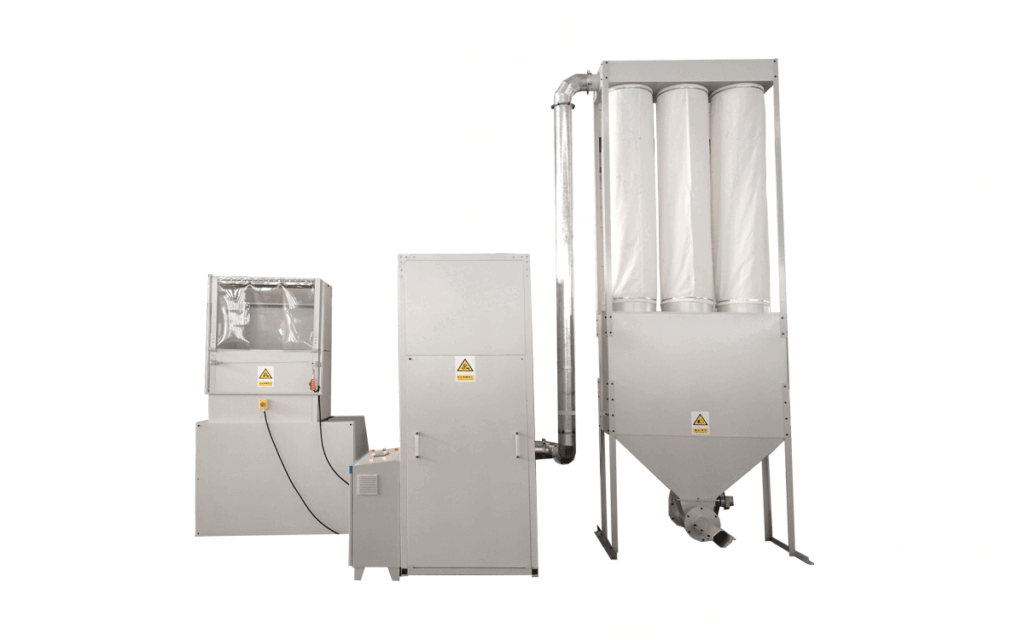
An EPS cold press machine squeezes water out of wet scrap foam before it enters a recycling machine. Foam scrap from washing, food-line trim or outdoor storage carries water, and that water is weight you are paid nothing for. Dewatering it first lets the densifier or compactor downstream run cleaner, use less heat, and deliver a denser product that earns a better rebate. This guide covers where the cold press fits, how to size it, and the failure patterns we see in the field.
Why water in scrap foam costs you twice
The first cost is at the weighbridge. Recyclers buy on weight, but they buy on dry polymer weight; water is discounted or rejected outright. A wet bale that looks heavy can contain a large share of water, and the rebate per tonne drops accordingly.
The second cost is inside your own machine. A densifier has to evaporate the water before it can melt the polymer, which means energy spent on something you are not selling and a feed that fluctuates as moisture varies. In a compactor, trapped water prevents the material from locking together, so the bale springs apart on the pallet. Neither problem shows up on a spec sheet; both show up on the monthly figures.
How a cold press removes water without heat
A cold press works mechanically. Wet foam is fed into a chamber and pressed between a plunger and a die, squeezing free water out through drainage openings. Nothing is melted, so the material keeps its identity, and the energy demand is a fraction of a thermal process. What comes out is a compressed, semi-dry block that stacks and feeds predictably.
Because there is no heat, the machine tolerates mixed or contaminated scrap that a densifier would rather not see, and it can sit directly beside the wash line or the food-packaging line where the wet material is generated. That proximity matters more than it sounds: wet foam is heavy, and every metre you push it by hand is a reason for operators to skip the step.
Where it sits in the recycling line
The order is collection, dewatering, densifying or compacting, then shipment. The cold press sits immediately before the recycling machine, after the wet scrap has been separated from the dry stream.
- Cutting offcuts from the cutting line are normally dry and can bypass the press entirely.
- Shape trim is usually dry too, unless it has been washed.
- Food-line and washed scrap is the stream that justifies the machine. Keep it separate from the dry stream so you are not paying to press material that never needed it.
If the material is destined for an ingot, the press pays for itself in heat saved. If it is destined for a bale, it pays for itself in bales that hold together and a rebate that is not discounted for moisture.
Field problems and what they usually mean
| Symptom | Likely cause | What to check |
|---|---|---|
| Water still dripping from the pressed block | Press force too low for the material, or cycle too short | Press force setting and dwell time; whether the feed is over-thick |
| Block falls apart when stacked | Foam too wet, or too much contamination (soil, food residue) | Upstream separation; if the scrap is heavily contaminated, no press will fix it |
| Machine stalls on a batch | Dense fused material mixed in with loose offcuts | Feed consistency; sort shape trim from loose foam |
| Drainage holes blocked | Fines and sediment carried in with the water | Cleaning interval on the drainage plate |
| Throughput drops over a shift | Chamber filling with compacted fines, or worn seals | End-of-shift clean-down routine and seal inspection |
Sizing the press to your wet-scrap tonnage
- Measure the wet stream separately. Weigh only the scrap that actually arrives wet. Pressing dry offcuts is wasted cycle time.
- Work to your peak day. Wet scrap arrives in bursts after a wash cycle or a food order; the press must clear that burst before it accumulates.
- Check the output block size against how you will store and ship it. A block that is too large to lift by hand will be left on the floor.
- Confirm the press force against the density you need downstream. Heavier, denser scrap needs more force to release the water.
- Plan the footprint next to the source. The press belongs where the wet material is produced, not across the plant.
Mistakes worth avoiding
- Pressing everything. Dry cutting offcuts do not need dewatering. Running them through wastes cycle time and adds a handling step that operators will eventually stop doing.
- Buying a press to fix contamination. A cold press removes water, not soil or food residue. If the scrap is dirty, the problem is upstream sorting, and the recycler will still discount it.
- Ignoring the water you just removed. The press produces a drainage stream that has to go somewhere. Plan the drain or collection point before the machine arrives.
- Treating it as the last purchase. Plants often buy the densifier first and add the press a year later, then discover the layout no longer works. If you know your scrap is wet, plan both steps together.
- Assuming a press replaces drying. It removes free water mechanically; it does not dry the polymer. Material that has been soaked for days still needs time under cover before it processes well.
Frequently Asked Questions
Do I need a cold press if my scrap is dry?
No. If your offcuts come straight off the cutting line and are stored under cover, there is no water to remove and the press adds a handling step without benefit. It earns its place only where the stream is genuinely wet.
Cold press or drying before the densifier?
They solve different problems. A cold press removes free water mechanically and quickly; drying removes surface moisture slowly and needs space and time. Most plants that wash scrap use both, but the press is the step that makes the densifier’s job predictable.
Can a cold press handle food-contaminated foam?
It can press it, but it will not clean it. Contaminated scrap is priced lower regardless, and the recycler may reject it. Sort and, where required, wash first; the press comes after.
How dry is the output?
Dry enough to stack and feed without dripping, but not kiln-dry. Expect the block to release free water under pressure and to lose remaining surface moisture over time under cover.
Where does the squeezed-out water go?
To a drainage point you provide. This is the detail most often missed in planning: the machine needs a drain or a collection container, and in food plants that water may need to go to the existing wash-water system.
Related reading
- EPS Foam Recycling Machine: Turn Scrap Foam into Profit — the three recovery routes and how to pick one.
- EPS Recycling Machine: Densifier vs Compactor — which downstream route fits your volume.
- EPS recycling machine — the step this press feeds into.
If your scrap stream is wet and you are not sure whether the press or the densifier should come first, describe your process to contact our team and we will lay out the sequence for your plant.