
EPS Foam Recycling Machine: Turn Scrap Foam into Profit
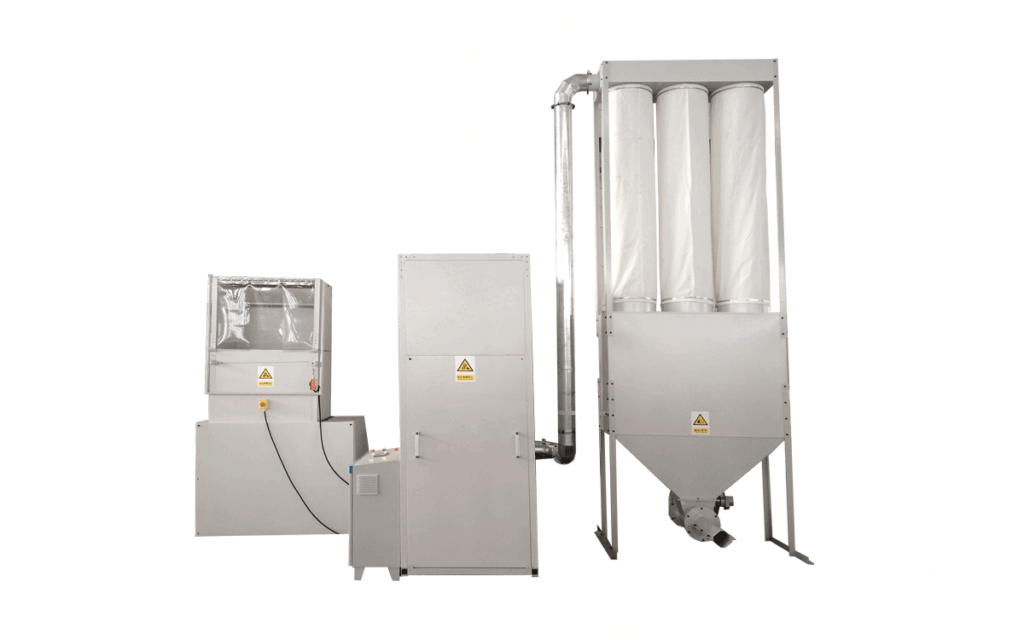
An EPS foam recycling machine turns the scrap your cutting line and shape moulder produce every day back into something with a market value. Expanded polystyrene is more than 90% air, so a skip filled with loose offcuts is mostly empty space that you pay to store, handle and haul away — yet the material itself is clean polymer that compacts or densifies into a feedstock recyclers buy. This guide explains the three recovery routes, how to size the machine against your real scrap rate, and the mistakes that quietly destroy the rebate.
What loose EPS actually costs you
The invoice from the waste contractor is the visible part. The rest sits in the plant: floor space taken by bags and boxes of offcuts, forklift trips to move them, and the fire load of foam stacked against a wall. On a line running two shifts, scrap accumulates faster than most managers expect, because the volume is high even when the weight is low. A plant that cuts a few cubic metres of block a day can generate enough loose foam to fill a truck every week.
Set against that, recovered foam has a price. Densified or compacted material goes back into the polystyrene chain as feedstock, and the rebate you receive depends almost entirely on two things: how dense you can make the material, and how clean it is when it arrives. Both are decisions you make at the machine, not at the recycler.
Where your foam scrap comes from
Foam scrap arrives in streams that behave differently, and it pays to keep them apart before they reach the machine.
- Cutting offcuts from the cutting line — trim, rejected boards and test cuts. Clean, dry and consistent, this is the easiest material to compact or densify.
- Shape trim from the moulder — gates, runners and rejected parts. Often denser than board offcuts because the material has already been fused, which can be an advantage for the densifier.
- Packaging returns and breakage — foam that has been in contact with food, water or soil. This is the stream that needs sorting and, if it is wet, dewatering before it is worth anything.
Mixing wet scrap with dry scrap is the fastest way to lose rebate on the whole batch. Keep the wet stream separate and deal with it deliberately.
The three recovery routes, and what each one gives you
There is no single correct machine. The route follows the volume and the market you can reach.
| Route | What comes out | Best when | Trade-off |
|---|---|---|---|
| Densifier (hot melt) | Solid ingot or log | Steady volume, want the highest rebate, have space for a heated machine | Higher capital cost and power draw; needs a reasonably consistent feed |
| Compactor (cold press) | Compressed bale | Moderate volume, tight budget, want a simple machine | Lower density than an ingot, so lower rebate per ton and more hauling |
| Granulator plus reclaim | Bead or flake for reuse | Clean offcuts you want to feed back into molding | Only a modest share can go back into the blend before fusion suffers |
Most plants that ask us about an EPS foam recycling machine end up with a densifier, because the ingot is the form recyclers pay best for and it stores outdoors without absorbing water. A compactor makes sense when volume is moderate and the buyer accepts bales. Granulation is a different decision: it is about reusing material inside your own line, not about selling it, and it only works with clean, single-grade scrap.
How to size the machine against your real scrap rate
Sizing starts with weighing, not guessing. Collect scrap for one normal shift and weigh it, then repeat on your busiest day. The peak figure is the one that matters, because a machine that keeps up on average but backs up every Thursday will still leave you bagging foam by hand.
From there, work in volume rather than weight. Loose foam occupies many times the space of the same mass once compacted, so the practical question is how much floor area the output takes and how often it leaves the plant. A densifier producing ingots you can stack on a pallet changes your storage requirement far more than the tonnage figure suggests. If your scrap is wet, add the cold press step described in our cold press guide before the densifier — water is weight you are paid nothing for and heat you waste boiling off.
Choosing the right machine in five steps
- Weigh a shift of scrap on a normal day and on a peak day. Write both numbers down; size for the peak.
- Separate the streams — dry cutting offcuts, shape trim, and wet or contaminated foam. Decide which streams you will actually process.
- Check the moisture of the wet stream. If it drips or feels heavy, plan a dewatering step before densifying.
- Talk to your recycler before you buy. Ask what form they accept (ingot, bale, flake), what contamination they reject, and what the rebate difference is between forms. This single conversation decides the route.
- Match footprint and power to the space beside the line. A machine that has to be fed across a walkway will be bypassed by the operators within a month.
Mistakes that cost more than the machine
- Buying on throughput alone. A machine rated far above your scrap rate runs empty, and an empty densifier wastes heat. Match the machine to the peak you measured, not to the biggest model on the price list.
- Storing scrap outdoors in bags. Foam left in the rain absorbs water, and water is the single biggest rebate killer. Covered storage costs less than the rebate you lose.
- Mixing grades. Foam that has been in contact with food or soil contaminates a clean batch. One dirty bag can downgrade a whole pallet of ingots.
- Assuming reclaimed bead is free material. Only a limited share can go back into block molding before fusion and dimensional stability suffer, and the blend has to be validated on your own machine. Treat reuse as a bonus, not the business case.
- Forgetting the labour. Loose foam is handled three or four times before it leaves the plant. Compacting at the source removes most of those trips, and that saving often exceeds the rebate in the first year.
Frequently Asked Questions
Is an EPS foam recycling machine worth it for a small plant?
Usually yes, but the payback comes from handling and storage as much as from the rebate. A small plant with steady cutting offcuts typically recovers the cost through fewer haul-away trips and reclaimed floor space before the material value alone would justify it. If your scrap is intermittent, a compactor at lower capital cost is the safer start.
Densifier or compactor for foam?
A densifier when you have steady volume and a recycler who pays for ingots; a compactor when volume is moderate and budget is tight. Compare the rebate per ton against the difference in capital cost and power, not against the purchase price alone.
Can recycled EPS go back into my own production?
Partially. Clean, single-grade offcuts can be granulated and blended back at a modest ratio, but fusion quality and dimensional stability must be checked on your own block mould before you commit to a percentage. Most plants sell the bulk and reuse a small fraction.
Does the foam need to be dry?
Yes. Water adds weight you are not paid for and forces the machine to evaporate it. Wet or washed scrap should be dewatered first; a cold press does this mechanically without heat.
What form do recyclers prefer?
Ingots from a densifier command the best price because they are dense, stackable and easy to feed into extrusion. Bales are accepted but priced lower. Always confirm the accepted form with your buyer before choosing the machine.
Related reading
- EPS Recycling Machine: Densifier vs Compactor — the full comparison of both routes.
- EPS Cold Press Machine: Dewatering Scrap for Recycling — the dewatering step that protects your rebate.
- EPS recycling machine — the machine itself and where it sits in the line.
If you are weighing up a recovery step for your plant, send us your scrap rate and moisture situation through contact our team and we will tell you which route fits — including when the honest answer is that you do not need one yet.