
How to Size an EPS Silo System: Volume, Flow and Ageing Time
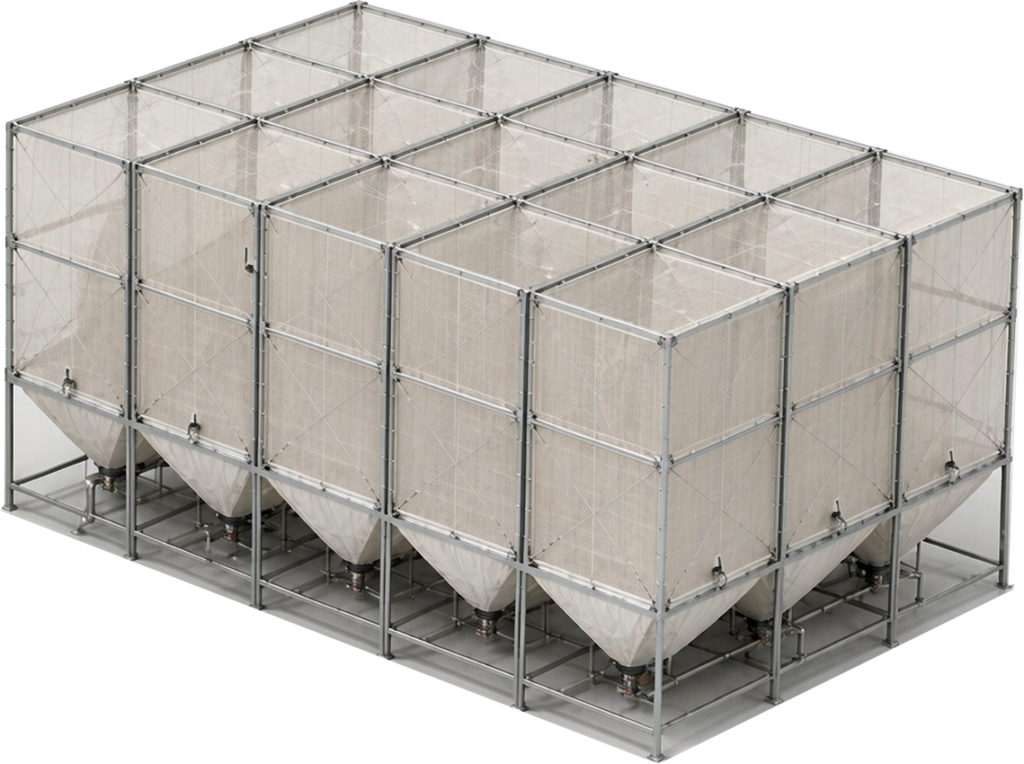
An EPS silo system is the buffer that lets your pre-expander run in steady batches while your block molding machine draws aged bead on demand. Size it wrong and the buffer vanishes exactly when you need it. This guide covers the three numbers that decide a silo that actually protects your line, and the mistake — sizing for storage instead of for ageing — that defeats its only real job and turns an expensive tank into a pass-through.
Why a silo is not just a bin
Pre-expanded bead must rest so internal pressure equalises before moulding; skip ageing and you get post-mould shrinkage and surface defects. The silo is where that rest happens. A correctly sized silo holds at least one shift of expanded bead, so a brief pre-expander stop does not stop moulding and the bead ages properly. Without it, every pre-expander stop immediately starves the moulders and every shortcut on ageing shows up as a bad block that passed the moulder and failed the customer.
Number 1 — volume by shift demand
Match the silo to your peak moulder bead demand per shift, not per hour. A busy plant wants a buffer of many hours, not minutes. If your moulders draw a given kg of bead per shift, size for at least that, plus the residence time below. Per-hour sizing is the classic error: it leaves you with a bin that empties before the pre-expander can refill it during a stop, so the buffer exists only on paper and never in the shift you actually need it.
Number 2 — residence time for ageing
Bead needs time to stabilise. Size the silo so bead spends the required rest hours inside it, not just passes through. A silo used only as a pass-through defeats the quality purpose; size for residence time, not just storage volume. The two numbers are different and the residence-time one is the one that protects your blocks, so ask for the residence time before you ask for the cubic metres.
Number 3 — flow without damage
Bead must move without bridging or compaction. Conical bottoms and gentle air conveyance keep it flowing; rough handling damages beads and cuts fusion quality downstream. If you run several densities, separate silos or compartments stop grades mixing and keep your block spec from drifting between shifts, which is a small cost that prevents a recurring, hard-to-diagnose quality complaint.
Signs your silo is right-sized
A right-sized silo lets the pre-expander run in long, efficient batches while moulders draw bead all shift; a stop in one does not stall the other; and bead leaving the silo has rested the required hours. If you cannot take a pre-expander down for maintenance without stopping moulding, the silo is too small, full stop. That test is the simplest way to know you under-bought.
| Factor | Size for | Wrong way |
|---|---|---|
| Volume | Peak shift demand + buffer | Per-hour demand only |
| Ageing | Required residence hours | Pass-through only |
| Flow | Gentle, no bridging | Forced, bead-damaging |
Common mistakes
- Silo too small. The buffer vanishes during any stop and the line stalls when you can least afford it, usually during the maintenance you finally scheduled.
- No ageing time built in. Defeats the quality purpose; size for residence time, not just storage volume, or you paid for a tank that does not do its job.
- Poor conveyance. Bead damaged in transit to the moulder cuts fusion downstream and wastes the expansion you paid for at the pre-expander.
- One silo for mixed densities. Grades blend and your block spec drifts shift to shift; separate compartments cost little and protect consistency across the week.
Reading the buffer test on your floor
The simplest check that your silo is right-sized is maintenance: can you take the pre-expander down for a service without stopping the moulders? If yes, the buffer is real. If the moulders stall the moment the pre-expander stops, the silo is too small and you have been running on luck, not on capacity. Use that test before you approve the size, because the sales number and the real shift are two different things. A silo that passes the test also protects you during the steam hiccup and the bead late delivery, which are the days that actually cost you money and a missed shipment to a customer who will remember it.
Residence time is the second test. Pull bead from the silo and mould a sample block; if it shrinks or shows surface defects, the bead is not resting long enough and you sized for storage, not for ageing. Lengthen the residence by adding volume or slowing the draw, and re-test. This is cheaper than chasing the defect into the moulder, where it looks like a fusion problem and gets the wrong fix from an operator who cannot see the cause three machines upstream. Size for the test, not for the cubic-metre number on the quote, and the blocks will tell you when it is right.
Frequently Asked Questions
How long should bead age in the silo?
Long enough for pressure to equalise — typically several hours. Confirm the exact residence time for your density with the process spec; too short and blocks shrink after moulding, too long just costs tank volume.
One silo or several?
If you run multiple densities, separate compartments stop blending and keep block spec stable, which matters more than the small extra cost when a customer measures every block.
Does the silo need to be near the moulder?
Close enough that conveyance is gentle and short, so bead reaches the moulder undamaged and the buffer stays effective during a pre-expander stop rather than being spent on a long, lossy run.
Can a small silo still help?
A little, but a silo sized only for minutes does not survive a real stop. Size for a shift plus residence time to get the protection you are paying for and the maintenance window you need.
What if I add a second moulder later?
Size for the bead demand you expect at that point, or buy a silo with spare compartments, because adding a moulder is exactly when the buffer proves too small.
Next step
Send us your shift bead demand and densities and we will size the silo and pre-expander together. Talk to our team for a configuration that matches your real line and leaves room for the second moulder you keep mentioning.