
CNC EPS Foam Cutting Machines: Precision, Tooling and When to Use Them
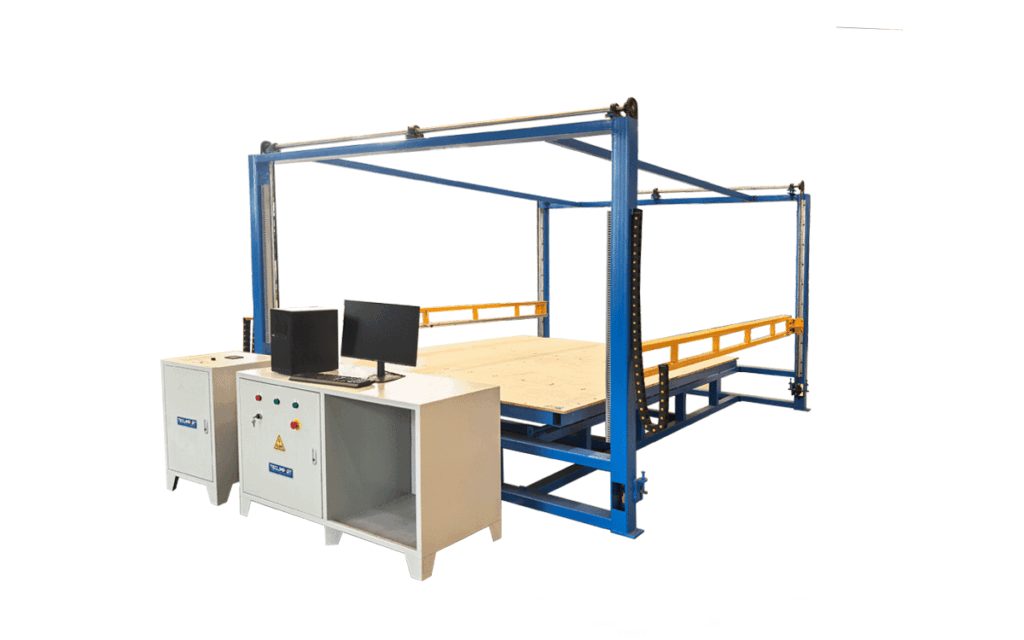
Hot-wire vs CNC
A hot-wire EPS cutting machine is unbeatable for straight blocks and simple profiles — fast, cheap to run, low waste. A CNC EPS foam cutting machine takes over when the part is 3D, contoured or repeatable from a drawing: it follows a CAD path with a routed bit or a driven wire, so every part matches the file.
Where CNC earns its place
- 3D and contoured shapes. Architectural cornices, packaging inserts, prototypes — anything a straight wire cannot trace.
- Repeatability. Load the same file, get the same part across a batch. No jig, no operator eye.
- Complex assemblies. Multiple profiles from one block with nested nesting paths.
Tooling and tolerances
CNC routers use carbide or high-speed steel bits sized to the foam; fine bits for detail, larger for fast stock removal. Dust is the by-product — our dust and fume FAQ covers extraction. Expect edge tolerances in the sub-millimetre to low-millimetre range depending on bit and feed; the accuracy FAQ explains what holds it.
How it sits in your line
CNC is the finishing stage after a cutting line rough-cuts the block. Many plants run a hot-wire line for volume blocks and one CNC cell for shapes — the two are complementary, not either/or. Pair both with a recycling machine so offcuts return as bead.
Buying checklist
- Table size vs your largest part.
- Axis count (3-axis covers most; 4/5-axis for true 3D).
- Spindle power vs bit and feed you need.
- Dust extraction built in or planned.