
What Is an EPS Cutting Line and How Does It Work
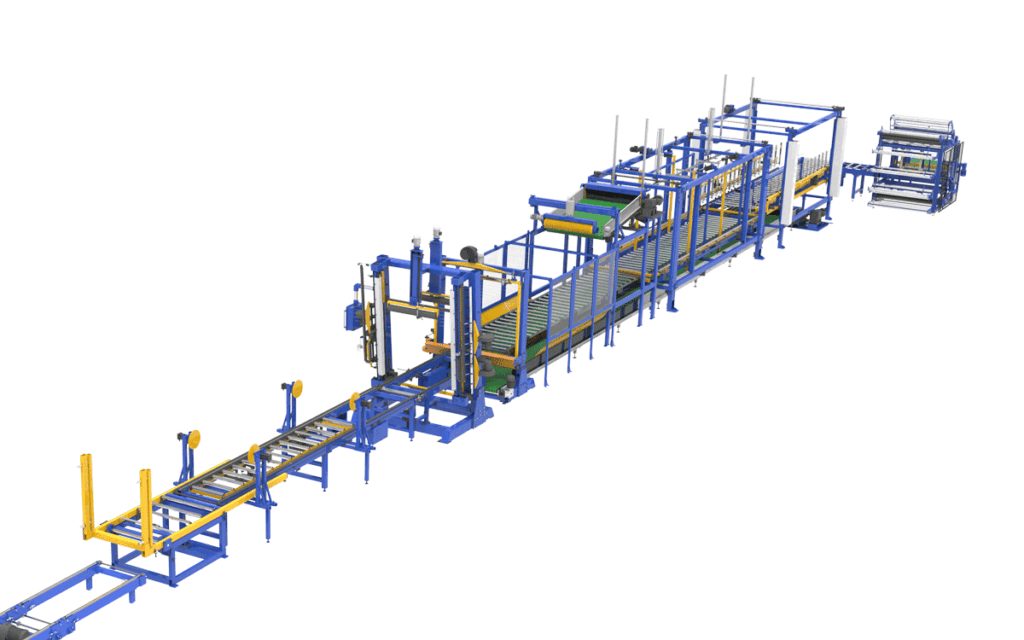
A cutting line is the machine that turns a raw EPS block into the panels, sheets, and profiles a customer actually buys. If you are new to EPS production, understanding what a cutting line is and how it works is the fastest way to avoid expensive mistakes when you size your factory. This guide covers the principle, the main parts, how it differs from a CNC cutter, and how to choose one that matches your block molding output.
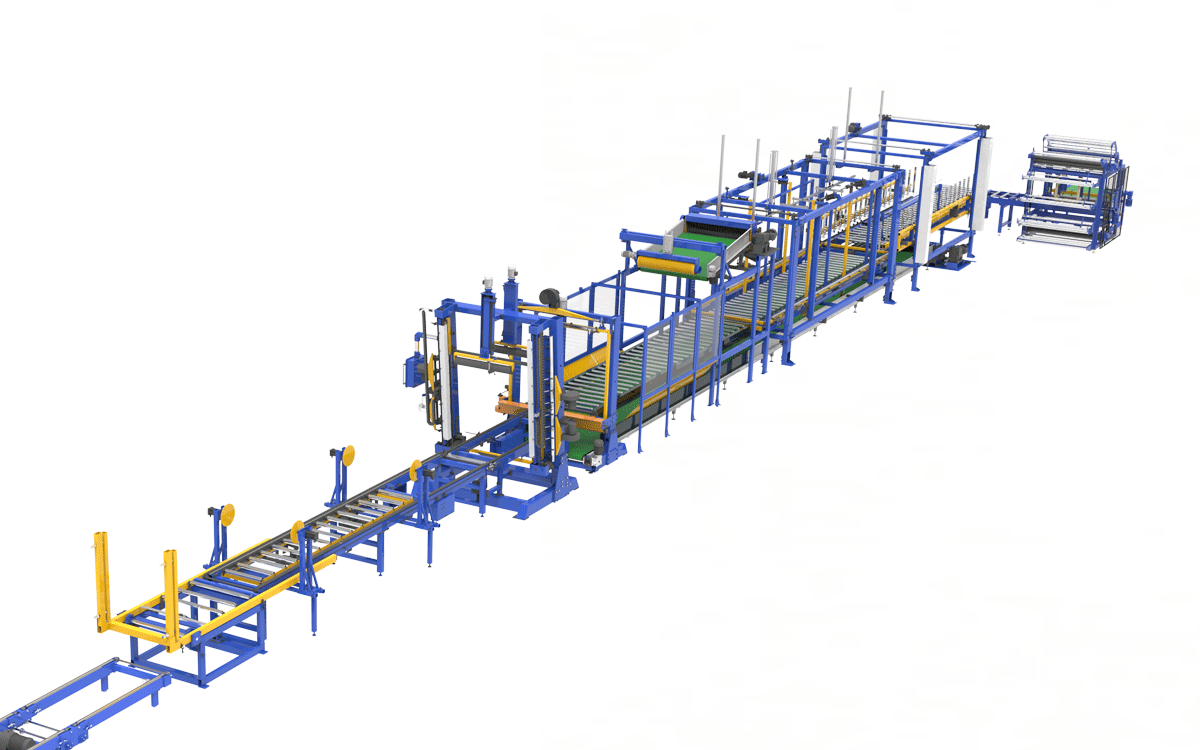
What an EPS cutting line is
An EPS cutting line is a stationary, multi-wire cutting system built around a large block of expanded foam. Vertical and horizontal resistance wires — heated to just the right temperature — slice the block into parallel sheets or profiles as the block is fed through on a conveyor or the wire frame moves across it. Unlike a handheld hot-wire cutter, a cutting line cuts a whole block at once, so it is the workhorse for panel and sheet volume. One operator loads the block, sets the pitch, and the line delivers consistent sheets with clean edges.
How an EPS cutting line works
The process is straightforward. A cured EPS block is placed on the in-feed table. Servo or CNC-controlled wires move at a set pitch to cut the block into the target thickness. Because the wires are hot, they melt through the foam rather than crushing it, leaving clean edges with almost no dust. The cutting speed is governed by foam density: denser foam cuts slower. On YouXin’s SPQ series the rated speed is 1.8–2.0 m/min measured at 15 kg/m³. The heat also lightly skins the cut face, which helps sheets stay square in storage.
Cutting line vs CNC cutting machine
A cutting line is for straight, parallel sheets and blocks — high volume, repeatable. A CNC cutting machine is for 2D and 3D shaped profiles from a CAD drawing: letters, architectural shapes, insulated shells. Most factories run a cutting line for the bulk sheet work and a CNC machine for shaped orders, because the two jobs need different motion control. Putting shaped work on a straight-wire line wastes time and gives ragged edges; putting bulk sheets on a CNC machine wastes a precise tool on a simple job.
Typical specifications
| Model | Block Length | Block Width | Block Thickness | Cutting Speed (@15 kg/m³) |
|---|---|---|---|---|
| SPQ-2000B to SPQ-6000B | 2000–6000 mm | 1200 mm | 1200 mm | 1.8–2.0 m/min |
Figures above are current model ranges; block thickness and density change the real cutting speed.
How to choose an EPS cutting line in 5 steps
- Decide the block size you will feed. YouXin’s SPQ-2000B to SPQ-6000B handles block lengths of 2000–6000 mm, so match the machine to the longest block your molding line produces.
- Set the sheet thickness range. Wire pitch and servo resolution decide your minimum and maximum cut thickness; confirm both against the products you sell.
- Check cutting speed at your density. Rated 1.8–2.0 m/min is at 15 kg/m³; ask for the number at your typical density so you can plan daily output.
- Confirm edge quality and dust control. Hot-wire cutting should leave smooth edges; poor wire tension or wrong temperature causes ridges and bead loss.
- Plan upstream and downstream flow. The line needs a block source (your block molding machine) and a way to move cut sheets to packing without manual stacking bottlenecks.
Common mistakes when setting up a cutting line
The biggest trap is assuming the brochure cutting speed applies to your foam. Cutting speed is density-dependent: a 30 kg/m³ block cuts roughly half as fast as a 15 kg/m³ block of the same size. Size your line for the densest product you actually sell, not the lightest, or you will under-capacity the whole factory and the molding line will idle waiting for sheets.
A second trap is ignoring wire tension and ventilation. Slack wires wander and leave wavy sheets; hot-wire cutting releases fumes that need extraction for operator comfort and code compliance. Both are cheap to fix at install and expensive to retrofit later. A third trap is undersizing the in-feed and out-feed tables, which forces manual handling and quietly caps your real throughput below the machine’s rating.
Maintenance and wire care
The consumable on a cutting line is the wire itself. Check tension daily, replace wires that have stretched or developed hotspots, and keep the pitch calibration verified so sheet thickness stays on spec. A simple log of wire life and cut counts tells you when to swap before quality slips. With steady care, a cutting line runs for years with little beyond wires and occasional bearing service.
Frequently Asked Questions
Is a cutting line the same as a CNC cutter?
No. A cutting line cuts parallel sheets from a block; a CNC cutting machine cuts shaped 2D/3D profiles from a drawing. They serve different steps and are usually run side by side.
What density can a cutting line handle?
YouXin’s SPQ series is rated at 15 kg/m³ for the stated speed; it cuts higher densities too, just slower. Tell your supplier your density range so the wire power and feed are sized correctly.
How much floor space does it need?
The machine plus in-feed and out-feed tables need a clear run longer than your longest block, plus space for sheet handling. Plan the layout before delivery so the line is not crammed against a wall.
Do I need a cutting line if I only make shape parts?
If every order is a shaped profile, a CNC cutting machine may be enough. But most factories still cut raw blocks into sheets first, so a cutting line usually pays for itself quickly.
Want help sizing a cutting line or pairing it with a CNC cutting machine? Contact YouXin with your block size and daily volume.