
EPS Block Molding Machine: How to Choose the Right Layout
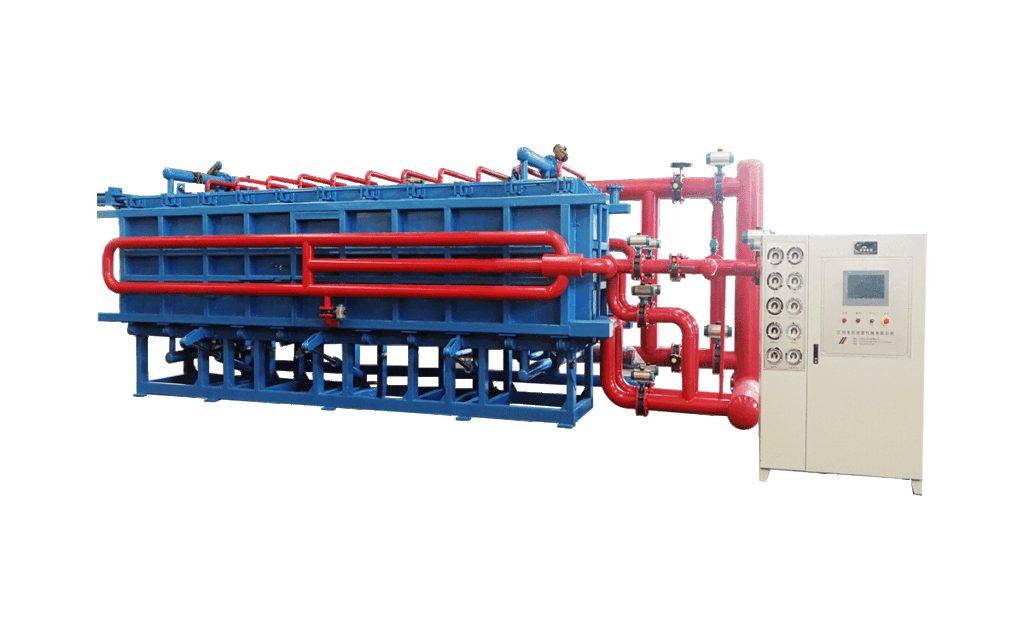
Start with the bottleneck
Before sizing a bigger EPS block molding machine, find where your line actually stalls. Most plants that think they need more moulding are really short on steam, bead supply or handling — a new moulder just makes the bottleneck faster. Map the cycle: pre-expansion, ageing in a silo, moulding, cooling, cutting. Fix the slowest stage first.
Three layouts
- Vertical. Fills from the top, compact footprint, the standard workhorse for panels and shapes cut on a cutting line.
- Horizontal (styrofoam). Loads and ejects along the length — better for long blocks and in-line conveyor handling. Our vertical vs horizontal guide compares them in detail.
- Height-adjustable. One frame changes block height, so you carry fewer mould sizes as volume grows.
Capacity you can plan around
| Series | Block length | Output |
|---|---|---|
| SPB-2000 | 2,000 mm | 12–15 blocks/h @15 kg/m3 |
| SPB-4000 | 4,000 mm | 12–15 blocks/h @15 kg/m3 |
| SPB-6000 | 6,000 mm | 12–15 blocks/h @15 kg/m3 |
Output is quoted at 15 kg/m3; higher-density blocks take longer per cycle, so size for your real density.
What to size before buying
- Steam. The moulder is a steam consumer; confirm plant steam capacity at target cycle time.
- Block dimensions. Match your cutting line and your biggest product, not a catalogue number.
- Handling. Eject direction and floor space decide whether vertical or horizontal fits. Long blocks favour horizontal + roller conveyors.
- Automation. Vacuum, filling and eject automation lift output but add cost; add them where labour is the limit.
Maintenance that protects output
Steam traps, mould vents and the filling valve wear first. Our 8 practical maintenance tips keep cycles on target. A clean mould and steady steam are most of the battle.