
EPS Recycling Machine: Densifier vs Compactor (Complete Guide)
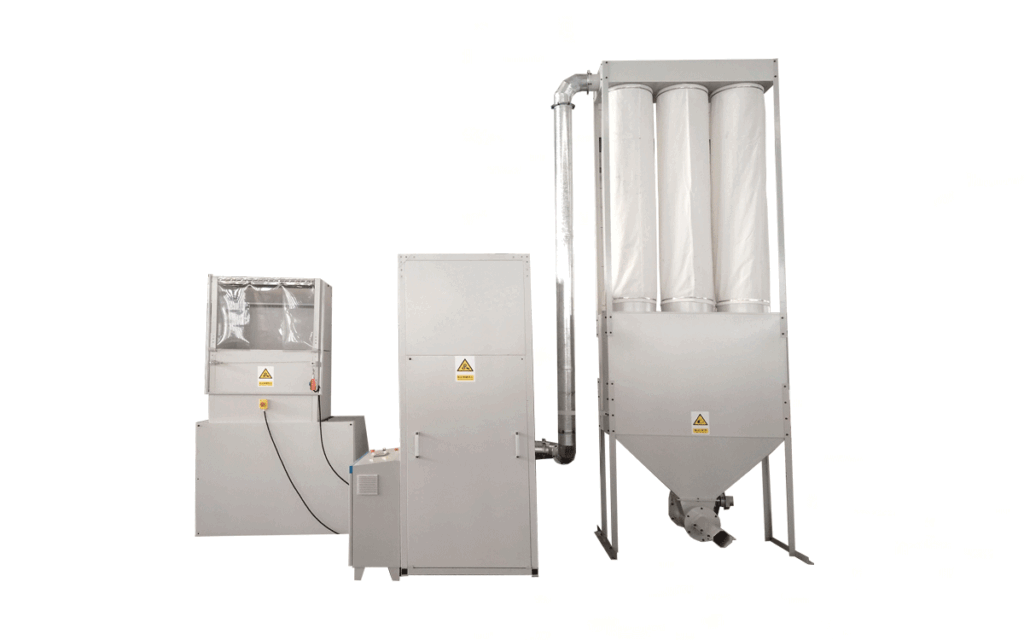
An EPS recycling machine returns cutting offcuts and scrap to reusable material instead of landfill. Every cutting line and shape moulder throws off trim; a recycling step turns that trim into bead or ingot and cuts raw-material cost. This guide compares the two recovery routes and where the machine fits your line.
Route 1 — densifier
A densifier melts trimmed EPS into a dense ingot a reprocessor buys back. Best for steady, high volume where you want the smallest ship-out and highest rebate. The ingot is pure polystyrene that re-enters the plastics stream cleanly. Our EPS recycling machine page covers the unit.
Route 2 — compactor / de-duster
A compactor squeezes light scrap into a manageable bale for collection. Lower capital, simpler to run — the practical choice where volume is moderate. How EPS recycling works.
Where it sits on the line
Put a collection bin at the cutting table, densify or compact on a schedule, and ship the ingot. Many plants feed a small percentage of recovered bead back into block molding. For foam-specific scrap, see the foam recycling machine guide.
Payback
For a busy plant, offcut recovery often pays for the equipment within a season through lower bead purchase and disposal cost, before the ingot rebate. Talk to our team about a step sized to your offcut tonnage.