
EPS Shape Molding Machine: Dies, Parts & Selection Guide
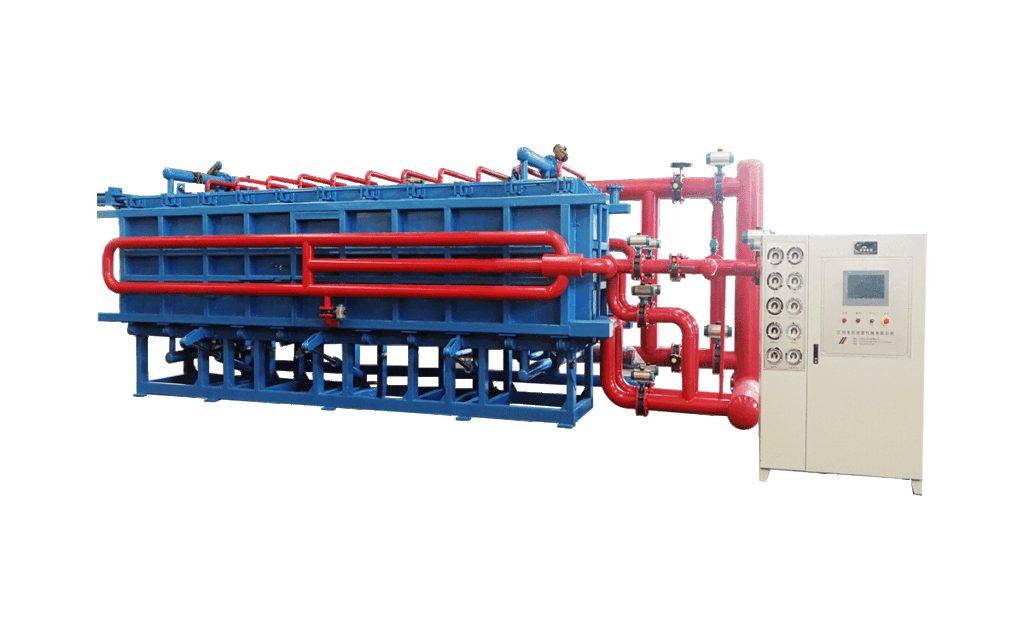
An EPS shape molding machine blows pre-expanded bead into an aluminium die and steams it to fuse a finished part — a pump volute, an appliance pack, a corner cushion — with no cutting step. Where a block molding machine makes a slab you later cut, shape molding makes the part ready to wrap. This guide covers when to use it, what the die costs you, and how to select one.
How shape molding works
Pre-expanded, aged bead from the silo is blown into the die, steamed to fuse, cooled, and ejected as a finished part. The die is the commitment: one die per part. The block vs shape comparison shows the economics.
Die cost and break-even
Shape molding adds an aluminium die per part, so each new shape carries tooling cost before the first part ships. Below the break-even volume you are paying die cost for parts you could cut from block at lower all-in cost. Above it, you skip the cutting step and its trim. Model the break-even with your product mix — see shape vs block cost.
Where it fits the line
Shape molding sits after the pre-expander and before wrapping. It pairs with the same steam and bead systems as block molding, so a plant often runs both: block lines for flexibility, shape lines for steady sellers.
Selection checklist
- Die size vs your largest part
- Steam staging for even fusion on thin walls
- Eject and handling suited to fragile shape parts
- PLC recipe storage per die
For a shape cell sized to your repeat parts, talk to our team.