
Steam Traps and Condensate Drainage in EPS Block Molding
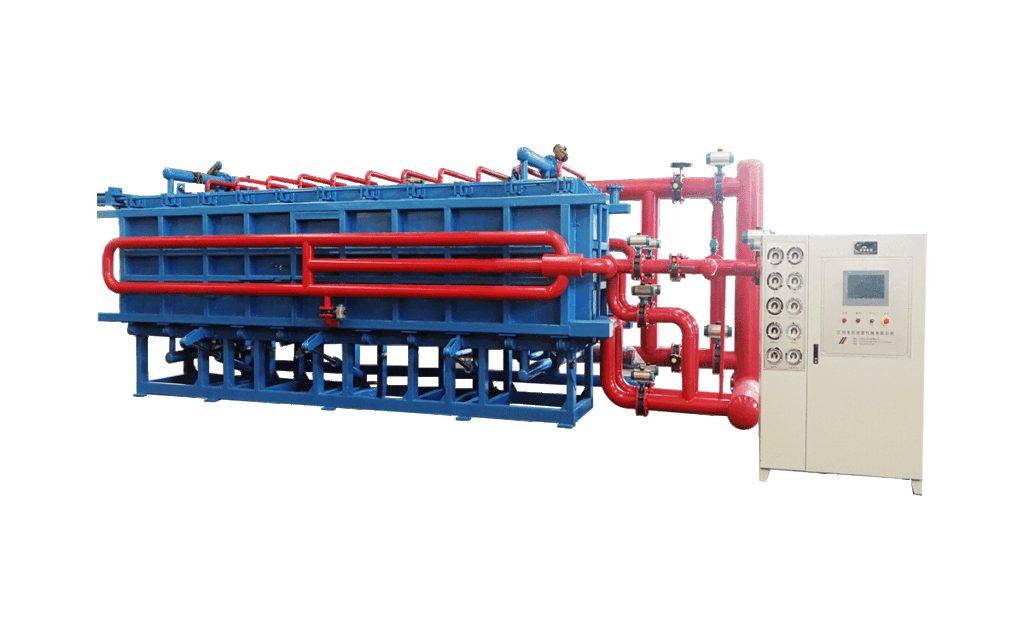
Wet steam is one of the most common reasons an eps block molding machine produces blocks with soft patches, hollow cores or corners that crumble. The mold chamber only has a short steam phase in each cycle to do its work, and any water sitting in the chamber, in the jacket or in the drain legs steals heat from exactly the places that need it most. This guide explains where condensate collects, how to select and size steam traps for an EPS line, and how to read the symptoms on a finished block so you can fix the drainage instead of chasing the beads.
Why Condensate Hurts Fusion
EPS fusion depends on steam contacting every bead surface long enough to soften and bond it. When steam turns wet, three things go wrong at once. First, liquid water films on the bead surface act as a heat sink: the water carries heat, but it also blocks steam from touching the bead directly, so the surface welds unevenly. Second, pooled water at the bottom of the chamber condenses the steam passing through it, so the lower part of the block sees cooler, wetter steam than the top. Third, water carried at speed into the chamber erodes soft pre-expanded beads and can wash beads out of position before they set.
The result on the block is easy to recognize once you have seen it: a dense, well-fused skin at the top, a band of poor fusion lower down, and corners or edges that shed beads when you lift the block. Operators often blame the pre-expander or the ageing time first, but when the same beads fuse perfectly on a neighboring line, the steam circuit is the place to look.
Where Water Collects in a Block Mold
Condensate forms everywhere steam touches a surface cooler than saturation temperature, and at cycle start that is almost every surface in the machine. Four spots matter most:
- The steam chamber walls and the mold cavity itself, which are cold at the beginning of every cycle.
- The steam jacket and distribution channels behind the perforated plates, where pockets form behind ribs and weld seams.
- The bottom of the chamber and the drain legs, where condensate runs down and pools if drainage is undersized.
- Long horizontal steam runs from the boiler to the machine, where the pipe itself acts as a condensing surface.
Each of these needs a clear path for water to leave, and each path needs a trap that passes condensate fast while holding live steam back. Whether you run a vertical EPS block molding machine or a horizontal styrofoam block molding machine, the steam circuit principles are identical; only the chamber geometry changes.
Choosing and Sizing Steam Traps
Most EPS plants use thermodynamic or mechanical traps on the chamber drains, and each type has its place. Thermodynamic traps are compact and tolerate high pressure, but they cycle open and closed and can pass live steam when the pressure differential is low. Float traps drain continuously and handle heavy condensate loads well, which suits the drain legs under the chamber; their weakness is dirt, so they need strainers upstream and periodic cleaning. Thermostatic traps lag behind the saturation curve, which makes them useful where you want the drain line to hold back pressure briefly rather than pass steam.
Sizing matters more than type. A trap that is too small backs condensate up into the chamber; a trap that is grossly oversized wastes steam on every cycle. Work from the actual condensate load per cycle, not from the pipe diameter, and check the pressure differential at the trap rather than reading the boiler gauge. If your line now steams at a different pressure than it did when the traps were selected, the traps may no longer be correctly sized for the duty.
Drainage Layout and Piping Practice
Good drainage is mostly plumbing discipline. Keep drain legs vertical and short where possible, because horizontal runs collect water in low spots. Slope steam supply lines toward the traps, not away from them. Give each chamber drain its own trap instead of sharing one trap between two chambers with different condensate loads, and put a test valve downstream of every trap so maintenance can hear and see what each one is doing. Insulate the steam mains and the chamber jacket; bare pipe between boiler and mold wastes energy and generates condensate all the way to the machine. Finally, agree a trap inspection routine and log it. Traps fail in two directions: stuck open wastes steam and dryer fuel, stuck closed floods the chamber. Both show up in block quality within days.
On height-adjustable block molding machines, remember that changing the mold height changes chamber volume and therefore condensate load per cycle. A drainage setup tuned for one height range may need re-checking after the line moves to another.
Symptom, Cause, Fix: Reading the Block
Use this table the next time a block comes off the line wet or soft.
| Symptom on the block | Likely cause | What to do |
|---|---|---|
| Soft band across the lower third of the block | Pooled condensate in the chamber; drain leg undersized or trap stuck closed | Open the trap test valve, blow the trap through, check drain leg slope and diameter |
| Wet skin but a good core | Vacuum applied too early; surface water not drained before vacuum pulls on the block | Extend the drain period between steam-off and vacuum-on |
| Corners crumble while the sides are fine | Wet steam scouring beads at the entry points, or distribution channels blocked with scale | Check the steam inlet baffles and clean the distribution channels |
| Fusion quality changes from day to day on the same beads | Intermittent trap failure or condensate carry-over returning into the steam supply | Log trap test results each shift and inspect the condensate return line |
| Steam consumption climbs with no quality gain | Traps stuck open and passing live steam to the drain | Check each trap by temperature or ultrasonic listening and replace passing units |
A Five-Step Check Before You Blame the Beads
When fusion turns poor, work through this sequence before touching the pre-expander or the ageing silos:
- Blow down the chamber drains at cycle start and watch how much water comes out. A steady stream for more than a few seconds points to a drainage problem.
- Test every trap with its downstream valve. A closed trap floods the chamber; a wide-open trap sends a constant steam plume to the drain. Both need action.
- Check the steam supply pressure at the machine inlet, not just at the boiler. Long or undersized mains lose pressure that the original trap sizing assumed.
- Compare the position of the defect on the block with the drainage layout. Bottom-band defects map to the drain legs; side defects map to the jacket channels.
- Only then review bead density and ageing records. If the beads fuse fine after the drainage fix, the beads were never the problem.
Common Mistakes We See on Site
- Sizing traps by pipe diameter instead of condensate load, then wondering why the chamber stays wet.
- Sharing one trap across two chambers of different size, so the smaller chamber drains slowly every single cycle.
- Removing or bypassing traps temporarily during commissioning and never putting them back.
- Insulating the boiler room but leaving the steam main bare, so condensate forms all the way down the pipe.
- Blaming the beads first: the expensive habit of re-adjusting the pre-expander for a problem that lives in the steam circuit. The counter-intuitive point is that trap maintenance costs almost nothing, while one week of scrap blocks usually costs more than every trap on the line.
Frequently Asked Questions
How often should steam traps on an EPS block machine be tested?
A quick audible and visual test at every trap is a five-minute job per shift. A full inspection with temperature or ultrasonic measurement fits well into a weekly maintenance slot. Lines that log trap tests catch failures before the failures reach block quality.
Can wet steam damage the machine, not just the block?
Yes. Carried water erodes perforated plates and steam channels over time, and flooded chambers put thermal stress on plates and tie rods. Fixing drainage protects the tooling as well as the product.
Do the steam side and vacuum side use different traps?
They should be treated as separate circuits. The vacuum side handles air and residual condensate rather than live steam, and is normally sized differently. Follow the trap manufacturer duty calculations for each circuit instead of copying one trap type across the whole machine.
Will a bigger boiler solve wet steam problems?
Usually not. If condensate cannot leave the chamber, more steam just raises the water level faster. Drainage capacity comes first; boiler capacity only helps once the water has somewhere to go.
Where does trap maintenance fit into line downtime?
Trap testing needs no shutdown, and a stuck trap is usually replaceable with hand tools between cycles. Budget a monthly slot for trap replacement and you avoid most unplanned quality stops.
If your blocks show bands of poor fusion that will not go away with bead adjustments, audit the drainage system next. Contact our team and we will help you review the steam circuit of your eps block molding machine, from trap selection to drain leg layout.