
How Does EPS Block Molding Work: From Steam to Rigid Foam Block
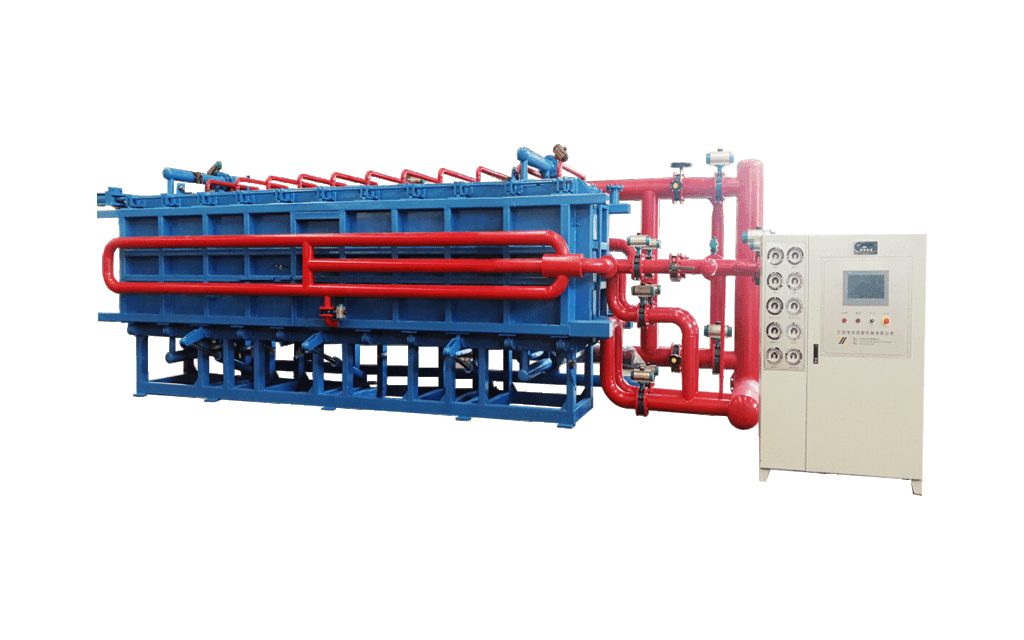
Block molding is the step that turns loose pre-expanded EPS beads into the rigid, uniform foam blocks your cutting line will slice into panels. If you understand how EPS block molding works, you can specify a machine that holds density and dimensions batch after batch — which is exactly what export customers demand. This guide walks through the process, the machine parts, and how to choose the right one for your plant.
What EPS block molding is
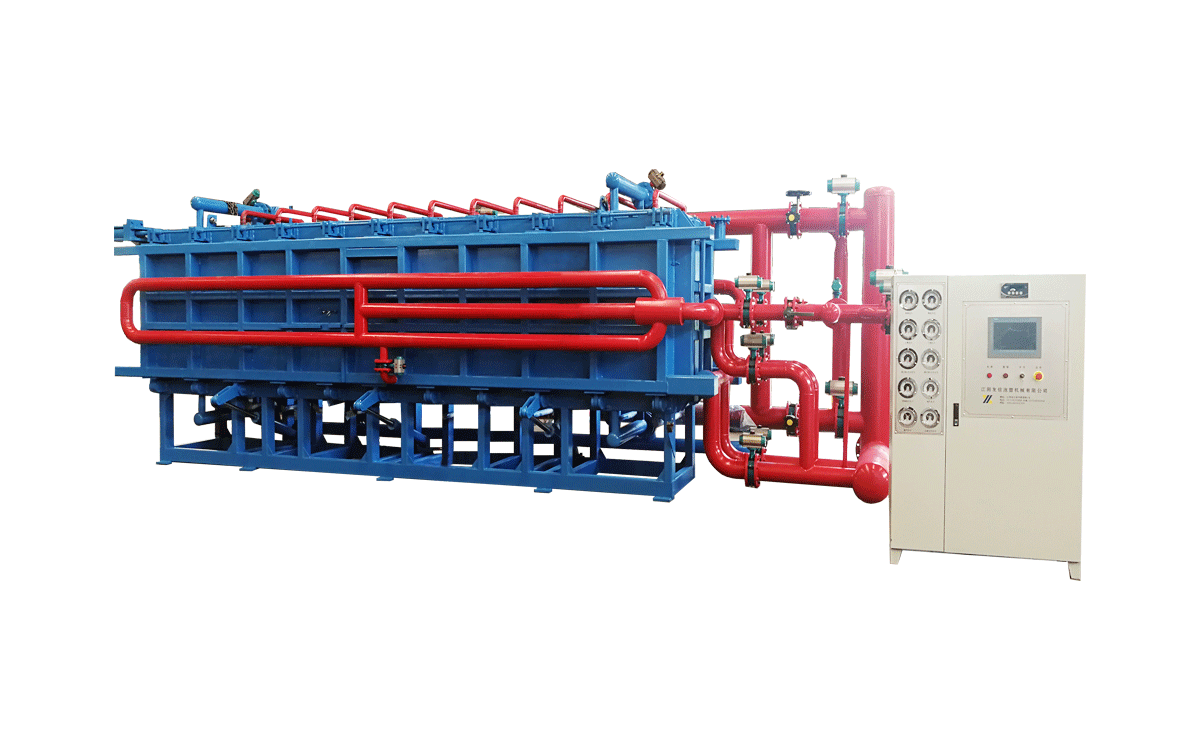
EPS block molding fuses pre-expanded beads into a solid block inside a large steel mould. The beads — already expanded to a low density by your EPS pre-expander machine — are blown into the mould, then heated with steam so the beads soften and fuse at their surfaces. After cooling, the fused block is ejected and moved to curing and cutting. The result is a closed-cell foam block with predictable strength and insulation value, the raw material for every panel and shape you sell.
How EPS block molding works, step by step
First, pre-expanded beads are conveyed into the mould cavity. Steam is introduced through the mould walls; the heat makes each bead expand slightly and stick to its neighbours, filling every gap. The mould is held at steam pressure long enough for the block to fuse through its full thickness. Cooling water then sets the shape, the mould opens, and the block is pushed out. A vertical EPS block molding machine does this in a vertical cavity; a horizontal one in a horizontal cavity — the physics are the same, the footprint differs. Both rely on steady steam and cold water more than on any single clever part.
Where block molding sits in your plant
Block molding is the middle of the three core steps: the pre-expander machine makes the beads, the block molding machine fuses them into blocks, and your cutting line slices those blocks into the sheets customers buy. Get the block step wrong and both neighbours suffer — under-fused blocks jam the cutter and waste beads from the pre-expander. That is why the mould, the steam, and the cooling water deserve as much attention as the headline output number when you compare machines, and why most buyers spec the pre-expander and the block moulder together rather than separately.
Typical specifications
| Model | Block Length | Block Width | Block Thickness | Output (@15 kg/m³) |
|---|---|---|---|---|
| SPB-2000LZ to SPB-6000LZ | 2000–6000 mm | 1000–1200 mm | 1000–1200 mm | 12–15 blocks/hour |
Figures above are current model ranges; exact output depends on block size, steam quality, and cooling water temperature.
How to choose an EPS block molding machine in 5 steps
- Set the block dimensions you sell. YouXin’s SPB-LZ series covers block lengths 2000–6000 mm and widths/thicknesses 1000–1200 mm; pick the size that matches your panel range.
- Match output to your cutting line. At 15 kg/m³ the vertical machine makes 12–15 blocks/hour; confirm that feeds your cutting line without idle time.
- Check steam and cooling supply. Stable steam pressure and cold cooling water are the hidden constraints; a great mould cannot fuse well on weak utilities.
- Choose vertical or horizontal. Vertical saves floor space and is common for standard blocks; horizontal suits certain layouts and taller blocks. Match the plant footprint.
- Confirm automation and safety. Ejection, filling, and pressure control should be automated and interlocked so one operator runs the line safely.
Common mistakes in block molding
The classic trap is quoting capacity at the lightest density. The “12–15 blocks/hour” figure is at 15 kg/m³; at 20–30 kg/m³ the same machine is slower because the beads need more steam and cooling. Size your line for the densest block you will actually ship, or your real daily output will fall short of the quote and the cutting line will starve.
A second trap is poor bead fill. If the mould is not filled evenly, you get voids and weak spots that the cutting line turns into scrap. Filling pressure, bead size consistency from the pre-expander, and venting all matter — none of them show up in a spec sheet, but all of them decide block quality. A third trap is weak steam: low or fluctuating pressure gives partly fused blocks that crumble at the edge and fail customer inspection.
Quality control and maintenance
Hold density with a simple scale-and-volume check on a sample block each shift; a drifting density is the earliest sign of fill or steam trouble. Keep the mould faces clean and the seals intact so steam does not leak and waste energy. Inspect the ejector and the safety interlocks on a schedule — the mould is heavy and the cycle is pressurised, so the safety system is not optional. With steady care, block molding is a quiet, repeatable process.
Frequently Asked Questions
Vertical or horizontal block molding machine?
Both fuse beads the same way. Vertical machines have a smaller footprint and are the standard for regular blocks; horizontal machines suit specific layouts and taller blocks. Choose on floor space and block height.
Why does density change my output?
Denser blocks need more steam to fuse and more cooling water to set, so each cycle takes longer. Always read the output figure at your real density, not the brochure’s lightest case.
Do I need a pre-expander first?
Yes. Block molding starts with pre-expanded beads; a pre-expander machine supplies them at a controlled density. The two machines are a pair, not alternatives.
How do I keep block dimensions consistent?
Stable steam pressure, correct fill, and calibrated cooling give repeatable blocks. Automating the cycle removes operator variation batch to batch.
Planning a block line? Contact YouXin to match a vertical EPS block molding machine with a pre-expander for your target density and output.