
YouXin Ships EPS Pre-expander, Silo System and Steam Accumulator to ISOART in Brazil
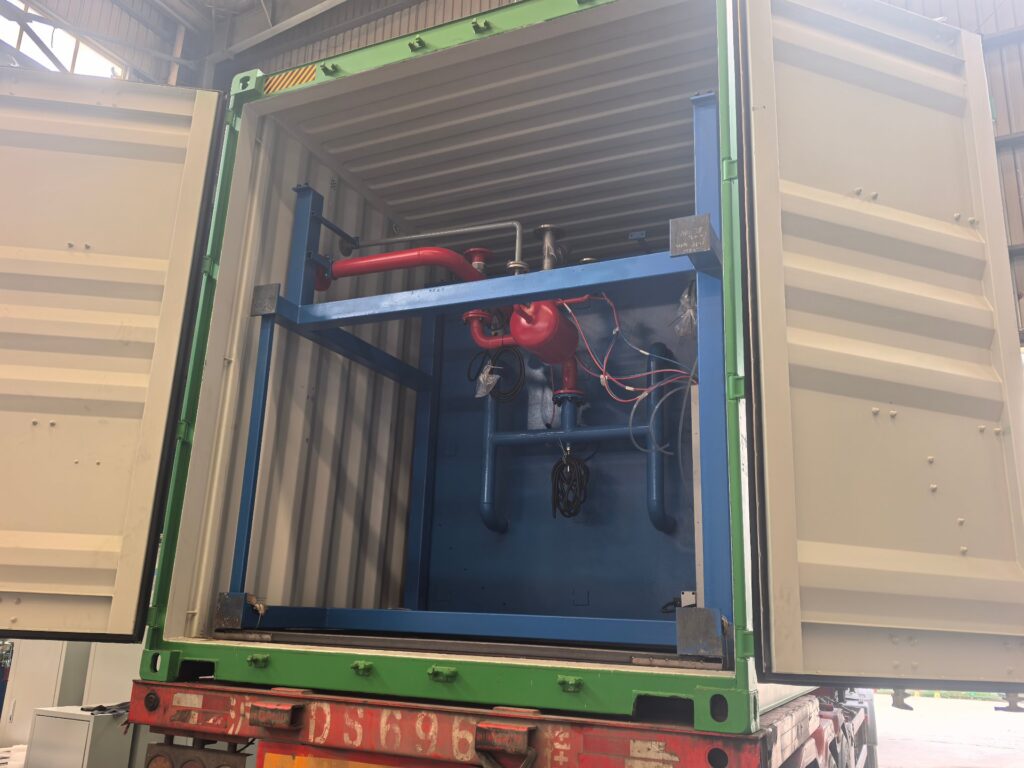
On 26 September 2026, YouXin EPS Machinery shipped a pre-expansion and steam package to ISOART in Brazil. The shipment brings together three items that sit at the front of every EPS line: an EPS pre-expander machine, a full automatic EPS silo system, and an EPS steam accumulator.
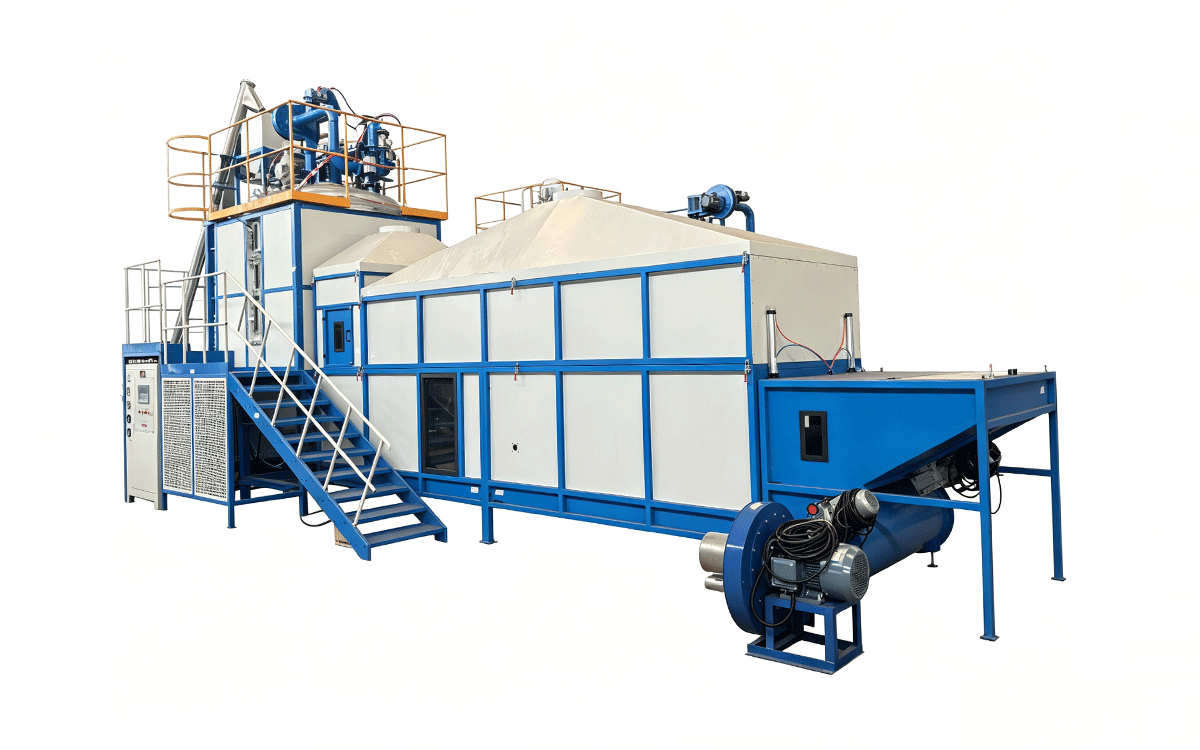
What shipped, and what each machine does
These three units are not three separate purchases; they are one system. Pre-expansion sets the bead density, the silo holds and ages that bead, and the steam accumulator keeps the steam supply steady while both are working.
| Item | What it does on the line | Why it is bought with the others |
|---|---|---|
| EPS pre-expander machine | Expands raw EPS bead with steam to the target density, then dries and de-agglomerates it | Sets the density of every block or shape moulded downstream — no later stage can correct it |
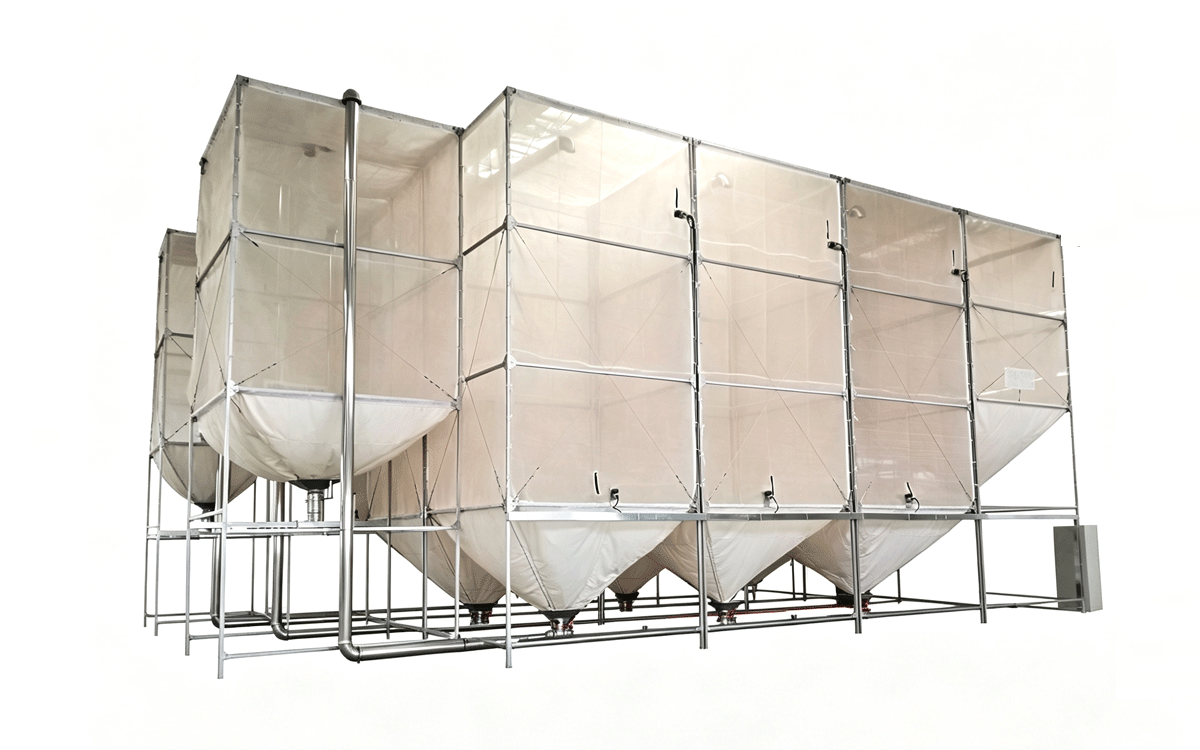
| Full automatic EPS silo system | Ageing, storage and controlled feeding of expanded bead | Decouples pre-expansion from moulding so one stage never waits on the other |
| EPS steam accumulator | Stores steam and buffers pressure between the boiler and the machines that use it | Holds pressure steady when several consumers draw steam at the same moment |
All three sit upstream of block moulding and cutting. When one of them is undersized or unstable, the symptom never appears where the cause is: it shows up later as blocks that are heavy, uneven in density, or slow to cure before cutting.
Why pre-expansion decides what the rest of the plant can make
An EPS plant is a chain, and bead density is the first link. If the bead leaving the pre-expander drifts, the block moulding machine cannot fix it. Blocks come out heavier than specified, which costs raw material, or lighter than specified, which fails compressive strength. Cutting accuracy suffers too, because inconsistent density cuts inconsistently.
That is why the pre-expander is specified first and the rest of the line is sized around it. The machine expands a weighed charge of raw bead with steam, holds the expansion temperature steady, and discharges bead into a fluid bed that dries it and breaks up agglomerates. Wet or clumped bead does not feed reliably: it bridges in the silo, blocks filling guns and produces density spread across a single block.
The silo is the second half of the same job. Freshly expanded bead needs hours to stabilise while air replaces the steam inside the cells. A full automatic silo system handles that ageing, stores the buffer, and feeds the moulding machines on demand. Without enough silo volume, plants run pre-expander and moulding as one rigid process — and any interruption at either end stops both.
Where the steam accumulator earns its place
Steam is the largest utility cost in an EPS plant and the most common hidden bottleneck. Boilers are usually sized for average load, but a pre-expander and a block moulding machine do not draw steam evenly: they fill, steam and vent in cycles. When two or three machines peak at once, boiler pressure dips, and a pressure dip is a density dip.
A steam accumulator sits between the boiler and the consumers. It stores steam during the low part of the cycle and releases it during the peak, so the machines see a steadier pressure than the boiler alone could deliver. Plants that add one typically do it for one of two reasons: the existing boiler cannot cover peak demand without a costly upgrade, or the line is being extended and steam demand is about to grow.
For a new or growing plant this is usually cheaper than buying a larger boiler, and it makes the output of the machines you already own more repeatable.
Typical specifications
EPS Pre-expander Machine — specification snapshot
| Model | Chamber Diameter | Chamber Height | Density Tolerance | Output (@15 kg/m³) |
|---|---|---|---|---|
| SPJY-1600G | 1600 mm | 2500 mm | ±1.5% | 1600–1800 kg/h |
| SPJY-2000G | 2000 mm | 2000 mm | ±1.5% | 2000–2200 kg/h |
These are YouXin’s current model ranges. Silo volume and steam accumulator capacity are configured per plant, against bead consumption, product mix and the boiler you already run — we size them with you rather than quoting a fixed number. Full options: EPS Pre-expander Machine and EPS Silo System.
Five checks before you order your own package
- State your real density range. Quote the lightest and heaviest grade you sell, not the average. Low-density grades need more chamber volume and often double expansion.
- Measure the steam you have. Log pressure at the machine inlet over a full shift. If it swings during simultaneous draws, budget for an accumulator or pressure regulation as part of the project.
- Size silo volume against production, not floor space. Silage capacity is what lets pre-expansion and moulding run independently — it is the cheapest buffer in the plant.
- Confirm local power and controls. Voltage, frequency and control voltage differ by market; specifying them late is a common cause of commissioning delay.
- Plan the installation window. Foundations, rigging, steam and air connections and operator training all need slots in the schedule before the machines arrive.
Common mistakes when buying this part of the line
Sizing the pre-expander for peak output. A machine bought for the busiest hour of the year spends most of its life in short bursts, and every restart costs consistency. Size about 20% above steady moulding demand instead.
Treating the silo as storage. It is a process stage. Under-sized silage is the most common hidden cause of density drift between shifts.
Assuming the boiler is somebody else’s problem. Steam quality, dryness and condensate return decide density spread as much as any control feature on the machine.
Skipping the trial. Bead expands differently by grade and supplier. Running your own material before dispatch settles the specification in a day.
No spare-parts plan at handover. Seals, sensors and filters are consumables in this industry; waiting for a shipment to change a seal costs more than the part.
From dispatch to production
Shipment is the middle of the job, not the end of it. After the equipment arrives, the sequence is normally installation and alignment, connection of steam, air and power, start-up and calibration, then operator training. YouXin supports that sequence with installation guidance, remote diagnostics for control faults and a spare-parts plan built around the configuration supplied.
Every machine is CE certified and built on a shared spare-parts platform, and YouXin equipment is exported to more than 50 countries — which matters most when a plant needs a part or an answer quickly.
Frequently Asked Questions
Why buy a pre-expander, a silo and a steam accumulator together?
They are one process, not three. The pre-expander sets density, the silo stabilises it through ageing, and the accumulator keeps steam pressure steady while both work. Buying one without the other two usually moves the bottleneck rather than removing it.
Can the steam accumulator replace a bigger boiler?
Often yes. If your boiler covers average demand but dips when several machines draw at once, an accumulator is usually the cheaper way to hold pressure than upgrading the boiler.
How much silo volume do we need?
Enough to cover your longest production run plus the ageing time your grade requires. We size it against your bead consumption and shift pattern rather than quoting a standard number.
Do you ship to South America?
Yes. YouXin equipment is exported to more than 50 countries, and this shipment to ISOART in Brazil is one of them. Tell us your port and timeline and we will quote the configuration.
Can you supply the moulding and cutting stages as well?
Yes. The pre-expansion package is normally matched with a vertical or horizontal EPS block molding machine, a cutting line and packing, so the whole plant is sized as one line.
How do we get a quotation?
Send your bead grade, target density, block or product size and daily output. See our EPS Insulation and EPS Packaging pages for typical applications, or contact our team for a configuration and a quote.