
EPS Pre-Expander Machine: How It Works and How to Size One
What a pre-expander actually does
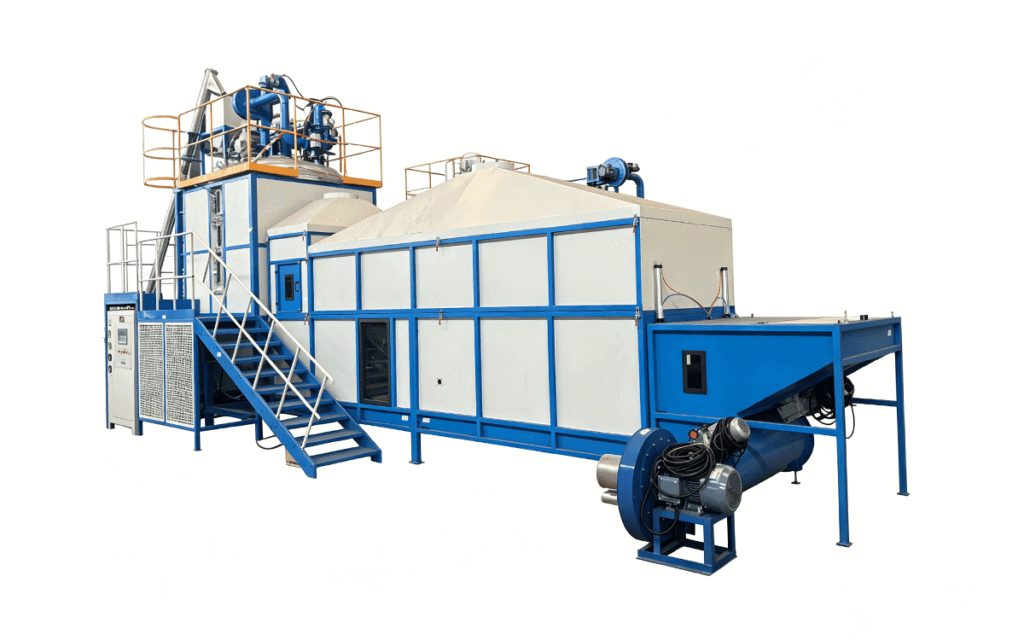
An EPS pre-expander machine is the first real step in making EPS foam. Raw expandable polystyrene bead arrives as tiny, dense spheres; the pre-expander steams them so they expand 20–50x in volume to a target density (typically 12–25 kg/m3). That expanded bead is then aged and moulded into blocks or shapes. Get the density wrong here and every downstream step — block moulding, cutting, fusion — inherits the defect, which is why this machine is the heart of the line.
How the expansion happens
- Steam penetration. Bead is fed into a steam chamber; heat softens the bead and the blowing agent inside vaporises, pushing it to expand.
- Fluidised-bed suspension. A gentle air stream keeps bead fluid so each grain expands evenly instead of clumping. This is where most “lumpy bead” faults come from when the bed plate is blocked.
- Density control. Modern units (the YouXin SPJY series) weigh the batch to hit a set density. The target density sets both expansion ratio and, later, block strength.
- Drying and conveyance. Expanded bead is dried and moved to a silo system for ageing before moulding.
Batch vs continuous
Batch pre-expanders expand a measured charge per cycle — simpler, easier to change density between runs, good for mixed production. Continuous units feed bead steadily for high, single-density volume. See our batch vs continuous comparison to pick. For most plants scaling up, a second batch machine of the same model is cheaper to train and spare than mixing types.
What to size for
| Input | Why it matters |
|---|---|
| Target density | Sets expansion ratio and block strength; confirm your product spec first |
| Throughput (kg/h) | Must feed your moulders; size for peak, not average |
| Bead size | Small bead for fine shapes, larger for blocks; match your moulding |
| Steam capacity | Undersized steam starves expansion and scatters density |
Common faults that push density off
Sticking steam valves, clogged fluid beds and drift in the level/weighing sensor are the usual culprits. Our pre-expander maintenance guide lists the quick fixes. A short, regular routine keeps density where you set it.
The takeaway
Size the pre-expander to your moulders’ peak bead demand and your target density, give it enough steam, and let a silo handle ageing. Do that and the rest of the line — block moulding and cutting — runs on clean, consistent bead.