
EPS Block Molding Machine: How to Choose the Right Model
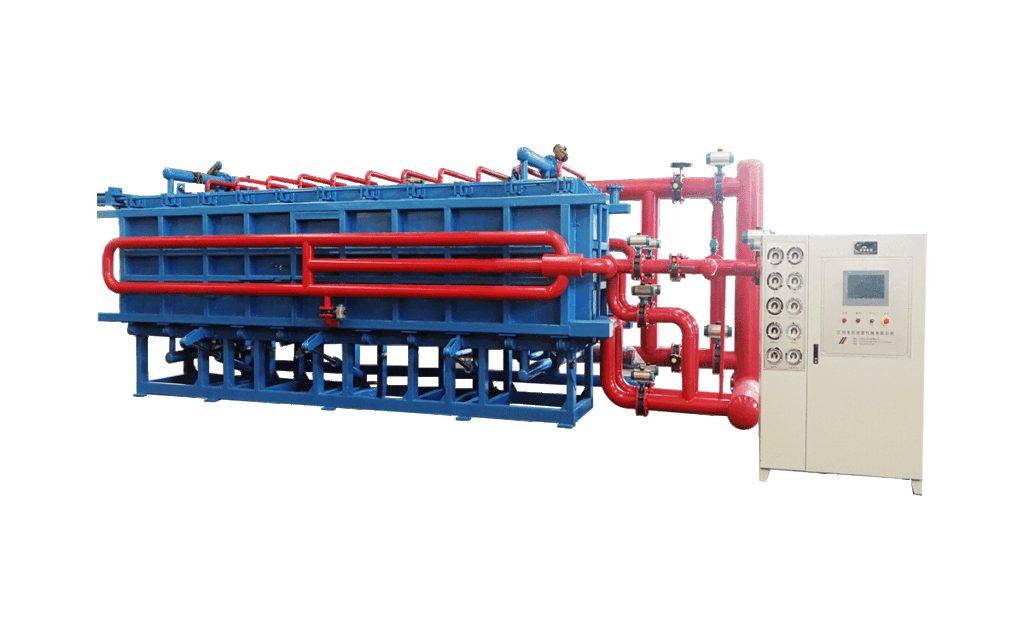
Choosing an EPS block molding machine comes down to three questions: what block size do you sell, how many blocks per hour do you need, and how much automation can your operators handle. This guide compares vertical, horizontal and height-adjustable models so you can shortlist the right one.
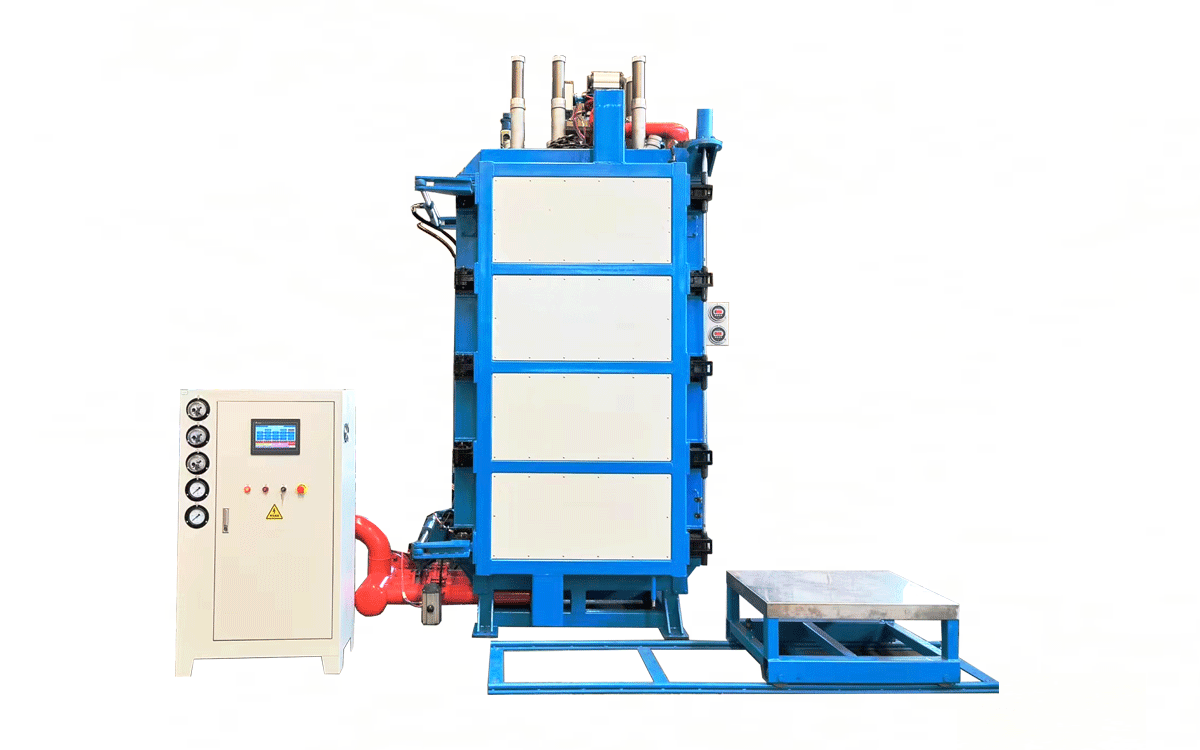
Vertical vs horizontal block molding
A vertical EPS block molding machine uses a single-door opening, which means less steam leakage, lower energy consumption and a more uniform block. It is the standard choice for plants selling insulation board that need consistent density across the whole block.
A horizontal EPS block molding machine is built for throughput. Blocks are ejected faster and the machine integrates easily with automatic conveyors and stacking, so it suits high-output plants running long campaigns.
The height-adjustable model sits between the two: it changes block width by moving the mould walls instead of replacing the whole mould, which is ideal when your order book mixes several thicknesses.
Key specs to compare
- Block length (2000-6000 mm) and maximum thickness
- Blocks per hour at your target density, not at the lightest density on the datasheet
- Vacuum cooling system and steam consumption per block
- Mould changing time, and whether wall adjustment is manual or motorised
- Optional conveyors, weighers, tilters and block handling
The first two are where buyers most often get caught out. A machine rated for 8 blocks per hour at 15 kg/m³ may only deliver 5 at 25 kg/m³, because denser blocks need longer cooling.
Getting the density right upstream
Block quality starts with the bead. Consistent pre-expansion from an EPS pre-expander machine plus proper ageing in an EPS silo system is what allows a block molding machine to hold density tolerance cycle after cycle.
Browse the full range on our Products page, read our EPS Construction guide for typical board specifications, or ask us for a quotation with your block size and output target.
Typical specifications
Horizontal Styrofoam EPS Block Molding Machine — specification snapshot
| Model | Block Length | Block Width | Block Thickness | Output (@15 kg/m³) |
|---|---|---|---|---|
| SPB-2000WZ to SPB-6000WZ | 2000–6000 mm | 1000–1200 mm | 1000–1200 mm | 12–15 blocks/hour |
These are YouXin’s current model ranges. Exact configuration depends on block size, density target and the layout you run. Full options: Horizontal Styrofoam EPS Block Molding Machine.
A five-step way to shortlist
- Fix the block size you sell. Length, width and thickness decide the mould, and the mould decides the machine. Standard ranges run from 2000 mm to 6000 mm in length.
- Set the output you need at your real density. Ask for blocks per hour at the density you actually sell, not the lightest grade on the datasheet.
- Decide how often thickness changes. Frequent changes favour the height-adjustable model; a fixed campaign favours vertical or horizontal.
- Check steam and vacuum capacity. Steam consumption per block and vacuum cooling time are what determine the real cycle.
- Confirm what is included. Conveyors, weighers, tilters and block handling change both the price and the labour per block.
Common mistakes
Comparing blocks-per-hour at different densities. A machine rated at 12–15 blocks/hour at 15 kg/m³ will deliver noticeably fewer at 25 kg/m³ because denser blocks need longer cooling. Always compare at your density.
Choosing horizontal because it sounds faster. Horizontal machines eject faster and suit automation, but vertical machines leak less steam and give a more uniform block. Match the design to what you sell.
Skipping the upstream stages. Consistent pre-expansion and proper ageing are what allow any block moulding machine to hold tolerance. Buying a better mould will not fix drifting bead.
No block storage or curing space. Freshly moulded blocks need hours to stabilise before cutting. Forgetting that floor area is a classic layout error.
Ignoring the cutting stage. The block mould sets your capacity, but the EPS cutting line sets your shipping rate. Size them together.
Frequently Asked Questions
Vertical, horizontal or height-adjustable?
Vertical for uniform density and lower steam use; horizontal for throughput and easy automation; height-adjustable when your order book mixes several block thicknesses.
What block sizes are standard?
YouXin models cover 2000–6000 mm block length with 1000–1200 mm width and thickness; the height-adjustable range changes thickness by moving the mould walls.
Can we change block thickness later?
On the height-adjustable model, yes, quickly. On fixed moulds it means a new mould — plan for it if your product mix is likely to widen.
How much steam capacity do we need?
Steam is the hidden constraint in every EPS plant. Size the boiler for the moulding machine at peak cycle rate, not at average load, and budget for condensate return.
Should we add recycling from the start?
Almost always. Block trim and rejects are recyclable from day one, and an EPS recycling machine usually pays back inside a year.
How your density target changes the choice
Block density is the specification that quietly decides everything else. Lighter blocks cool faster and cycle quicker, but they need stable, well-aged bead and careful steam control. Heavier blocks need longer cooling under vacuum, which is why output quoted at 15 kg/m³ does not carry over to 25 kg/m³.
That has two practical consequences when you shortlist machines. First, ask for output at the density you sell, not at the headline density. Second, make sure the upstream stages can hold that density consistently: a pre-expander sized for the right output and enough silo volume for proper ageing.
If your product mix spans a wide density range, say so when you enquire. Vacuum capacity, steam valve sizing and cooling time are all configured to a range, and changing that range later is more expensive than specifying it now.
Can one machine run several densities?
Yes, within the configured range. Cycle time and steam consumption change with density, so output planning should use the density you run most, not the lightest grade.
How do we know if the block is properly cured?
Blocks need hours to stabilise after moulding before they cut cleanly. Cutting too early causes shrinkage and dimensional drift in the finished sheet — a storage problem, not a cutting problem.